How to Create a Lavender-Themed Garden
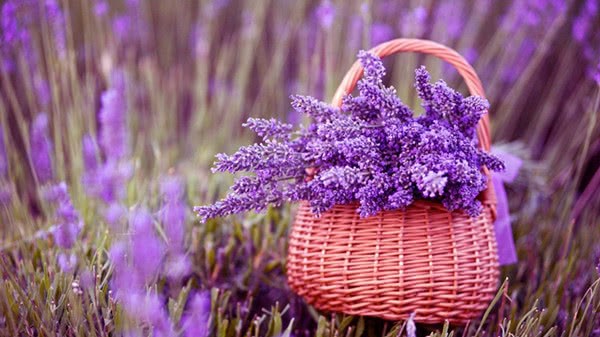
Lavender, also known as perfume plant, spirit vanilla, vanilla, yellow vanilla, and lavandula, belongs to the Lamiaceae family, genus Lavandula. It originated along the Mediterranean coast, across Europe, and on the islands of Oceania, and was later widely cultivated in the United Kingdom and Yugoslavia. Lavender was already a fairly common herb in Roman times, and because of its many uses it is called the "queen of herbs." Lavender has elegant and graceful leaf shapes and flower colors, with long, beautiful blue-purple inflorescences. It is a new perennial cold-hardy flower for courtyards, suitable for grouped or row planting along flower borders, and can also be grown in pots for ornamental display.
How do you create a garden themed around lavender?
1. Garden style - Lavender is an herb with a very European character, so the garden styles suited to lavender are none other than the naturalistic English garden or the formal French courtyard.
2. Choosing the flowering season - To create a lavender corner in your own garden, you first need to know the flowering season of lavender. In North China, the lavender flowering season is generally in summer, that is, during June and July, and the flowering period lasts about one month, though some late-flowering varieties can continue into August.
3. Planting location - When planting lavender in a garden, since it is not like large-scale cultivation in open fields, it cannot achieve the spectacular full carpet of a flower field, so the mutual pairing of plants must be taken into account. Lavender generally grows about 45-90 cm tall, making it suitable as a foreground and middle-ground plant in the garden. Therefore, planting it near paving or along both sides of a walkway is very appropriate. In this way, when the garden owner walks past, they are steeped in fragrance, which is very romantic.
4. Plant pairing - In a backyard garden themed around lavender, lavender plants pruned into rounded mounds are arranged in the garden in small groups of three to five, paired with sun-loving perennial flowers that bloom in spring and summer, interspersed among them to fill the space around the lavender, and the visual effect will be outstanding. For example, the finely textured and softly colored purple aster, as well as the yellow fernleaf yarrow, whose color contrasts with the purple of lavender, are both very eye-catching choices; in addition, pink-toned Chinese roses can also be planted, with purple delphiniums used in the background, along with elegant astilbe and lively, lovely hollyhocks, and finally accented with irises of distinctive leaf shape and delicate red corn poppies, making the garden even more outstanding.