Cool-headed Reflections on the Current State of Chinese Penjing Development
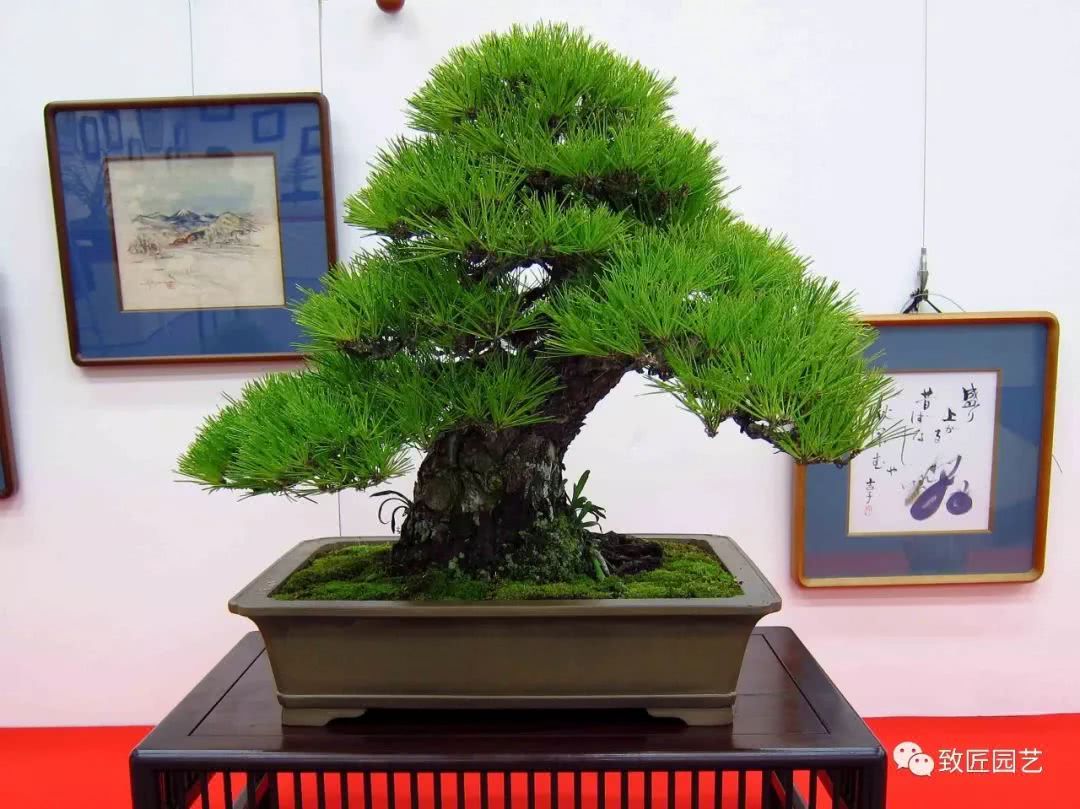
Penjing originated in China. The prototype of Chinese penjing is the image of a potted plant combining plant, pot and stand depicted in the Eastern Han dynasty (25-220 AD) tomb mural unearthed in Wangdu, Hebei; while in the Tang dynasty tomb passage mural of Crown Prince Zhanghuai, there appeared penjing forms created by the ingenious combination of pot, tree and stone. For this reason, experts unanimously hold that Chinese penjing took shape in the Tang and Song dynasties and flourished in the Ming and Qing dynasties. They also hold that after the Revolution of 1911, the continuous domestic revolutionary wars and the invasion of Japanese imperialism suppressed the development of penjing art to a certain extent; after the founding of New China, the Party and the people's government attached great importance to the inheritance and innovation of traditional arts, especially in the 1980s and 1990s. After entering the 21st century, penjing development across the country entered the fast lane, with an extremely encouraging situation, and the most prosperous period in history has arrived, which has become a consensus among people of insight in the industry.
Turning the pages of the history of Chinese penjing development, penjing art, like other traditional arts, has a direct relationship between its rise and decline and political and economic development. After the liberation of the whole country, under the guidance of the Party's literary and artistic policy of "letting a hundred flowers bloom and a hundred schools of thought contend," cities such as Suzhou, Guangzhou, Hangzhou, Wenzhou, Yangzhou, Chengdu and Shanghai successively established penjing gardens, and the skills of a group of old artists were inherited. The Party's reform and opening-up policy, the leap-forward development of the economy, and the improvement of people's living standards powerfully promoted the development of penjing art and the penjing cause. Especially after history entered the 21st century, the development trend has been even more inspiring and encouraging, and people in the penjing world have heard, seen and personally experienced these changes. In 1977, Shanghai penjing took the lead in entering the Hong Kong market; in 1982, the Jiangsu Penjing Art Exhibition was held in Hong Kong, China and received favorable reviews; in the same year, Chinese penjing participated in the Netherlands International Horticultural Exhibition. Subsequently, groups were sent many times to Germany, Japan, France, Singapore and other countries and regions to participate in exhibitions, as well as in the biennial Asia-Pacific Regional Penjing and Viewing Stone Conference and Exhibition. The quadrennial China Penjing Competition and Exhibition has so far been held six times, with more than 20 provinces, municipalities and autonomous regions and up to 100 cities participating. At the same time, following the Shanghai Penjing Museum, the Jiangyin Township Penjing Museum and the China Yangzhou Penjing Museum were successively completed and opened. Private penjing gardens for profit have sprung up like bamboo shoots after rain. Penjing has moved toward the market as a new industry. In recent years, some entrepreneurs have even taken pleasure in collecting top-grade penjing, raising the grade, taste and artistic value of penjing. Exchanges between the domestic and international penjing worlds have been frequent. The chairman and vice-chairman of the International Bonsai Association, the chairman of the European Bonsai Federation, Japanese bonsai master Kimura, and Taiwan, China master Zheng Chenggong have successively been invited to visit or give operation demonstrations; Hu Yunhua, Wei Jinsheng, Zhao Qingquan and others have also successively gone to the United States, Canada, Australia, the Philippines, Malaysia and other countries and regions to lecture and teach skills; even folk groups have spontaneously organized visits to Japan for inspection. Penjing exhibitions across the Taiwan Strait and the Guangdong-Hong Kong-Macao-Taiwan Penjing Art Expo have followed one after another; Yangzhou Red Garden has also established a friendship garden with the Jeju Island Penjing Art Garden in South Korea; opportunities for mutual learning and observation have increased. New people and new works keep emerging, local tree species and resources have been fully utilized, and the regional and stylistic characteristics of penjing have developed in a diversified manner, with individuality becoming more prominent. Theoretical research on penjing has produced abundant results. "Chinese Penjing," "Essence of Contemporary Chinese Penjing," "Appreciation of Chinese Penjing," "Collection of Works from Famous Chinese Penjing Gardens," as well as penjing albums from Zhejiang, Fujian, Hubei, Anhui and other places have been published one after another, also serving as summaries of regional penjing experience; and so on. In short, Chinese penjing has shown unprecedented prosperity, laying a good foundation for the development of Chinese penjing and creating rare opportunities.
These brilliant achievements are indeed gratifying. However, behind this prosperity, there also exist and have appeared some discordant phenomena and problems that have been overlooked. If sufficient attention is not paid, if they are not corrected in time, and if effective measures and methods are not formulated, they will interfere with and affect the increasingly promising trend of penjing development. Therefore, we must calmly reflect, make the best use of advantages and avoid disadvantages, grasp the direction, and ensure the healthy development of Chinese penjing art. In the author's view, the tendencies and problems that exist are mainly manifested in the following aspects: First, the aristocraticization of penjing. Some entrepreneurs and collectors spend generously, and as long as they take a fancy to something, they spare no expense to buy it, even directly importing or smuggling it from Japan, Taiwan, China and other countries and regions, which invisibly greatly raises the price of penjing and has a relatively large negative impact on the penjing market. Second, valuing pines and cypresses while neglecting miscellaneous woods. At large exhibitions, pine and cypress categories account for a fairly high proportion of award winners, while the proportion of elm, plum blossom, trident maple and some local tree species is subject to certain limits, which affects the development of distinctive tree species in various places. Of course, the fact that miscellaneous-wood tree penjing cannot compare with pine and cypress categories is another reason, but its consequence may be to favor one and discriminate against the other, suppressing the development of local miscellaneous-wood penjing. Third, modeling admires Japan and Taiwan, China. At present, in modeling and style, there is a tendency to pursue Japan and Taiwan, China as fashionable, including the practice of using "wire carving" on pines and cypresses and forcibly changing their natural trunk forms, even inviting masters to give demonstrations in China, and there is a trend of using this as the standard for measuring penjing art, neglecting the local styles and characteristics of Chinese penjing. Fourth, techniques avoid complexity and seek simplicity. Now works that truly reflect traditional binding techniques are no longer common, especially the palm-fiber methods typical of the Yang and Chuan schools, and most have been replaced by winding with metal wire. The former is cumbersome and requires high basic skills, while the latter is simple and easy to learn, neglecting the inheritance and development of traditional techniques. Fifth, uneven development of types. Penjing is divided into two major categories, tree penjing and landscape penjing, and landscape penjing also includes tree-and-stone penjing; in the domestic and international penjing worlds, it seems that penjing refers to tree penjing, and the actual situation is also that tree penjing is valued over landscape penjing, causing landscape penjing works to lag behind, with few excellent works. However, landscape penjing is the type most imbued with Chinese characteristics and able to reflect poetic and pictorial sensibility and its cultural connotations. Sixth, lack of exchange and training. As for the current state and trends of penjing and its techniques in today's world, China's position in the world penjing world, whether there are gaps and deficiencies, and how to maintain China's advantage as the birthplace of world penjing, few people in the domestic penjing world know much about this. The reasons lie in two aspects: First, relevant higher-level departments organize few opportunities to go abroad for exhibitions, inspections and observation, and these are concentrated in only a few cities; domestically, it is limited to a competition and exhibition once every four years, lacking professional exchange and discussion. The guiding and functional role of industry associations has not been fully brought into play. Second, the propaganda and guidance content of professional magazines, newspapers and other media has certain limitations. In addition, in promoting new people and new works among young and middle-aged people in various places, how to improve their quality, cultivation and skills and train reserve backbone personnel must be placed on the high-level agenda. At the same time, the experience summaries of the older generation of master-level experts cannot be neglected; where conditions permit, they should be compiled and published, playing a role of linking the past and the future. And so on. All of these involve the prospects and sustainable development of Chinese penjing. The author hopes to attract the attention of the high-level figures in the domestic penjing world and people within the field, turn worry into joy, and maintain the sustained and sound development momentum of Chinese penjing.
In reflecting on the above problems, the point is not raising the problems, but rather putting forward suggestions and methods for solving them so that relatively ideal practical results can be achieved. This is the crucial topic. Here the author puts forward a few superficial and immature suggestions.
First, clearly understand the situation and acknowledge the gaps
Facing the rapid development trend of penjing in today's world, and connecting it with the current situation and reality of Chinese penjing, the upper levels of the Chinese penjing world should think calmly, accurately identify China's position and role in the world penjing world, determine in what aspects there are advantages, deficiencies and gaps, and place themselves correctly. To a certain extent, the saying that "China is the mother of world penjing" has become history, and one must never comfort oneself with this, rest on past achievements, or be blinded by self-importance. It can be regarded as a "patriotic education" in penjing, launching a major discussion in the penjing world and conducting reflection and evaluation in a realistic manner. Only by facing reality squarely and acknowledging the gaps can we arouse and stimulate the Chinese penjing world to strive hard, rebuild the image of Chinese penjing, and maintain the honor and status of the founding country.
Second, inherit tradition and give play to advantages
As a traditional art, penjing, like other arts, is all the more representative of a country and region the more traditional it is. China's nearly two-thousand-year history of penjing development, especially the various schools and styles that have already formed, is the crystallization of a region's penjing history and culture. It is undoubtedly precious and should be well inherited, certainly not discarded. At the same time, it should be acknowledged that China does not lack all advantages in penjing. For example, in tree penjing, the pine and cypress category is inferior to Japan, while the miscellaneous-wood category is slightly superior; and the poetic and picturesque landscape, especially tree-and-stone penjing, is uniquely Chinese in character, standing out like a crane among chickens. For another example, Japan's wire carving, as the existence of a form of expression, is acceptable, but it should not be imitated too much, still less is it worth pursuing, because it violates the principle of nature and bears obvious traces of artificiality, whereas China's deadwood trunk is a perfect combination of nature and art, expressing the individuality of the tree stump and having higher value. In short, we must make the best use of advantages and avoid disadvantages, give play to our strengths, walk our own path, and remain free from any external interference and influence; only then can we certainly accomplish something.
Third, uphold science and encourage innovation
The scientific outlook on development should also be advocated in the penjing world; this is beyond doubt. For example, in penjing substrates, management methods, pruning tools and other aspects, there are important gaps between China and foreign countries. To change this situation, a very important point is to integrate a scientific attitude and scientific methods into all aspects of penjing management; conditions should be created to gradually create conditions and lay the foundation for scientific penjing management. While inheriting and maintaining traditional techniques and styles, innovation should be encouraged, and selections should be made from it, taking the essence and discarding the dross. For example, the literati tree and inkstone-style penjing that appeared in the last two exhibitions have already gained recognition in the penjing world, possess unique style and charm, and give people a refreshing feeling. It is suggested that in national grand exhibitions, while establishing traditional awards, a special innovation award may also be established, in order to achieve new breakthroughs in penjing conception, forms of expression, techniques, and pots and vessels, thereby flourishing penjing innovation.
Fourth, broaden exchanges and emphasize training
Whenever there are major domestic or international penjing competitions or activities, relevant departments should not only transmit information, but more importantly regard them as excellent opportunities for exchange and observation. If they are domestic, experience exchanges, special lectures or seminars, and master demonstrations should be organized, making full use of the occasion when peers from across the country gather and giving play to its special functions. If they are international, associations should put forward suggestions to administrative departments and strive to organize delegations to participate in exhibitions or conduct observational inspections, broaden their horizons, feel the pace of world penjing development, learn from others' strengths and make up for one's own weaknesses; only then is it possible to keep up with or develop in step with world penjing. In addition, for penjing technicians in various places, opportunities should also be provided for them to raise their level and pursue further study, just as after graduating from university undergraduate studies one can take graduate entrance examinations. Attention should be paid to training high-level penjing talent and creating necessary conditions for their further study. The Ministry of Construction and qualified provincial construction departments should consider this from a long-term and developmental perspective and carry out training in a planned way. This should be a hundred-year plan for the development of Chinese penjing.
Fifth, cooperate wholeheartedly and create brilliance together
At present, the domestic penjing world mainly has two organizations and two authoritative exhibition activities, belonging respectively to the Ministry of Construction and the Ministry of Agriculture. In order to catch up with and surpass the world penjing level, the two organizations should strengthen contact, break down "threshold views," jointly seek development prospects, use their respective advantages and functions and powers, achieve sharing of resources and talent technology, and twist the two ropes into one strength. For example, the Ministry of Agriculture's land, materials and labor can absolutely serve as an emerging industry to promote the adjustment of a region's industrial structure, enabling penjing to truly enter domestic and international markets; the Ministry of Construction has the advantage of professional penjing talent and technology. The combination of these two advantages can promote and drive the development of China's penjing cause, achieving the goal of restoring vigor and creating brilliance together. This is probably the need of the situation and also the common aspiration of people in the domestic penjing world.
The above is the author's reflection on the current state of Chinese penjing. It is relatively superficial and may not hit the point, but it is only intended to use this humble article to attract better contributions. The author believes that the better the situation, the more one must keep a calm head, the more one must correctly treat the achievements already made and the problems that exist, and find methods and measures to solve the problems, so as to avoid detours as much as possible. The purpose is to resonate, call on everyone to work together and make joint efforts, and make due contributions to revitalizing Chinese penjing and establishing the new image of China as the founding country of world penjing.
Wonderful content