The best time to transplant orchids: take a walk in the mountains and you will understand
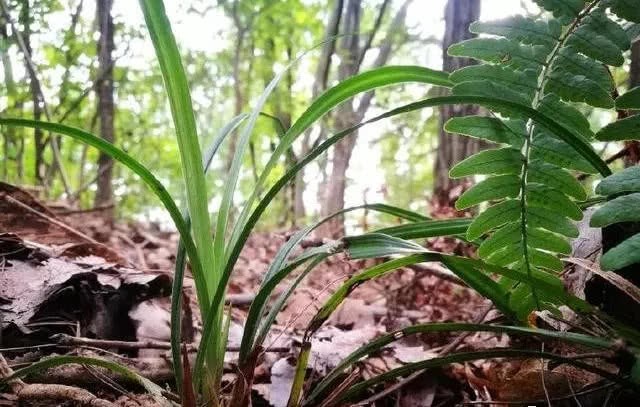
Orchids are plants with evergreen leaves all year round, and precisely because of this, many netizens assume orchids can be transplanted in any season. Is that really the truth?
As a member of the natural world, the growth patterns of wild orchids are of course closely tied to nature. So what is the best season to transplant wild orchids? Haoshe Farmer believes there are two best seasons in a year for introducing orchids, and this is also a conclusion Haoshe Farmer drew by observing wild mountain plants. This common trait applies not only to orchids but also to other wild flowers and grasses.
Chinese medicine studies human beings, but as fellow living things in nature, humans, animals and plants all share some commonalities. For example, traditional Chinese health cultivation often says: harvest in autumn, store in winter. Haoshe Farmer thinks this saying also fits orchids. In autumn the temperature difference is large, and the orchid plant absorbs nutrients through photosynthesis; in winter it is cold, the orchid plant pauses its growth, storing nutrients well for use the following year.
Anyone who has planted trees knows that in our country March 12 every year is Arbor Day. Why was the holiday for planting trees set on this day? Because after March 12 comes the Spring Equinox, and at the Spring Equinox plants begin to sprout new buds and the sap flows outward. If you plant trees after Qingming, it is very difficult to get them to grow well, and even if they survive, it will affect that year's sprouting.
So when is the good season for transplanting wild orchids? Haoshe Farmer tells everyone: go to the mountains and look at those broadleaf forests. When the leaves begin to fall, you can transplant orchids. At this time the orchid's roots are stable and not easily injured, and the orchid plant has also accumulated a certain amount of energy, so after potting it will not decline from lack of nutrients during the acclimation period. There is another good season for transplanting orchids, and that is before March 20 each year (after Cymbidium goeringii finishes flowering, during the bud stage of Cymbidium faberi). At this time the orchid is ready to surge into growth, and after potting it acclimates quickly and roots quickly.
When chatting with Haoshe Farmer, a netizen sighed: I learned this too late, so that introducing orchid seedlings in summer caused losses. In fact, most plants are not suitable for transplanting in summer, and orchids with fleshy roots are even more so. So orchid lovers should pay close attention to the season when introducing orchids in the future; choosing the right season for introduction will let you achieve twice the result with half the effort in orchid growing.
If you have different views and experiences, you are welcome to leave them in the comments section to discuss together the experience of growing and cultivating wild orchids.