These potted plants grow well at home and can even be eaten as vegetables
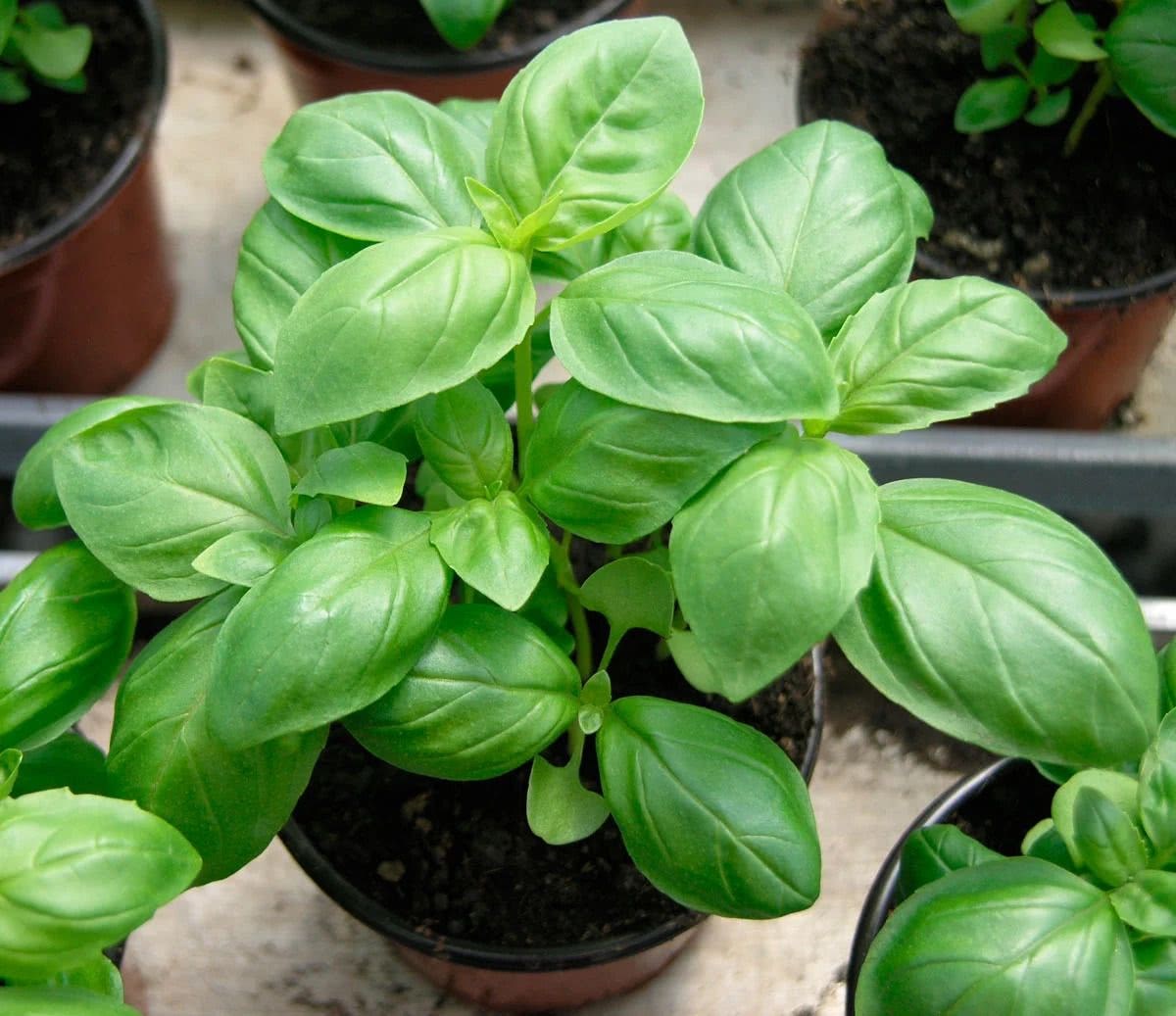
Growing some plants with fresh fragrance on the windowsill or balcony is wonderful, and they are all especially easy to care for. You might as well grow some herb plants at home; they grow vigorously, look great, can become vegetables on the dining table, and can also become fresh seasonings in the kitchen.
Below are some herb plants that are easy to grow indoors:
1. Basil
Basil likes a warm and humid environment year-round, and the growing location needs fairly abundant light. You can plant it on an east-facing or south-facing windowsill.
Potted basil needs regular watering. In spring and summer, keep the soil moist, and the potting soil must have good drainage. During growth, you can give it an organic liquid fertilizer once every 2 to 3 weeks.
You can directly choose to grow it from seed, or propagate it directly from stem cuttings. Just cut a section of basil stem about 9 cm long, remove the lower leaves, soak it in water, and change the water every two days. Usually it will root in one to two weeks. Once the roots have grown longer, you can transplant it into soil. It is very easy to propagate successfully.
If you want potted basil to grow more vigorously, you can pinch off the top once it reaches 15 cm, removing the tender top buds. This promotes continuous branching and vigorous growth of the leaves.
2. Oregano
Oregano has many varieties, and it can grow very tall. You can keep pinching off the tops to encourage branching. With proper care, it can be grown for many years, and potted cultivation is also very simple.
You can directly buy a potted oregano plant, or you can propagate it from seed, though the seeds are relatively difficult to germinate. You can also propagate it from stem cuttings, usually choosing stems 9 to 12 cm long, removing the lower leaves, and preparing loose, well-drained sandy soil. Keep the soil moist, insert the stems into it, and avoid waterlogging in the soil. Place it in a ventilated spot with bright light, and usually it will root and sprout in two to three weeks.
3. Rosemary
Rosemary is a perennial woody shrub plant. It grows relatively slowly for the first two or three years, and after that it grows into a shrub form. It likes loose, well-drained soil and a ventilated, light-transmitting environment, and the growing location needs abundant light.
Growing rosemary from seed is very difficult. It is generally propagated from stem cuttings, and you can directly use vermiculite or perlite for cultivation. Prepare some healthy semi-woody stems about 10 cm long, remove all the lower leaves, and insert the stems directly into vermiculite or perlite.
During cultivation, keep the vermiculite moist and avoid drought. In addition, you need to regularly mist water around it to maintain relatively high air humidity, with the temperature kept between 22 and 25 degrees. Usually it will grow slender roots in two to three weeks, after which you can transplant it into potting soil.
4. Parsley
Parsley is a biennial herbaceous plant. It likes a warm and humid environment year-round, and the growing location needs abundant light. During cultivation, keep it warm and dry year-round. You can place it on a south-facing windowsill.
When growing parsley, prepare loose, breathable, well-drained sandy soil. During care, do not water too frequently. Be sure to wait until the soil 3 to 5 cm below the surface is dry before watering again. There is no need to fertilize frequently. Each time you harvest, you can cut off everything more than 3 cm above the base, and it will grow new leaves again.
5. Thyme
Thyme likes a dry environment year-round, and the minimum temperature for care should be kept above 5 degrees. It does not need nutrient-rich soil for cultivation, but the soil must have good drainage. It can also grow well in partial shade, but with abundant light it will grow more vigorously. During care, you can prune it regularly to encourage continuous branching.
6. Sage
Sage is very suitable for beginners to grow. Its ability to adapt to the environment is especially good. You can plant it directly in potting soil, and the growing location should have plenty of light, maintaining more than 4 to 8 hours of light per day. In summer, it can even produce small purple flowers. It is very suitable for growing by the windowsill.
Sage is also very easy to propagate. You can directly buy a small potted sage plant, or cut a few stem sections and insert them into sandy soil, keeping the soil moist, and they will root and sprout quickly.