This creature is extremely picky and only lives in streams. It tastes even better than bullfrogs and is commonly known as the king of a hundred frogs.
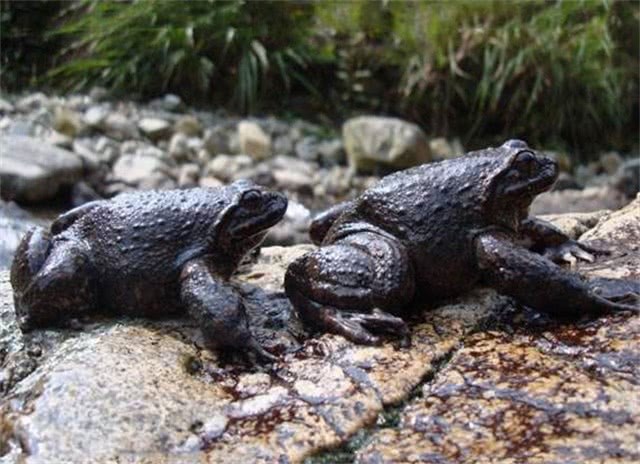
When I was a child in the countryside, I saw plenty of animals too. Back then I often went to play by the stream with a few friends, and we could often see all kinds of fish swimming around in the water. The water quality was very clear then, with a constant flow of fresh water running through the stream, which not only drew us kids to play by the stream, but also attracted a large number of animals with extremely high water-quality requirements. Among them was one hard-to-catch animal, a regular visitor to the small streams in the mountains.
Its name is the stone frog (rock frog). Actually, the stone frog is a species in the frog family. Its requirements for water quality are very high: there can be no pollution from pesticides, chemical fertilizers or sewage. It only appears in small streams, where the flowing water is the cleanest. The stone frog grows fairly large and is also very plump. Raised in naturally flowing water, its flesh is tender and very easy to absorb, so both the elderly and children can eat it. The nutritional value of the stone frog is even higher than that of the bullfrog, and it has long held the title of "king of a hundred frogs," which shows the unique status and favor the stone frog enjoys in the frog world.
After cleaning the stone frog thoroughly, add seasonings and stew it clear. Prepared this way, the stone frog tastes very tender. Although it is not processed much, the meat eaten this way is especially smooth and very delicious. In the countryside, whenever this frog was caught in the past, it was specially stewed to nourish children and the elderly, as it is easy to digest and has a very fresh, tender texture. The stone frog is high in amino acids and protein, making it a food with very high nutritional density. Nowadays, wild ones are basically nowhere to be seen, and in some areas they have even become extinct.
As an aquatic creature, the stone frog also needs to hibernate. Generally, by early spring, the stone frog begins to come out foraging, and at this time the stone frog tastes the best. After a winter of hibernation, the stone frog is also easiest to catch at this time. When I was little, I could still catch stone frogs. People could hardly resist the deliciousness of the stone frog and began hunting them. Later, the number of stone frogs became fewer and fewer. Now the stone frog has become a wild protected animal in our country, and catching or eating wild stone frogs is prohibited. But people still miss the taste of the stone frog, so some farmers began to farm stone frogs artificially, and it has also become a path to wealth.
However, farming stone frogs is not that easy. First, it requires a relatively constant temperature, with around 18-24°C being suitable; too high or too low a temperature may cause the stone frogs to die. The temperature condition alone stumps a large number of farmers, so the areas more suitable for stone frog farming are in the south of our country; the north is not suitable. In addition, it also requires clean, pollution-free flowing water, a quiet environment suitable for laying eggs, and so on, so the requirements are very high. Friends, have you ever seen a stone frog? If you see a wild stone frog, be sure not to catch it!