Snake plant: no need to buy fertilizer, bury 3 of these in the pot, and in 1 month new shoots will break through the pot
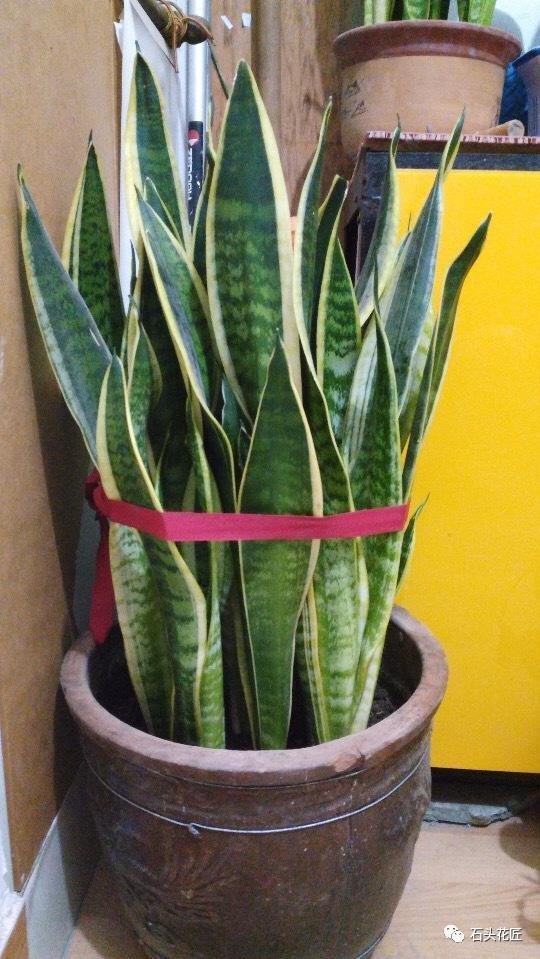
Snake plant (Sansevieria) is a common household flower; not only is the plant upright and sturdy, but the snake plant's striped leaves are very beautiful and have high ornamental value. Many flower lovers keep snake plants at home, because they are not only good-looking, but can also absorb formaldehyde left over after home renovation, playing a role in purifying the air.
Snake plants are not only good-looking and useful, but also have very strong propagation ability. If you have one pot of snake plant at home, through later care and handling you can get 10 pots, or even more, of potted snake plants. There are two ways to propagate snake plants: division propagation and cutting propagation. Generally, snake plants propagated by division grow fast and have a high survival rate.
Here many flower lovers may wonder: how can you make a snake plant grow more side shoots? By doing division propagation. Actually, the key still lies in fertilizing. As the saying goes: for growing flowers, three parts depend on fertilizer and seven parts on water; if you want plants to grow sturdy and emerald green, fertilizing is also very important. So today I will share with you a kind of fertilizer for snake plants; adding it to the pot can make it quickly grow side shoots. Today's topic is:
Don't buy fertilizer for snake plants; bury 3 grains of "it" in the pot, and in 1 month "steel shoots" will break through the pot!
Soybean fertilizer can promote snake plants to grow side shoots
Friends who grow flowers all know that nitrogen fertilizer can promote the growth of plant branches and leaves, and for a foliage plant like the snake plant, nitrogen fertilizer is crucial to it. When growing snake plants at home, you can fertilize the snake plant in spring, summer and autumn, mainly choosing nitrogen fertilizer.
Soybeans are a very good source of nitrogen fertilizer. Soybeans contain very rich protein. Put the soybeans in a pot, cook them, then let them cool. Directly use chopsticks to poke two holes at the edge of the snake plant's flower pot, add 2-3 cooked soybeans to each hole, then cover them with soil, letting the soybeans naturally ferment in the soil to provide nutrients for the snake plant's growth. Note here that the position where you add the soybeans should be as far as possible from the snake plant's root system, to prevent the fertilizer from burning the roots during fermentation.
Every two weeks you can add a few soybeans to the flower pot. After the snake plant absorbs the fermented soybean fertilizer, it can grow quickly and can also sprout side shoots. Sometimes a sturdy snake plant will directly send out side shoots from the side of the flower pot. So in the process of growing snake plants, if you want the plant to grow sturdy and dense, you must promptly supplement nitrogen fertilizer to promote plant growth.
Leaf cuttings of snake plants
Of course, snake plants have another propagation method, which is through leaf cuttings. This method has high propagation efficiency, but the young snake plant seedlings from cuttings grow relatively slowly.
Generally in spring, summer and autumn, choose sturdy snake plant leaves, cut the leaves into small sections 5-8 cm long, then soak the trimmed snake plant leaves in a 0.2% rooting powder aqueous solution for 30 seconds, take them out and let them dry, then insert them into prepared sterilized sandy soil. Place the pot in a cool environment for 1 week, and the snake plant leaves can take root and sprout, then divide and pot them up as needed for later growing.
Tips for snake plant care
Flower lovers who have grown snake plants all know that snake plants like to grow in breathable, water-permeable soil. Therefore, when changing pots and soil every year, it is best to choose water-permeable, breathable sandy soil. Each time you water, make sure to water thoroughly once, and avoid water accumulating in the pot. In this way, your snake plants at home can grow dense and emerald green.
Regarding tips for snake plant care and propagation, if you find them useful, please like below, follow, and forward to more friends.
I am [Stone Gardener], and I share little flower-growing tips every day. Remember to follow me.