Why are rose flowers getting smaller and smaller?
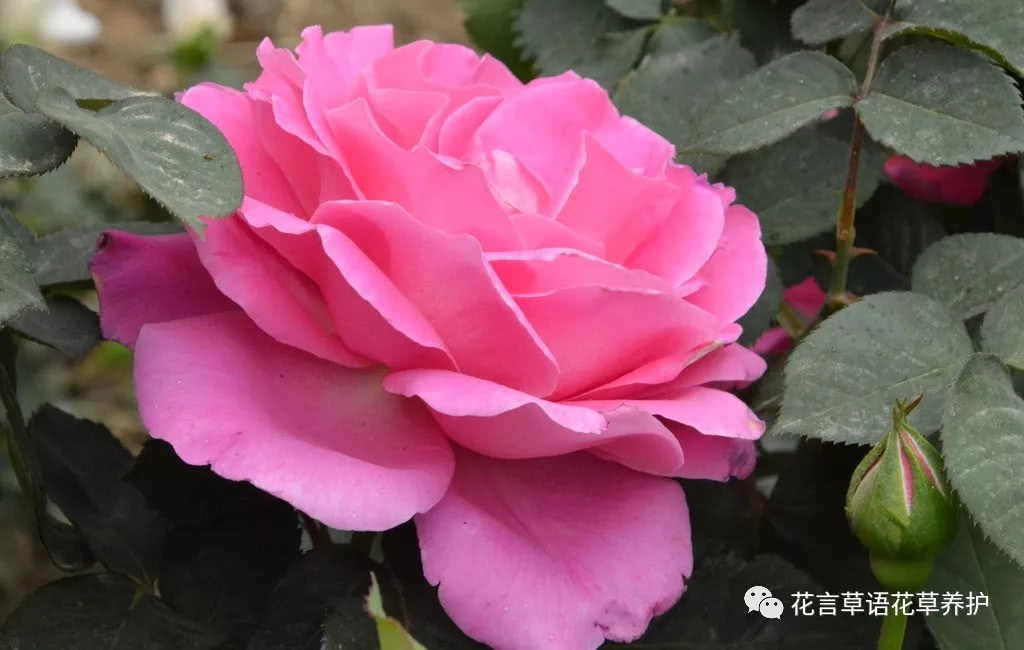
When it comes to roses, everyone is familiar with them; they are an extremely common plant. Almost everyone who loves growing plants has kept one or two pots of roses, or even more.
When we usually buy roses, we judge whether a rose is worth buying from the size of the plant, its color, its variety and the size of its flowers.
The size of rose flowers is a major factor influencing people's purchases. But we usually find that the roses we bring home first bloom with flowers of a very large diameter, but when they bloom the second time, the flowers start to get smaller. What is going on? Today, the Flowers and Plants Research Institute will analyze this for everyone.
Natural factors
Variety affects size
There are as many as tens of thousands of rose varieties, and each variety has its advantages and disadvantages, so naturally there are some varieties with relatively small flowers, such as the common miniature roses, whose flowers are all on the smaller side; even the large-flowered miniature roses bred in recent years cannot compare with most shrub varieties.
Therefore, before buying, flower lovers must consult relevant information and confirm the approximate diameter of the flowers, so as not to regret it after purchase.
Temperature reasons
After formally entering summer, temperatures rise substantially in all regions. At this time, the growth of roses is in a stagnant or semi-stagnant state, and the plant's absorption of nutrients also becomes slow. We all know that flowers are nurtured by the plant, and when the nutrient supply is insufficient, it is entirely reasonable for it to produce relatively small flowers.
All flowers blooming in summer generally vary in size, and this is also unavoidable.
The second flush is not as good as the first
In spring, roses are in their growth period, growing rapidly, and both the plant and the flowers are madly absorbing nutrients, so the flowers produced at this time are naturally relatively large. But after the first flush of flowers fades, as the temperature gradually rises, the demand for nutrients gradually decreases, so the second batch of flowers is naturally much smaller than the first flush.
Human factors
Some people may ask, is there really no way to solve this?
Of course there is!
Pruning work must be done properly
Pruning is a much-talked-about issue. Whether it is roses or other plants, doing pruning well is beneficial in every way to the plant's subsequent growth.
As mentioned earlier, flowers are nurtured by the plant. Without good pruning, the flower buds cannot absorb enough nutrients, and naturally cannot produce perfect flowers.
Everyone also knows that roses love to grow side branches. If they are not pruned, the nutrients of the rose will be divided among the side branches. Over time, there will be more and more side branches, while the flowers get fewer and fewer nutrients, so naturally the flowers they produce also become smaller.
Nutrient supplementation must also be timely
Although pruning can determine the size of the flowers, if nutrients are not supplied in time, no matter how thick and strong your plant is or how well developed its root system is, with insufficient nutrients, the flowers produced by the rose will not be very large either.
Whether grown in the ground or in pots, you must develop the good habit of regular fertilizing. Only with a steady supply of nutrients will rose flowers bloom bigger and bigger.