The 3 most nourishing flowers: grow one at home and the whole family, young and old, stays healthy
In early autumn the weather is dry, so when growing flowers at home you can grow some that clear dryness and reduce internal heat. They are not only beautiful but can also be used as food or medicine, killing two birds with one stone. Let's take a look!
“
Early autumn dryness-clearing"
-Honeysuckle-
Since ancient times, honeysuckle has been a good medicine for clearing heat and detoxifying. It can dredge the meridians and invigorate collaterals, and it is a broad-spectrum antiviral medicine, so most cold medicines and anti-inflammatory Chinese patent medicines contain honeysuckle. Compared with other plants, growing it is also relatively simple, making it a very good household flower.
Honeysuckle clears heat and detoxifies, dredges tendons and invigorates collaterals, and has a certain ability to resist toxins and disease. It has the fine reputation of "Chinese herbal antibiotic" and "green antibiotic."
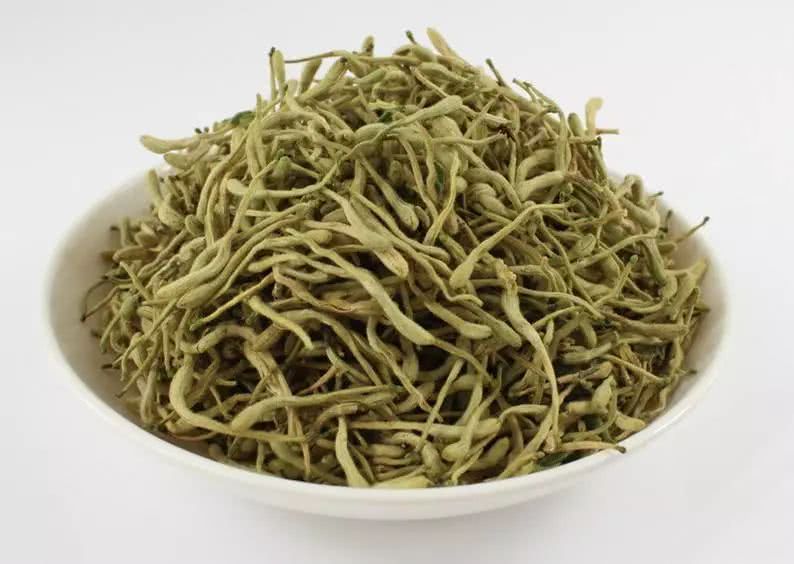
Take one teaspoon of dried honeysuckle and brew it with a cup of boiling water, then let it steep for about ten minutes. You may add rock sugar or honey to taste. It can also be used together with cool-natured medicinal materials such as tribute chrysanthemum. The biological activity of chlorogenic acid contained in honeysuckle can promote metabolism and improve people's immunity.
Besides medicinal use and brewing tea, honeysuckle can also be used in food. For example, adding a small amount of honeysuckle when cooking porridge can improve immunity.
The simplest way to propagate honeysuckle is by cuttings, usually carried out in spring and autumn. Cut the branches of the mother honeysuckle plant into cuttings about 10 cm long for rooting. After inserting them, keep them moist and strengthen management; they will basically take root in about one month and can bloom in the same year.
Layering can also be used. Propagation by layering is generally done in spring and summer. Choose a relatively long branch on the mother plant and bury it about 4-5 cm deep; the soil here must not be too deep. It can take root by autumn of the same year, and in late autumn or the following spring it can be separated from the mother plant and transplanted as a new plant.
-Mint-
Mint clears wind and relieves heat, and clears rashes. It can be used for wind-heat cold, headache, red eyes, throat obstruction, mouth sores, rubella, measles, and chest and rib distension and tightness.
A busy life greatly increases stress and easily produces bad moods such as irritability and insomnia. At this time, drinking some mint porridge can promote metabolism, relieve stress, clear heat and relieve fatigue, and help digestion, so naturally your mood improves too.
Mint tea: add sugar to green tea infusion, then add fresh mint leaves, and it is truly mint tea. Rinsing the mouth with mint tea leaves a fragrant taste in the mouth; washing hair with mint tea can make hair fresh and comfortable and leave a natural fragrance; when the weather is cold, drinking mint tea hot warms the whole body and feels comfortable, and when the weather is hot, drinking it cold (simmer a thick decoction, add yellow sugar, and chill it for a snowy drink) relieves summer heat and refreshes the spirit.
Mint can be propagated by sowing, usually from March to June or in September, and the flowering time is generally from June to August. If indoors, it can be sown all year round. Choose loose, breathable soil, spray the soil moist, and sprinkle the seeds on the moist soil. After sowing, do not cover the seeds with soil; you can cover them with plastic film, keep the temperature between 21-25°C, and generally seedlings will emerge in 1-2 weeks.
The most commonly used propagation method for mint is cuttings. First cut relatively healthy branches from the mint as cuttings, 5-10 cm long, remove the lower leaves, and keep only 2-3 leaves. If the branch is relatively old, you can keep only buds and no leaves. Then choose soft, breathable soil for inserting the cuttings.
-Aloe-
When aloe is mentioned, many people will surely think of hand cream, face masks, lotion, and other skincare products. If you have aloe on hand, you can use it directly for skincare.
Aloe gel is also called "beauty gel." It contains amino acids, vitamins, minerals, enzymes, and other nutrients essential for the skin. Apply fresh aloe juice directly to the face for about 20 minutes. Persisting in this will make the skin very smooth, white, and tender, and since there are no additives, it can be used with confidence.
Take aloe juice, add a little water, and apply it directly to the face for beauty care, just like patting toner onto the face as usual; patting it lightly on the face will give very good results. When washing your hair, smear a little aloe water on your head to relieve itching and prevent white hair and hair loss; over time it may even promote hair growth.
However, aloe is a relatively common allergen, and quite a few people are allergic to it, so first apply aloe juice to the soft inner side of the upper arm. If there is no reaction, you can continue using it. If the skin turns red or a rash appears, rinse it clean with water and stop using it immediately.
Aloe itself is a plant that produces quite a lot of offsets. The simplest and most straightforward way to propagate aloe is to find a small offset beside a large, well-growing aloe and directly transplant it into a new pot. As long as it is managed properly, it will generally grow very well and soon fill the pot.
These 3 flowers are all very good indoor flowers
Keep a pot to clear dryness and reduce internal heat
The whole family, young and old, can use them
You should grow a pot too
Share it with flower lovers who need it too!