When growing flowers in autumn, learn to toss flower bulbs - the more you toss, the more vigorously they bloom
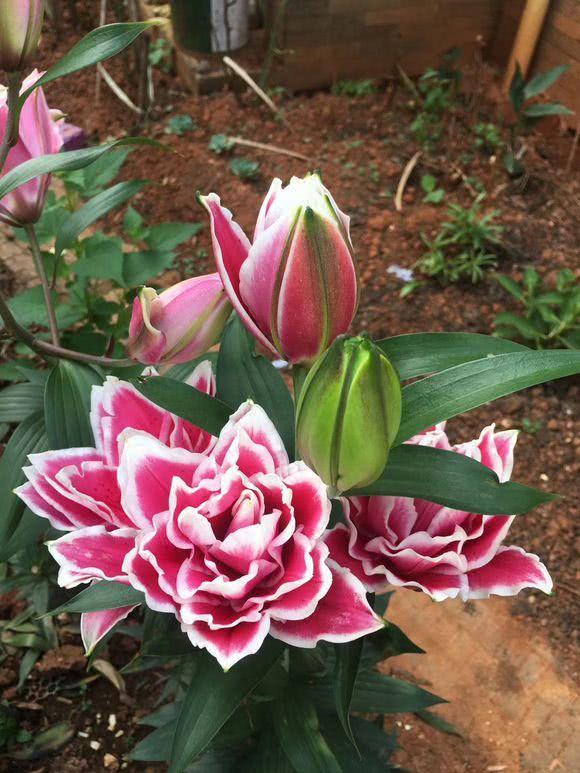
Autumn has arrived. If you are still wondering what flowers to grow, Momo suggests you grow these bulb plants. Just toss the bulbs in, and the more you toss, the more spectacularly they bloom - your balcony instantly becomes a garden room.
Lilies are elegant, and they too are "tossed" into bloom
Lilies have always been favored by women, because this flower is not only a symbol of beauty but also a reflection of elegant temperament, and it has a faint fragrance too. Autumn is a good season for planting. Be careful not to plant too deep - loosen the soil, toss the bulb in, and the covering soil should not exceed 2/3 of the soil. Now let's take a look at the specific method of tossing bulbs!
Lilies like acidic soil, preferably fertile acidic soil rich in humus. After planting, keep the soil moist so they root more easily. Generally in autumn, spray water once in the morning and once in the evening - do not spray too much. In spring and winter, control watering well - do not water until the soil is dry.
For lilies planted in autumn, after they root and sprout to 8 cm, you can appropriately supplement some organic nutrient solution, rich and balanced in nitrogen, phosphorus and potassium, with various organic matter, minerals and amino acids added, to promote rapid plant growth, more flower buds and a longer flowering period.
The artsy hyacinth - "toss it around" and it blooms in clusters
The hyacinth itself has an artsy temperament. It can be grown not only in soil but also in water. Generally, it can be planted in early autumn. Whether in pots or in the ground, it blooms in clusters.
The hyacinth has very strong cold resistance, but it cannot do without light. Generally, it should be grown in relatively fertile soil. If planted in the south, where the climate is relatively humid, it generally does not need watering for half a month. As for fertilizing, fertilizer should be supplemented before the flowering period, and generally a relatively dilute fertilizer should be used - an organic fertilizer that increases flowers, applied once every 10 days, diluted with water about 1000 times.
Amaryllis is stylish - its flowers are bigger than your face
Gardeners who have seen amaryllis know that the flowers it produces are bigger than a face, with relatively brilliant colors, and they look especially stylish. Generally planted in September, it can bloom in spring the following year.
Generally, grow it in loose, breathable, well-draining sandy soil. Remember not to let water accumulate, and do not water too much normally, because the bulb itself has a relatively strong water-storage capacity. Just keep the soil slightly moist.
Amaryllis is a plant that greatly loves fertilizer. Whether during the flowering period or the growing period, sufficient fertilizer must be supplemented, about once every 15 days, until flower buds form. Generally, no fertilizer is applied during the flowering period. After the flowers fade, continue fertilizing, usually with phosphorus and potassium fertilizer, which can promote flower bud differentiation. In winter, generally no fertilizer or little fertilizer is applied.