Tired of growing pothos and spider plants? Why not grow a peperomia, and its leaves will turn glossy with just a little water
Keep a green leafy plant in the office, and when your eyes get tired, look at the plant to give your eyes a rest, and your sense of happiness will grow by another notch. Most people actually know a few of the common green leafy plants grown at home, such as pothos, money tree, spider plant, and Monstera deliciosa.
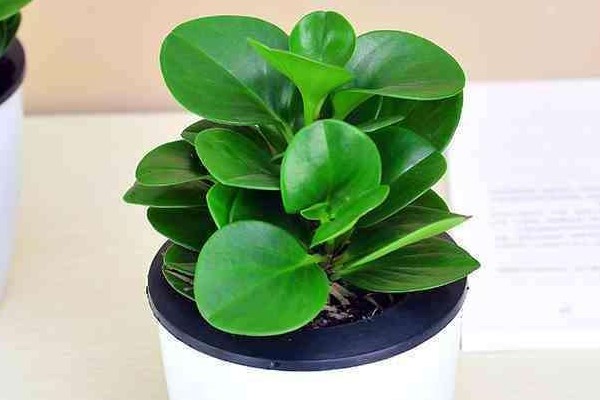
These plants are all great, and if you like them, you can try growing them at home too. Today, Huahua will introduce another green leafy plant. This plant is called peperomia, also known as wax-leaf peperomia. Just from the name, you can tell that this plant's leaves are as beautiful as green jade.
That's right, it really is so. Not only is the peperomia's color bright and glossy, but its leaf surface is also very smooth, oily green and glossy, which people find very appealing. Today, Huahua will tell everyone how to grow peperomia at home.
The environment peperomia likes to grow in is exactly the comfortable temperature of autumn, with the ideal temperature between 20-30 degrees, so in the hotter summer or colder winter, be sure to take measures to cool the peperomia down and protect it from the heat. In winter, the ambient temperature for peperomia is best kept between 10-15 degrees. If it drops below 10 degrees or even to 5 degrees, the peperomia may suffer cold damage or even freeze to death.
Because it is a foliage plant, when fertilizing peperomia it is best to apply nitrogen fertilizer, as nitrogen fertilizer helps the growth of peperomia leaves. When the temperature is comfortable in spring and autumn, you can fertilize once every half month, mainly using diluted liquid fertilizer. Too high a concentration or raw fertilizer can burn the plant and kill it. In summer, peperomia enters a dormant period just like in winter, so there is no need to fertilize it at that time.
Peperomia likes a moist growing environment. During the growing season, that is, in spring and autumn, you can water it once every 2-3 days. In summer, it needs watering every day, but do not choose to water at noon; it is best to water in the morning and evening. In winter, watering once a week is enough. During everyday care, you can also sprinkle a little water on the peperomia's leaves to keep them oily green.
Peperomia likes acidic soil, so when first planting it, it is best to add some soil containing humus to the potting mix. The soil should be both loose and well aerated, to prevent too much water from collecting in the pot and smothering the plant.
So, don't you think growing peperomia is actually very easy? For a plant like this with two dormant periods, whose leaves grow oily green and can also decorate the home, it would really be a pity not to keep one at home.
Are you tempted? Come and grow one!