Orchid hasn't bloomed after 2 years of care? Pay attention to these 5 points and blooming won't be difficult
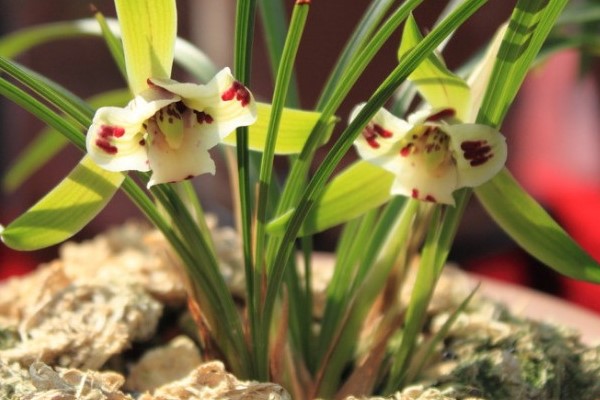
Orchids are loved by many people because of their high ornamental value, but perhaps "beauties" are all "dangerous" - seeing the wonderful sight of them blooming is truly too difficult. Huahua always thought her usual care was as thorough as could be, yet the orchid at home seemed not to appreciate it. With no other option, Huahua had to consult a professional, and only then learned that orchid care has to be done this way to work!
1. Pay attention to light intensity
Orchids are very afraid of being scorched by the sun, so when caring for them we should try to place them in a shady spot, and take shading measures in all three seasons of spring, summer and autumn to avoid the sunlight burning the leaves. If the morning temperature is not too high, you can put the orchid outdoors for a while, which can strengthen its functioning intensity, and the blooming speed will likewise be faster!
2. Pay attention to appropriate watering
There are many varieties of orchids, so before watering it is best to first understand the watering habits of different varieties and then proceed. Generally, the amount of water given to orchids should be kept at a moderate level, so that the potting soil is neither too dry nor too wet. In spring and autumn, watering about once every 3 days is enough. In summer, when the temperature rises, this is exactly the orchid's growing season, so it needs watering twice a day; when watering, be careful to prevent water droplets from falling on the leaf surface and causing black rot. In winter, watering once a week is fine, because at this time the orchid is in a dormant state.
3. Pay attention to fertilization intensity
During the growing period, orchids need the potting soil changed once a year, and at the same time need fertilizing twice. The first time, fertilizer needs to be mixed into the soil, usually a compound fertilizer containing nitrogen; the second time, it should be changed to a thin fertilizer solution or a foliar fertilizer. After fertilizing, the orchid will grow more vigorously, and the blooming speed will naturally increase as well. In fact, if conditions allow, before the orchid blooms we can also spray some plant ash solution and the like onto the leaves for care.
4. Pay attention to suitable temperature
Generally, the best growing temperature for orchids is within 15-20 degrees, so in autumn and winter friends in the north need to keep orchids warm. In winter, as long as the indoor care temperature is not lower than 10 degrees, it will not harm the orchid, and when the Grain Rain period arrives, the orchid can be moved outdoors for care.
5. Pay attention to the choice of soil
The soil for planting orchids is generally mainly leaf mold, which contains a large amount of nutrients and has fairly good air permeability, so it is very beneficial to orchid growth. If you cannot find this kind of soil, you can also use homemade cultivation soil for care.
Huahua believes that as long as you pay attention to the above 5 points, with careful care you can still see the wonderful scene of an orchid blooming. If you have any other care questions, you are also welcome to leave a message for Huahua!