Succulents taking over the balcony with no room left? Here's how to solve your care problems
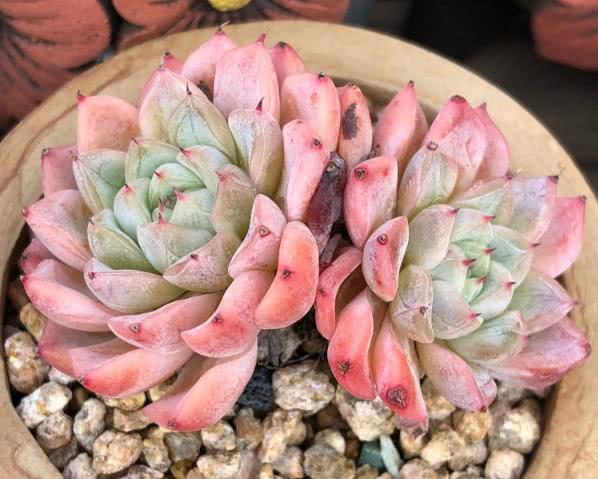
How do you deal with root rot in succulents? Pull the succulent out; if the substrate is still wet, tip it out too and let it dry before reusing. If the substrate is rather poor, it is advisable to switch to a general succulent substrate. Be careful when pulling it out. Clean the succulent's roots thoroughly, and use scissors or a small knife to cut off the rotten, dead roots. Before using the scissors or small knife, it is best to dip them in 75% alcohol, or pass them through a flame. After cutting, disinfect the wounds with potassium permanganate or carbendazim. Then place it in a cool spot and let it dry for two or three days before planting.
Plant the succulent again, and do not make the substrate too wet. Once planted, place it in a cool, ventilated spot with plenty of light. There is no need to water at first; roots usually form in about 10 days, and once it has gradually stabilised you can water little by little. This time you really must be careful with watering. You can also use a narrow-necked bottle with water in the bottom and set the succulent in the neck, taking care that the roots do not touch the water. This encourages root formation.
Are the leaf tips of your succulent withering? If only the lowest leaves wither, that is normal metabolism. The plant draws the nutrients back from old leaves to supply the growing points. If it happens on the whole plant, it may be due to too little water, shrivelling, or temperatures that are too high so the roots cannot take up enough water. Pay attention to controlling watering, and follow the rule of letting the soil dry before watering again.
How should succulents be cared for during their dormant period? Some succulents enter dormancy in summer, their outer leaves wither, and the plant itself has stopped growing. In this case, growers should change their usual watering frequency and reduce watering as much as possible. Wait until you find the pot has completely dried out, then give it a slight bottom soak. Or use a spray bottle to sprinkle clean water around the side of the pot, which also gently raises the air humidity.
In summer, when the sunlight is fairly strong, appropriate shading can reduce sunburn on succulent leaves, but the succulent is still in a high-temperature environment. Growers can move the succulents directly into a cool, well-ventilated indoor space and simply let them spend the summer indoors. Once autumn arrives, move them back outdoors for care. Although keeping succulents indoors can cause some leggy growth, it helps them get through the summer safely.
Soil: succulents require loose soil texture, with no overly fine dust particles in the soil; moderate fertility, with no undecomposed organic matter; neutral or slightly acidic (only a few species like slightly alkaline soil); and rich in organic calcium. Therefore, the growing medium should be mixed in certain proportions.
Fertiliser: fertilising is generally done in spring and autumn, stopped during the high temperatures of midsummer, and in winter, if heating is available, you may fertilise species that continue growing or flowering in winter, but for most species absolutely no fertiliser. With fertiliser concentration, remember: better weak than strong; it is better to fertilise several times than to risk one application of strong fertiliser.
This is a gathering place for succulent lovers, sharing succulent care tips. Welcome to follow and join the conversation.