Is fertilizing during the flower bud stage of Chinese Cymbidium beneficial? Do it right and next year's new shoots will be more numerous and stronger
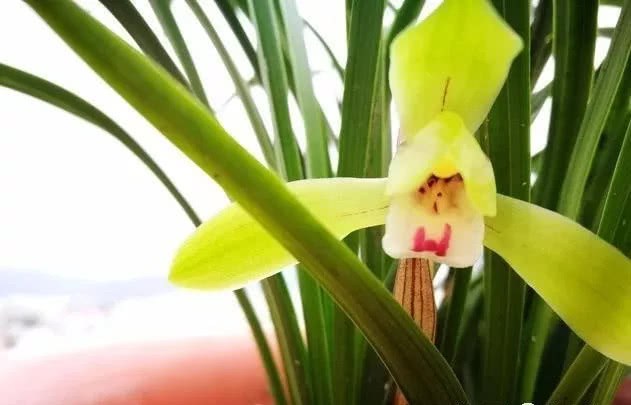
How to fertilize Chinese Cymbidium during the flower bud stage is a question that troubles many novice orchid growers. Haoshe Farmer generally does not fertilize, because my potting medium has enough lasting fertilizer effect for the year. But I have also tried fertilizing Chinese Cymbidium during the bud stage, and the results were quite good.
Fertilizing Chinese Cymbidium during the flower bud stage has two benefits. First, it provides the energy the plant needs for blooming, so it does not consume too much of its own nutrients and cause the plant to weaken. Second, it lays a solid foundation for next year's new shoots, which will emerge faster, more numerous and stronger than those of unfertilized plants. So if you fertilize Chinese Cymbidium properly during the bud stage, growing the plants next year will yield twice the result with half the effort.
Chinese Cymbidium generally begins to develop flower buds at the end of August, and at this time the flower buds are mostly under the soil. Newly sprouted flower buds are very tender, and if they accidentally come into contact with fertilizer, they can easily rot and die. From the end of September to the end of October, the flower buds break through the soil and become true flower buds, and only after going through low-temperature vernalization can they bloom into fragrant orchids. Fertilizing Chinese Cymbidium during the flower bud stage refers to the period from the end of August to the end of October, when the temperature is still warm, the orchid roots absorb fertilizer well, and there is no buildup of fertilizer that could rot the roots.
What fertilizer is best to use during the flower bud stage? Haoshe Farmer believes organic fertilizer should be the main choice, generally referring to various fully rotted cake fertilizers, farmyard manure and so on. Combine this with foliar spraying of a phosphorus- and potassium-based foliar fertilizer, attacking from both above and below to provide comprehensive nutrient supply.
Of course, for convenience, urban orchid growers can also use chemical fertilizers. Haoshe Farmer has emphasized many times that chloride-containing fertilizers must never be applied to orchids. What we commonly use is potassium sulfate three-element compound fertilizer. Orchid growers with the resources can also use slow-release fertilizer specially made for orchids, which is relatively safe.
In short, no matter what fertilizer you apply, remember one principle: it must not come into contact with the flower buds, and the flower buds must be kept in a safe range. When foliar spraying potassium dihydrogen phosphate, there is no need to worry about the flower buds. Haoshe Farmer has tried this many times, and as long as the fertilizer solution concentration is safe, it will not cause fertilizer damage to the flower buds.
During the flower bud stage of Chinese Cymbidium, besides fertilizing, even more attention should be paid to the need for light. Flower buds without light will find it very difficult to bloom, and even if they do bloom, they will not be fragrant or long-lasting.