How to care for orchids in early autumn? Avoid these 3 points to prevent rot and root decay
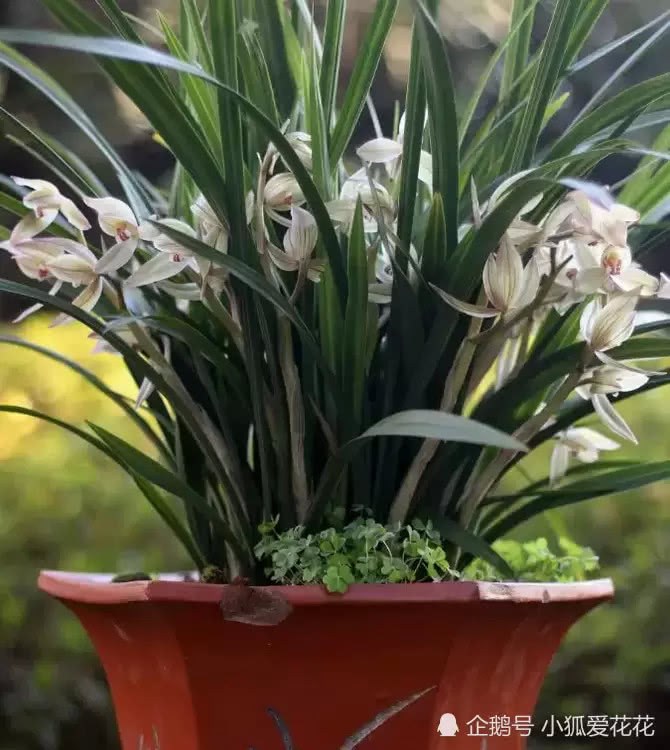
Now that autumn has arrived, it is also the best season for orchid growth. Flower enthusiasts are busy planning to buy orchid seedlings to plant, and after planting them, they are full of expectation, imagining that the orchid seedlings can grow healthily and bloom.
But although the orchids do grow, they always rot. What exactly is the reason? In fact, when this happens, there are mainly 3 wrong reasons. If you make the following "3 points" of mistakes, the seedlings will rot and the roots will decay.
Point 1: Closing windows and isolating them, infecting the root system
Some flower enthusiasts plant orchids in a relatively dry environment, and in this kind of environment orchids will grow slowly. At this time they start to get anxious and think about closing the windows to raise the humidity in the air. Although autumn has arrived, the weather is still rather muggy. Closing the windows not only fails to raise the humidity, but the orchid seedlings rot first. It really makes one feel deeply distressed.
We can sprinkle a few drops of water into the air. If the weather is too muggy, water less. On rainy days, if water accumulates in the pot, you can make a few small holes in the pot wall so that the excess water can naturally overflow.
When growing orchids, ventilation is very important. No matter how dry the air is, you must not reduce the amount of ventilation for the orchids, otherwise it is very easy to breed bacteria and infect the root system, and root rot is unavoidable. If you are in a house, you should open the windows every day. If the airflow is too weak to meet the ventilation conditions, you can use an electric fan for directed air exhaust.
Point 2: Improper use of "fertilizer", causing root rot
Autumn is the season when orchids sprout and bloom. Some flower enthusiasts see that other people's orchids have already bloomed in great numbers, while their own show no movement at all, and start anxiously using things to promote flower growth, such as phosphorus and potassium fertilizer and homemade fertilizer. If you use homemade fertilizer that has not been fermented, some problems will appear, such as rotting seedlings and burning roots, and the loss will outweigh the gain.
But if you really want to use homemade fertilizer, you can use grape skins, fish scales, and tomatoes. These are all good fertilizers. Grape skins and fish scales can be sun-dried and ground into powder, then put into a bowl. One bowl's amount can be mixed with 1000 milliliters of water for spraying. Tomatoes should be chopped into small pieces and mixed into the soil; they must not be too close to the root system.
If you want to promote orchid blooming, you can supplement with an organic nutrient solution that will not burn roots. This nutrient solution is fermented from sugarcane bagasse. Its method of use is also quite simple. Just drop 2 drops into 600 milliliters of clean water, shake evenly, and spray. It can comprehensively promote orchid growth.
Point 3: Not taking "anti-rot" measures, breeding bacteria
Although summer has passed, autumn still has hidden dangers, and it is also a stage when orchid seedling rot occurs frequently. If anti-rot measures are not done well, the entire orchid plant may be wiped out. Therefore, in order for the orchids to pass through this dangerous period more safely, we need to take corresponding anti-rot measures for them.
Under normal circumstances, using some carbendazim is enough, but the amount used for seedlings of different sizes is different. For large seedlings, it can be diluted with water 800 times; for small seedlings, it can be diluted with water 1000 times. Usually pay more attention to the sanitation of the orchid's living environment, and clean up the garbage near the orchids at fixed intervals to avoid bacterial growth causing root rot.
Little Fox warmly reminds flower enthusiasts to note that the above 3 points of mistakes must not be made, otherwise the orchid seedlings will rot. Of course, as long as these mistakes are not made, the flowers will naturally bloom in neat unison!