2 steps to grow purslane into a high-priced bonsai: experts won't sell it no matter how much money they're offered
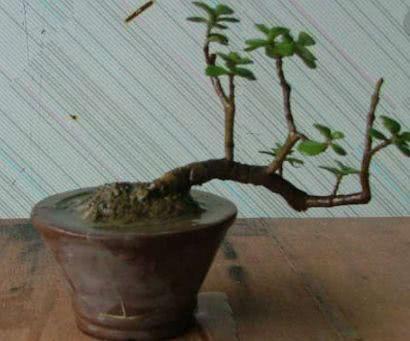
Everyone must have heard of purslane. Purslane is also known as ant grass. Many people born in rural areas will certainly know it, but many people have never thought that purslane can be developed into a bonsai, because the purslane you usually see grows on the ground and is very small.
However, what everyone does not know is that purslane has a very large classification among plants and belongs to the purslane study subject. Therefore, there is a type of purslane called the "purslane tree," also known as "golden branch and jade leaf" (Portulacaria afra, the elephant bush). This plant is a shrub-type purslane plant with very good ornamental value and can be grown as a potted plant.
Therefore, we should not be foolish enough to think that purslane is usually too ordinary. A flower-growing expert will cultivate the purslane tree into a high-priced bonsai in two steps, very beautiful and spectacular, and will not sell it in any way. In fact, these two steps are fertilizing the purslane tree with fertilizer, and also using pruning methods to cultivate the purslane tree into a high-priced bonsai, and then carefully introduce it to everyone.
The growth habits of purslane:
Purslane is a shrub in the Amaranthaceae family. Its branches are woody and very thick, so they can be used to make bonsai. The leaves of purslane are very oily green, plump and glossy, very beautiful. Purslane is a succulent plant, so its soil is very loose and breathable. If we want purslane to grow very vigorously, we also need to give purslane sufficient light, and it is recommended that a light duration of 10 - 12 hours is best.
The fertilization method for the purslane master's bonsai cultivation:
If the purslane tree is to grow into a high-priced bonsai, the fertilization step cannot be ignored. Only fertilization can make the branches and leaves of the purslane tree more robust. However, the fertilizer elements required by plants are usually mainly nitrogen, phosphorus and potassium, so the master uses the natural organic fertilizer worm castings to cultivate the purslane tree. This kind of worm castings is rich in nitrogen, phosphorus, potassium and other substances, is purely natural and pollution-free, and does not burn roots, so it can be used freely and is very easy to use, so that the purslane tree can get very good nutrition.
The pruning method for purslane:
We all know that the value of a bonsai is not about being as tall as possible, but about being as woody and original as possible, which makes it more valuable. Therefore, we still need to prune purslane and cannot let purslane grow too long. Because every plant has the characteristic of apical dominance, we need to use the method of pinching the top to inhibit the excessive growth of the purslane tree, thereby making the plant stronger. The method of picking the center and the top is to prune the top branches of the plant, so that the side branches of the plant will become stronger.
Through the above two steps, the master cultivated the purslane tree into a "high-priced bonsai," with strong and powerful branches, thick and broad leaves, and an extremely strong temperament, and will not sell it in any way.