This vicious toxic grass in farmland looks like bamboo but is very precious; nowadays it sells for 15 yuan per jin.
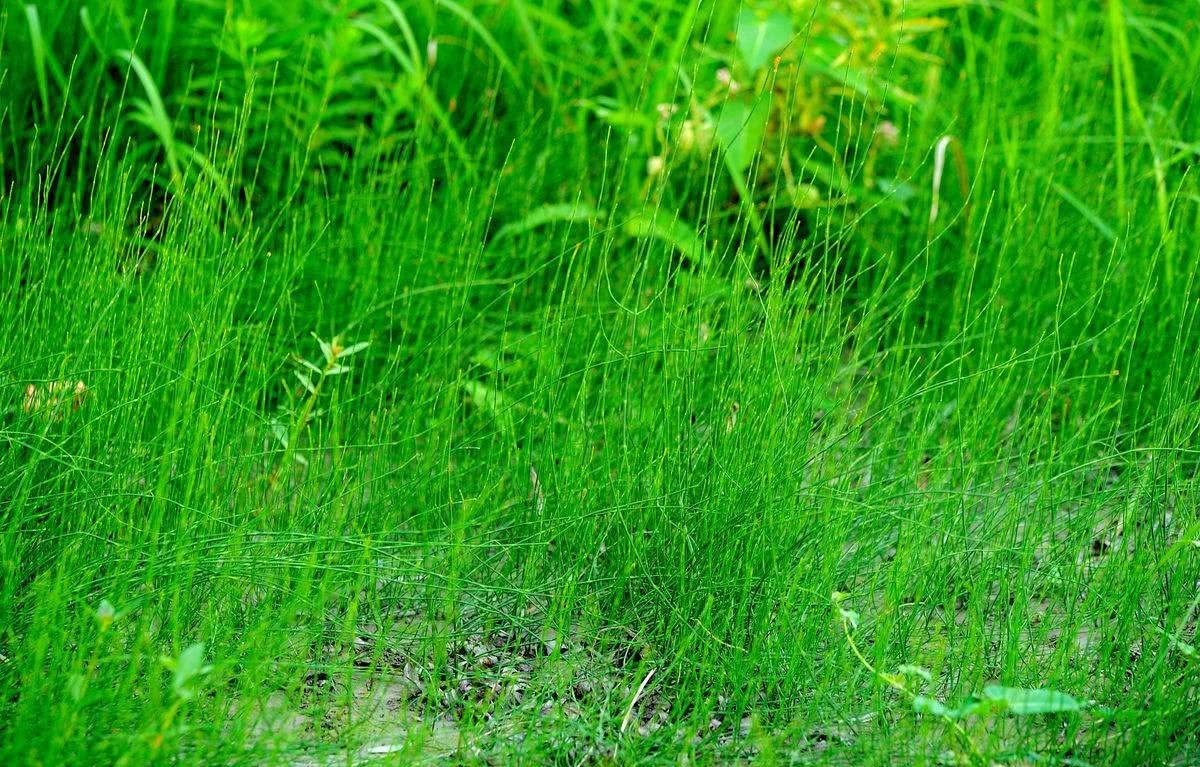
Our country is vast in territory and rich in resources, with abundant wild vegetation. Most of these wild plants are distributed in rural fields and mountain forests, so for farmer friends, wild plants are also common in daily life. Quite a few wild plants are loved by farmer friends, such as those edible wild vegetables and wild fruits, like Houttuynia cordata, dandelion, Rosa roxburghii, wild grapes, and so on. Of course, where there are favorites, there are naturally also things people hate and detest, namely the weeds and harmful grasses that grow near crop fields for a long time. Below, the author will introduce one such harmful grass at the field edge. It makes farmer friends detest it endlessly, but this harmful grass is actually very precious in value.
Speaking of this wild grass, for many farmer friends who farm, it can be described as an extreme headache. This wild grass looks like bamboo, with one node after another, so this wild grass is also called "bamboo-node grass" or "jointed grass."
This jointed grass is a common wild grass in rural areas of our country. It most likes to grow at the edges of paddy fields, orchards, and tea gardens. It is a common weed in summer-harvest crops such as wheat and rapeseed, in autumn-harvest crops such as cotton, corn, and sweet potato, and in fruit tree orchards and tea tree gardens. It is also a perennial weed. If it is not removed, it can grow for several years and will seriously damage crops.
In a garden in Heze, Shandong, our country, there is one such jointed grass plant. It has grown for many years (it is said to have grown for about a hundred years), covers an area of about 3 sq m, and the stems growing above the ground have already become woody.
From this, one can see how serious the damage to crops would be if this jointed grass were allowed to grow freely.
This jointed grass is not only harmful to crops, but is also a toxic plant, and the whole plant is toxic. Ordinary weeds, after being removed, can still be used to feed pigs, cattle, and other poultry and livestock, but because jointed grass is toxic, after being removed it can only be thrown away. So many farmer friends regard it as a kind of "vicious toxic grass."
So does this jointed grass have no value at all? Actually, no. Although jointed grass is a harmful grass in farmland and is toxic, its value is not small. As early as ancient times, people had already studied it.
Li Shizhen of the Ming Dynasty once said, "This grass has joints, and its surface is rough and astringent. Those who treat wood and bone, when using it to rub and wipe, make it smooth and clean, just like the thief of wood." This not only points out the origin of jointed grass, but also speaks of its use.
So what exactly is jointed grass useful for?
According to records in books such as the Compendium of Materia Medica and Bencao Bianfang, jointed grass is also called "earth ephedra" and "grass ephedra." The whole plant can be used as medicine, and it has many effects such as dispelling wind and dissipating heat, relieving muscle and reducing fever, clearing heat and promoting urination, and improving eyesight. It can be used to treat many symptoms such as condyloma acuminatum, psoriasis, cough and phlegm, red swollen painful eyes, pain of muscles and bones, and traumatic injuries. Therefore, although this jointed grass makes many farmer friends detest it endlessly, among the people it is indeed a very good Chinese herbal medicine, and it was already used in ancient times.
It is precisely because jointed grass has these values that, although it is a toxic harmful grass, its value is still very precious. So much so that in some Chinese medicinal herb markets, dried jointed grass can still sell for about 15 yuan per jin.
So everything has two sides, and one cannot deny it by looking at only one aspect, just like this jointed grass: on one side it is a toxic harmful grass, and on the other side it is a medicinal herb that can treat illness.
Of course, although jointed grass has medicinal value, the author does not recommend using it casually. It is best to consult professionals, to avoid problems.
Dear friends, do you know about jointed grass? You are welcome to leave a message and exchange views!