Why can't you ignore plant age when growing roses?
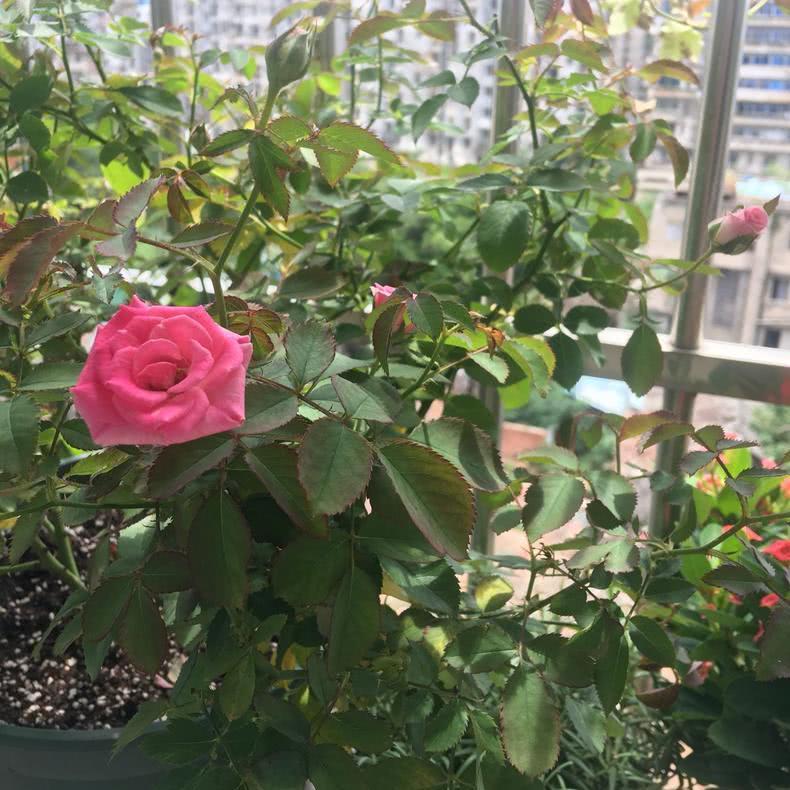
Everyone grows roses, and you probably know that a rose's life is limited. Even if it has always been grown well with no mistakes, over time, even if it is still alive, its vigor will be restricted, just like what we commonly call youth, middle age and old age - roses are the same.
Since roses also have age stages, it is inevitable that many flower growers mistakenly end up with roses in their twilight years, and as a result their vitality is poor, they do not sprout and do not bloom, leaving the growers at a loss.
This kind of old rose is most commonly seen in old cut-flower rose stumps. They are all culled from cut-flower roses. Generally, the requirements for cut flowers are higher than for ordinary roses, because once a cut-flower seedling exceeds a certain age, its flowering quality declines. So as fresh cut flowers they are somewhat marginal, and therefore the plants are replaced fairly quickly.
The time classification of cut-flower roses is slightly different. It is divided into 3 stages: the seedling stage, the production-flowering stage and the decline stage. Obviously, the seedling stage has the strongest vigor and vitality, so its flowering performance is much better. By the time the nursery has grown the cut flowers for about 3 years, their flowering performance and growth vigor gradually decline noticeably, and the greenhouse will cull this batch of cut flowers, which are used for batch profit. This is why greenhouses cull bare-root plants.
So these culled old stump seedlings are the key to many flower growers being fooled. The vigor and vitality of these seedlings are far inferior to fresh cut-flower roses, their flowering performance gradually declines, and slowly there are no flowers to bloom. Since their performance is so poor, why do flower growers still get fooled?
Let's analyze this specifically. For example, old cut-flower rose roots culled from 3-year-old or 5-year-old plants are then sold off cheaply. Seedlings that should have been culled end up making another round of profit through volume sales. And although flower growers see that they are old stumps, they waver because of the price and the flowery sales pitch that follows, and ultimately fall into the seller's trap.
Generally in nurseries, this kind of root is culled once every 3-4 years. After all, over time the flowering performance becomes much worse. Many times, for cut flowers, various hormone fertilizers are applied, and many culled roots are simply thrown away in the fields, useless. Personally, I suggest buying 1-year-old to 2-year-old seedlings for large-flowered roses. Such seedlings are absolutely the mainstay in terms of both activity and flowering performance. Be cautious about buying those aged seedlings.
Nowadays, classic rose varieties are basically around ten yuan, not very expensive. There really is no need to buy old stumps, and although propagating existing varieties by cuttings and transplanting takes a bit of effort, it is also a very good propagation method. We really have no need to take on the challenge of old stumps.
In addition, I also want to remind everyone not to be fooled by perfect descriptions. It is not that big roots mean strong activity, or that cheap and sturdy means good seedlings. You still need to learn to judge, and not always spend money to make trouble for yourself.