How to grow Alocasia macrorrhizos (giant taro)? Master these four points and the leaves and branches will grow more and more luxuriant
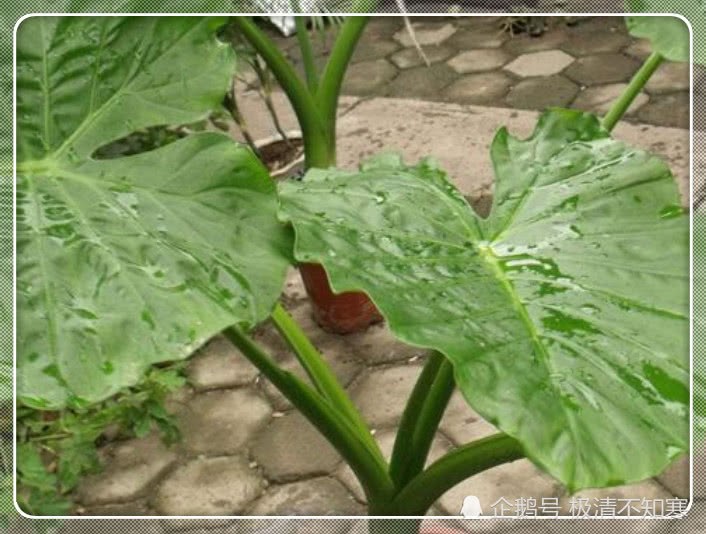
Alocasia macrorrhizos is a very common green houseplant, but because it is a tropical plant, it generally does not bloom in the north, though if the temperature and other conditions at home are suitable, it will also bloom. Today we will mainly explain the daily care of Alocasia macrorrhizos, so let us take a look together below.
The first point, the requirements for soil. Although Alocasia macrorrhizos does not have very high requirements for soil, we have tried ordinary garden soil, nutrient soil and pure sand soil, and found that Alocasia macrorrhizos grown in garden soil grows relatively slowly, is thin and weak, and looks malnourished.
But Alocasia macrorrhizos grown in pure sand soil grows well during the seedling stage, yet the later effect is not good, and the Alocasia macrorrhizos is relatively short. Alocasia macrorrhizos grown in nutrient soil is boat-shaped, with large leaves, and grows very fast. The second point, what kind of flowerpot to use? If a flower-growing friend wants a small potted plant, then there is no problem growing Alocasia macrorrhizos in a small pot.
Moreover, because the roots of Alocasia macrorrhizos are restricted, it will not grow very large. But if the friend hopes Alocasia macrorrhizos will grow very big and be placed in the living room as a large green plant, then a larger flowerpot must be chosen. According to experience, the larger the pot, the stronger and better Alocasia macrorrhizos grows.
The third point, the environment it likes. Alocasia macrorrhizos likes a semi-shaded environment, though some Alocasia macrorrhizos directly in the yard also grows very well. Here we need to explain why it is said that other people's plants can grow very well in a certain environment. The plant itself has a process of adapting to the external environment. Although Alocasia macrorrhizos likes a semi-shaded environment, in order to survive it will also adapt to other environments, but this requires a process.
The fourth point, the watering method. Most plants grow fastest in slightly moist soil. For Alocasia macrorrhizos in a small pot, water as soon as the soil is dry, and make sure water can flow out from the bottom of the pot. For a large pot or deep pot, when the soil surface is dry, you can dig open the surface soil and look at the color; if the soil below is moist or damp, then you do not need to water. Generally speaking, after one deep watering, there is no problem going half a month, or even a month, without watering. Have you remembered all the points above? You can follow and leave a comment!