How much do succulents get affected by air humidity?
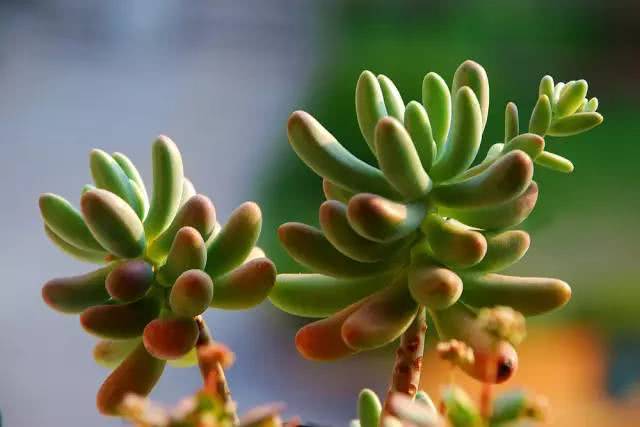
Some succulent enthusiasts often notice this problem: a prized succulent newly picked up from the flower market loses the proud look it had when it first "moved in" within just a few days.This is actually a matter of air humidity.
In dry northern regions, the best place to grow succulents is your ownopen-air balcony, or a windowsill, and this point is especially important.
So why do these problems occur?
And why is air humidity so important?
The succulents sold at flower markets are all produced in nurseries; such plants are grown in greenhouses, and greenhouses are kept closed for most of the time, so the air humidity inside is relatively high. Plants grown this way are plump and full of vitality. However, after they are purchased, the home growing conditions in most regions often cannot match this, so the problems described above appear.
Aren't succulents all growing in harsh desert environments? So how do they make use of air humidity?
In the native habitats of succulents, the temperature is high for several hours before the sun sets (especially at noon), but at night the temperature drops sharply, so water vapor in the air condenses to form mist, which is especially noticeable at dawn. Thismoisture existing in gaseous form can also be absorbed by succulents. The conditions in most growing locations are still insufficient. This does not even include some epiphytic varieties and certain Bromeliaceae plants that have even higher requirements for air humidity.
It is preciselybecause of the limitations of the growing locationthat many plants show fading color, scorched and shriveled leaf tips, and premature aging. Yet this is not seen in greenhouse cultivation. Although it is not fatal, the ornamental value is greatly reduced.
The most effective method is very simple: use a fine-nozzle spray bottle to mist them. Many enthusiasts also invert a disposable plastic cup over the pot (mostly in spring and winter). Alternatively, grow them in a glass tank with a layer of coarse sand on the bottom, and sprinkle water on it from time to time; this can increase humidity without constantly flooding the pots. In short, adjusting air humidity must take many factors into account, including species, season, and growth stage, and absolutely must not be generalized. Too high humidity makes plants prone to rot and likely to attract scale insects; too low humidity reduces ornamental value and makes plants prone to red spider mites.
Humidity recommendations
1
Air humidity requirements for each season
Maintaining a certain level of air humidity during the growing period is quite important.When plants enter the growing period, the effect of air humidity is obvious. Species native to tropical rainforests have even stricter requirements. Some horticultural varieties rich in color changes will have more brilliant colors if considerable air humidity can be maintained. It can be said that basically most varieties need a certain amount of humidity at this time. But duringthe dormant period, air humidity must be controlled quite cautiously.
2
Air humidity at the seedling stage
Air humidity at the seedling stage is especially important, because during the seedling stage there is a process of "hardening off." At this time, controlling the moisture in the soil is intendedto encourage new root growth; if relatively high air humidity can be maintained, the seedlings will not suffer from water shortage because of hardening off. Generally, the air humidity requirement at the seedling stage is higher than at other growth stages, but at this time air humidity is also the hardest to manage.
The smaller the seeds, the smaller the seedlings are relatively, and the poorer their resistance, so they often cannot tolerate high humidity. Typical examples are most varieties of Aizoaceae and some varieties of Crassulaceae (with Begonia semperflorens being the most prominent). Once they are established, this phenomenon improves greatly, and the issue of air humidity is no longer so prominent.
3
Air humidity requirements for asexual propagation
There are two commonly used methods of asexual propagation at home: cuttings and grafting.For cuttings, note that the plant organs must be kept dry for the few days after being separated from the mother plant. This time period depends on the variety: as little as 4 or 5 days, or as long as 1 month. After the wound has completely dried, it can be inserted into the medium. At this point relatively high air humidity can be maintained. One view advocates creating a dry environment, which allows rooting in a shorter time but consumes more.
Another view advocates creating a humid environment; this method consumes less from the cutting. As for grafting, during the first two weeks after grafting is completed, dryness and ventilation must be maintained, because excessive humidity affects the survival rate of grafting.