Leftover food transforms into Food Grace, Hong Kong labor group joins forces with vegetable vendors to practice social mutual aid
Hong Kong, just over an hour's flight from Taiwan, China, is an international metropolis all too familiar to people in China. If asked about their impression of Hong Kong, besides Hong Kong stars and TV dramas, what may come to mind are images of tall buildings, shopping malls and the harbor. Yet can you imagine that Hong Kong's green space coverage is actually 70 percent!
During the British colonial era, out of strategic considerations, the Hong Kong government kept Hong Kong at a certain scale of agricultural production, and before the 1960s, Hong Kong's local vegetable self-sufficiency rate could even reach 30%; however, it was also in the 1960s that Hong Kong, as one of the Asian Tigers, saw rapid economic development; at the same time, economic output value replaced strategic considerations, and the value of agriculture began to be denigrated. Economic development led to a surge in population, and as the importance of agriculture declined all the way, wave after wave of actions to develop farmland into new towns came surging in, nibbling away and swallowing it up, until agriculture was completely abandoned.
In 2015, Hong Kong's vegetable self-sufficiency rate was less than 2%, and its rice self-sufficiency rate was below 1%. Although Hong Kong relies almost entirely on imports for its food, one third of the garbage thrown away by Hong Kong people every day is food waste, which is a great irony. Faced with such a situation, how does Hong Kong society respond?
Food waste reduction action after the financial tsunami
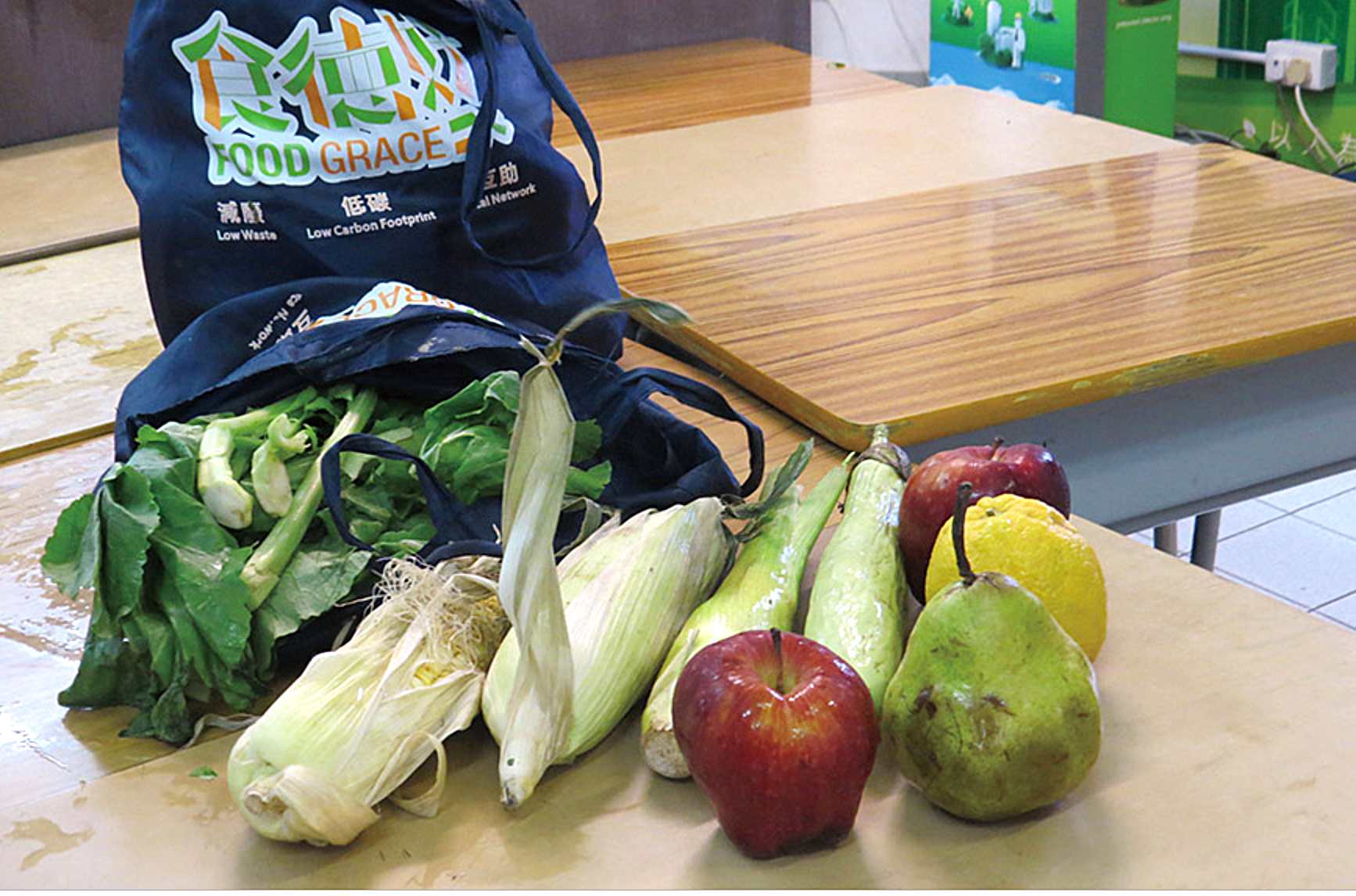
Around 2009, Hong Kong was hit by the financial tsunami, and severe price increases damaged the economic balance of many working families who were barely making ends meet; at the same time, large amounts of usable food were discarded, occupying various storage spaces and increasing disposal costs. The Hong Kong Confederation of Trade Unions' Confederation of Trade Unions Education Fund therefore launched the "Food Grace" food recycling program in 2009, using a model of "Low Waste, Low Carbon Footprint, Local Network" to carry out waste reduction and resource reuse, hoping to improve Hong Kong society's problem of wasting food and other resources, and to enable people of any class to "eat with grace" (eat well).
The "Food Grace" program currently has one food recycling center in each of three districts, Tai Po, Yuen Long and Kwai Tsing. This is the first time in Hong Kong that an organization, and a labor organization at that, has systematically paid attention to the problem of food waste and reuse.
(Originally published in Green Advocacy Monthly, September 2018, issue 178)