Add 3 of these when fertilizing the Portulacaria afra, and it beats other fertilizers; leaves stay green, stems grow thick, and it turns into an old stump
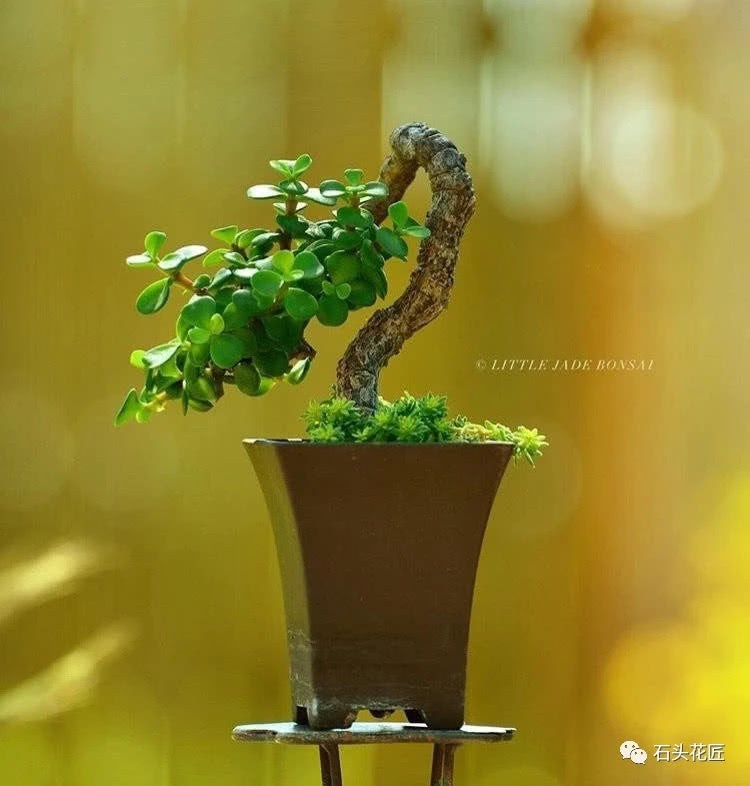
More and more friends are getting into growing flowers, and many people keep some plants and flowers at home, which not only beautifies the room but also purifies the air. What matters is that keeping some green potted plants at home can also help people relieve fatigue and benefit the family's health.
Friends who grow flowers all want their plants to grow lush and sturdy. Take the very common Jinzhi Yuye, whose scientific name is actually Portulacaria afra (elephant bush); it is a household plant that is very suitable for growing in pots. Portulacaria afra is not only easy to grow, but when kept in a pot it can also be pruned into a bonsai for care, and placed in the living room or on the balcony it looks very classy.
Now that we are gradually entering late autumn, which is also an important period for the rapid growth of Portulacaria afra, fertilizing Portulacaria afra in autumn is very crucial. Today I will share a very simple and effective fertilizing method, which is to apply soybean fertilizer directly to the Portulacaria afra.
Because Portulacaria afra is a foliage plant, it has a very high demand for nitrogen fertilizer. During the growth process, if nitrogen fertilizer is sufficient, the plant will grow lush branches and leaves. So when growing Portulacaria afra in autumn, adding nitrogen fertilizer to the plant, the simplest fertilizing method is to use soybean fertilizer. Because soybeans are rich in protein and extremely rich in nitrogen. Bury the treated soybeans in the Portulacaria afra pot, and after fermentation they can provide the plant with abundant nutrients.
The specific operation is very simple: after boiling the soybean grains, put them on the windowsill to cool, then dig a small hole at the edge of the Portulacaria afra pot. Depending on the size of the plant, you can put in 3-5 boiled soybean grains, then cover them with soil. Let the soybean grains ferment naturally in the soil, and the soybean fertilizer produced can provide nutrients for root growth.
This fertilizing method is simple and convenient to operate, and there is no need to ferment the soybeans. Friends who have used soybean fertilizer all know that soybeans produce a foul smell during fermentation, and they must be fermented for at least two weeks before use. But this method of directly burying boiled soybean grains at the edge of the pot and covering them so they ferment naturally in the soil will not produce a foul smell, and the fertilizer takes effect quickly.
With abundant nutrients, Portulacaria afra can grow even faster in autumn. Many friends hope that the Portulacaria afra they grow can grow sturdy and become an old-stump bonsai. Of course, to make Portulacaria afra grow into an old stump, relying only on fertilizing is not the decisive factor; in daily care you must also pay attention to watering, pruning and lighting.
Watering
Portulacaria afra likes to grow in moist soil, so during care it is enough to keep the soil moist. But when watering, you must be careful not to let water accumulate in the pot, otherwise it will cause the plant's roots to rot, and the loss will outweigh the gain.
Pruning
To make Portulacaria afra grow into an old stump, pruning is an indispensable step. Generally, apart from winter when pruning is not allowed, in the other three seasons, spring, summer and autumn, Portulacaria afra can be pruned. The pruning principle is: strong branches, heavy pruning; weak branches, light pruning. Generally, the strong branches are pinched at the top, which not only lets the branches grow more side buds and become fuller, but also makes the branches thicker. Friends who know how to make bonsai can also wire and bend Portulacaria afra into the bonsai shape they want.
Lighting
Portulacaria afra likes to grow in an environment with plenty of sunlight. Except in summer when the weather is hot and the sun is scorching, when you should pay attention to shading, in the other seasons it can be kept outdoors, increasing the light as much as possible.
Regarding the tips on fertilizing and caring for Portulacaria afra, if you find them useful, please like below, follow, and forward to more friends.
That is all for today's sharing, and see you next time.