These flowers are popular to grow now, beautiful and easy to care for, loved by everyone, better than pothos and spider plant
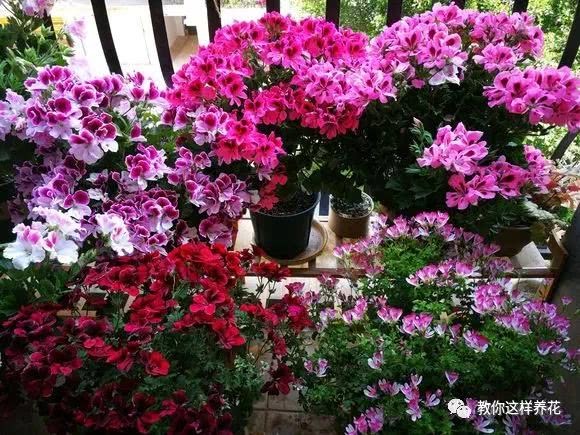
Autumn has arrived, and many flowers are blooming with all their might again. Pothos and spider plant look a bit monotonous after a while, so it is better to grow some pretty flowering plants. Here are several kinds of flowers that are beautiful and easy to care for, and some even have a delicate fragrance, loved by everyone. Let's take a look!
“
The flowers bloom beautifully"
-Geranium-
Geraniums are very beautiful, with many flower colors and lovely flower shapes. Their clusters of blooms are as big as hydrangeas, and they are relatively easy to care for, making them a favorite flower for many people. There are also some scented-leaf varieties whose flowers are not very showy, but the plants themselves carry a fragrance that can refresh the mind, make people feel clear-headed and energized, and also repel mosquitoes. There are many geranium varieties, and they are one of the flowers very much worth growing.
Temperature:Geraniums suit a climate that is warm by day and cool at night, and the overwintering temperature had best not be lower than 10°C.
Light:They like to bask in the sun, but the high temperatures and direct sunlight of summer make geraniums prone to disease and sunburn, so they should be shaded appropriately. In the other seasons, keep the light ample, which is good for growth.
Water:During the high temperatures of summer, watering should be reduced. In the peak growing seasons of autumn, winter and spring, keep enough moisture in the soil, but the soil must not be too wet. Water again once the surface of the soil in the pot has dried; do not water too much, to prevent water from not draining away and causing root rot.
Geraniums can be propagated both by sowing and by cuttings, and both are widely used. Sow in autumn and they can bloom in summer the following year. The optimum germination temperature is 20-25°C. Geranium seeds are not large, so after sowing the covering of soil should not be deep, and they germinate in about 14-21 days.
Geranium cuttings are also fairly easy: choose sturdy branches, leave about 10 cm, soak them in rooting solution and let them dry, and once they are slightly wilted insert them into a mixed medium of perlite and peat soil, cover with film to keep in moisture, and place in a cool, ventilated spot; they will root in 2-3 weeks.
-Pouch flower-
Pouch flower, also called pocketbook plant, can bloom for many years from a single planting. Its flowers are large, with a blooming period from January to April, and if given short-day treatment it can bloom all year round. Its flower colors include yellow, red and purple series, and it is an important greenhouse potted flower for winter and spring. What is popular on the market now are hybrid varieties bred over many years.
The pouch flower looks like a little money pouch. It is said that growing one pot can make your purse bulge and bring rolling wealth! So many people grow a pot of it, hoping for a wonderful meaning.
Temperature:Pouch flower likes a somewhat cool environment, and the most suitable temperature is 10-18°C. Above 20°C or below 8°C is not good for its growth.
Light:It likes bright light, but is also afraid of strong direct sunlight, so when cultivated in a greenhouse it does not need shading.
Water:When planting, make sure the container provides enough moisture, but do not water too much and cause waterlogging.
Propagation:Sow in mid-to-late August, using the fine-seed sowing method. After 3-4 rounds of transplanting and repotting, finally plant it in a flowerpot 12-15 cm in diameter, and it blooms between February and April the following year.
-Pouch flower-
Lewisia, also known as siskiyou lewisia, originates from the central mountain areas of the west coast of the United States and blooms from early spring into summer. Its flowers are white, with red stripes, red blushes or red spots in the middle. In the past it was planted in rock gardens, and now it is more popular as a potted plant.
Temperature:The most suitable growing temperature for Lewisia is 12-18°C; if grown in the open ground it needs to be covered. In spring, grow it at 15-18°C for 4-8 weeks; if the temperature is a little lower, extend the growing time a little.
Light:Lewisia is very sensitive to light; more sunlight can induce flowering, and in seasons with insufficient light you should also supplement its light.
Water:The root system of Lewisia is very sensitive to moisture. Watering can follow the principle of not watering until dry, and watering thoroughly when you do. In winter, keep it appropriately dry, otherwise the roots can easily die.
Propagation:July-August is the best time for sowing; sow this year and it blooms in April next year. After 12-14 weeks from sowing, it can be moved into a flowerpot.
-African violet-
African violet, also called African violet, is a perennial herbaceous plant. It can bloom all year round, with flower colors including purple, red, white, blue and bicolors. Because it is very short, it suits small potted varieties; its flower shape is handsome and elegant, and it can be placed in the living room, on the coffee table or in the study, with a very good decorative effect.
Temperature:African violets like a warm environment, and the suitable growing temperature is 18-24°C, with a minimum overwintering temperature of 16°C. When caring for African violets, be careful not to let the temperature swing wildly, as this can cause fatal damage to them.
Light:African violets like bright light or a semi-shaded environment, and do not like direct sunlight. If there is no sunlight, they can also grow very well under artificial light.
Water:Always keep the soil in the pot moist, and water when the soil surface dries. When watering, try to avoid pouring water on the leaves.
Propagation:African violets can be propagated by leaf cuttings. After the flowers fade, choose sturdy leaves, cut them off leaving a 2 cm petiole, let them dry slightly, and insert them into plain sand, vermiculite or perlite, keeping the air humidity high. They can root in about 20 days, grow seedlings after 1 month, and can be moved to a pot after about 2 months.
-Freesia-
Freesia, also known as freesia, is a perennial herbaceous plant. It generally blooms from May to September. Its plant form is delicate, its flower colors are rich and vivid, its fragrance is strong, and its blooming period is fairly long, so it is very popular. It can be placed in the living room or on a desk, and is very beautiful.
Temperature:The suitable growing temperature is 12-18°C by day and 8-12°C at night. Above 25°C the leaves will wither, and below 0°C the plant will be damaged.
Light:Freesia likes ample light. During the seedling stage in August-September, shade it slightly, and after October no more shading is needed.
Water:Always keep enough moisture in the pot, but do not water too much, to avoid waterlogging. When watering, be careful to avoid the leaf surface.
Propagation:Freesia is generally planted from corms in September. Flower bud differentiation begins in about early November and is completed in late November. Under short-day conditions, flower bud differentiation is favorably promoted. By May of the following year, the leaves gradually wither and the corms enter their natural dormancy period.
Although pothos and spider plant are good, they are slightly monotonous
Try these 5 kinds of flowers and let our flower-growing life become richer!
Show this to the flower lovers who need it!