Master 6 watering techniques for your plants and never worry about killing them with water again
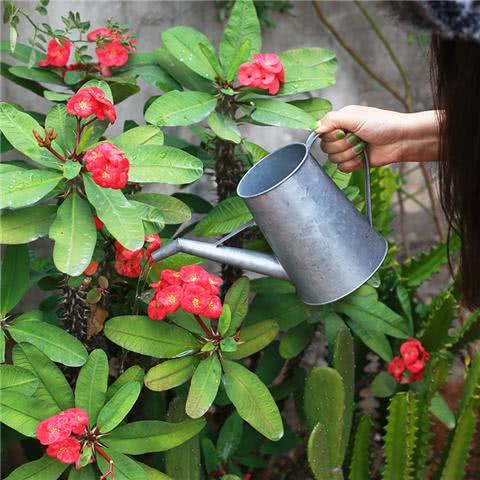
When growing plants, watering is an important task, and if you want to grow them well, you need to learn how to water. Too much or too little water is bad for the growth of flowers and plants, so you need to master the techniques to keep them growing healthily. Below are the 6 major watering techniques for growing plants!
(1). Water quality
The best water for watering plants is natural water; rain or snow water and the like is close to neutral and suitable for plant growth. You can also choose river water or pond water. If you use tap water, it is best to let it sit for 1~2 days first so the chlorine in the water dissipates. Do not use dishwashing water containing soap or dish soap, as it is better avoided and will kill the plants.
(2). Water temperature
The water temperature and soil temperature should be kept close, with a temperature difference of no more than 5°C. Generally, use warm water at 20°C~25°C to water plants, which can raise the soil temperature, speed up the decomposition of organic matter, and promote the absorption and division of root cells. In summer, water should first be stored for 1~2 days, which can raise the water temperature and reduce the temperature difference between the water and the potting soil. If cold water is used to water plants, the soil temperature suddenly drops, which stimulates the root hairs, hinders the normal absorption of water by the root system, easily causes leaf scorch, and in severe cases can lead to plant death.
(3). According to the season
Generally, in spring and autumn, choose 10~11 a.m. or 3~4 p.m. for watering; in summer, choose morning or evening when the temperature is low; in winter, water within 1~2 p.m., and try to choose a sunny day. Water thoroughly, until the potting soil is wet all the way through. In winter the water temperature should be slightly higher, and in summer slightly lower. If the water temperature is too low, it inhibits growth, disrupts the plant's physiology, causes growth to stop abruptly, and results in leaf drop, flower drop, and fruit drop.
(4). According to the climate
Generally, when the temperature is high or on windy days, watering should be increased; when the temperature is low or on cloudy days, watering should be reduced; on rainy days, water less or not at all; standing water needs to be drained promptly to avoid root rot. Watering should be done when there is light or the temperature is relatively high, so the water can evaporate quickly.
(5). According to habits and growth conditions
Water according to the habits and varieties of the plants. For shade- and moisture-loving flowers, spray water on the leaves and the surrounding environment frequently to maintain air humidity. Water herbaceous flowers more and woody flowers less. Drought-tolerant flowers should be watered less; moisture-loving flowers can be watered more; flowers with large, soft leaves should be watered more; flowers with small, waxy leaves should be watered less;
During the seedling stage and for newly potted cuttings, spray a little more water as appropriate to keep them moist. Water more during the growing period; water less during the dormant period; water more when buds are forming; water less during the flowering period.
(6). Never water too much
Do not water too much, otherwise waterlogging causes a lack of oxygen in the soil, the roots have difficulty breathing, and the absorption of water and nutrients is affected, which over time leads to suffocation and death. A lack of oxygen in the soil will also produce a series of toxic substances that directly poison the roots and can also cause root poisoning and death.