Causes and Solutions for Soft, Reddened Leaves with Black Spots on Kalanchoe
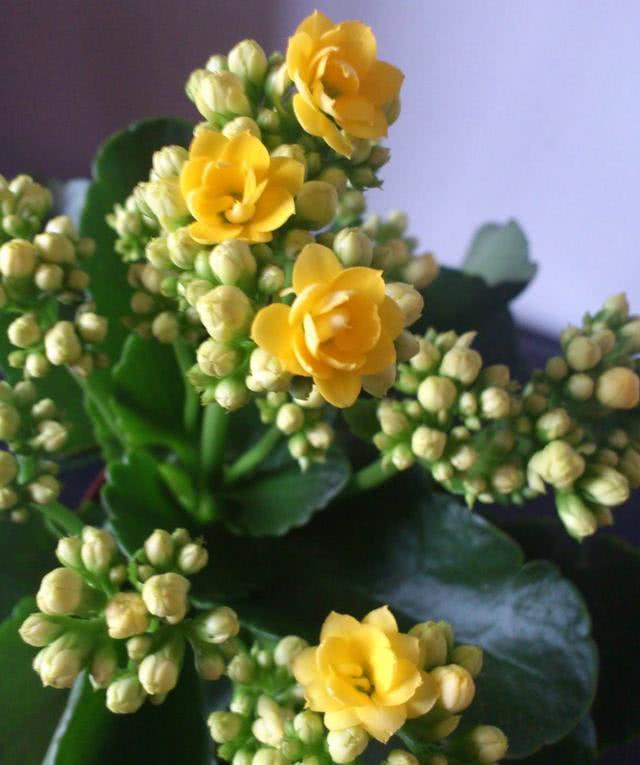
Kalanchoe buds in autumn each year and blooms in winter and spring, with a flowering period that can last as long as half a year, so it is deeply loved by the gardening public. Compared with flowers such as azaleas and gardenias, kalanchoe is relatively easy to grow, but there are still flower lovers who encounter various problems during the growing process, especially after getting through the summer. Recently, a flower lover asked: the kalanchoe's leaves are soft and wilted, the leaf edges have turned red, and they mentioned black spots. They asked what methods could solve this and make it bloom?
The picture below shows a kalanchoe grown by a flower lover. It can be clearly seen that the leaves are soft and reddened, with some black spots, and the leaves of the whole plant are too dense. When encountering this situation, we should first not think about making it bloom; moreover, in this state it has no ability to bloom. Let us first analyze the causes of this condition and the solutions, and then consider the issue of flowering.
The reasons for kalanchoe leaves becoming soft, wilted and reddened fall into three situations: 1. Severe lack of water. 2. Root rot caused by overwatering. 3. Strong direct sunlight exposure. Flower lovers can compare these with their own growing conditions.
Although kalanchoe is very drought-tolerant, and its stems and leaves also have a strong water-storage capacity, long-term lack of water will consume all the water in the plant and easily cause the leaves to wilt and dry up. Kalanchoe does not like very strong direct light, especially during high temperatures. Strong direct sunlight exposure will not only cause the leaves to wilt, but also cause the leaf edges to turn red or become scorched.
Overwatering, with the potting soil unable to dry out for a long time, can easily obstruct the kalanchoe's root system, making it unable to provide nutrients to the plant, causing the leaves to dry up, wilt and even die. If the potting soil is too wet and ventilation is poor, it is also easy for bacteria to breed, leading to various pests and diseases attacking the leaves. Based on the above situations, this flower lover should water promptly when water is lacking, provide sufficient scattered light and a well-ventilated environment, and can appropriately let the plant get some sun, but avoid strong direct sunlight at noon.
If the potting soil is not dry, it indicates that there is a problem with the root system. It is recommended to take the kalanchoe out of the pot, cut off the rotten roots, soak and disinfect them in a carbendazim solution, and after drying, replace the soil and replant. The kalanchoe in the picture has leaves growing too densely, so unhealthy leaves should be cut off promptly, cutting as many as there are, and at the same time, pinch off the tops of overly long branches to control the plant shape.
After the root system gradually recovers, new leaves will soon grow. After potting, do not fertilize at first. After new leaves grow, apply 2~3 times a compound fertilizer with comprehensive nitrogen, phosphorus and potassium nutrition, with an interval of about 10 days each time. Or use your own fully decomposed organic fertilizer to drench the roots of the plant, applying light fertilizer frequently. After the new leaves grow vigorously and the plant shape has clearly improved, switch to a fertilizer mainly based on phosphorus and potassium, drenching the roots with a potassium dihydrogen phosphate solution combined with foliar spraying, to promote flower bud differentiation and budding and flowering.