Placing ornamental stones indoors adds a more elegant and refined touch.
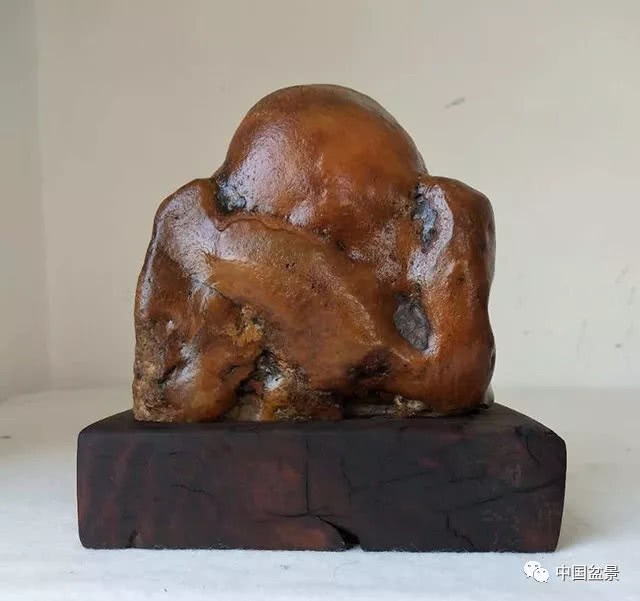
The bright moon shines among the pines, the clear spring flows over the stones.
An elegant room carries the charm of the mountains, and the virtuous find calm within themselves.
Lu Shaoheng of the Ming dynasty said: "In my studio, I do not uphold empty formalities; all who enter here are true friends." A true friend is like high mountains facing flowing water - a resonance of shared aspiration, like Shu Qi gathering wild greens, Tao Qian planting chrysanthemums, Mi Fu bowing to stones... There are countless things one may take as a kindred spirit, yet viewing stones is what reveals character most clearly. For they are upright and dignified, rugged with backbone and little flattery; plain and solemn, exquisite in form without vulgarity. When the ancients took stones as friends, lived alongside stones, and even lingered with them day and night, fondling them with heart and hand, this was a natural settling of values - if one had no mist and rosy clouds in the chest, how could one befriend them?
Taking stones as friends and bringing stones indoors, whether in ancient or modern times, is outwardly an expression of lifestyle and inwardly a pursuit of spiritual realm. As Zhuangzi said: "When the center is settled, outer things become clear." Stones hold a clarity of meaning; dwelling with stones, an empty cottage is plain and unadorned; stones hold a clarity of meaning; in elegance with stones, a studio room feels secluded and spacious. Stones from other mountains should not be merely creations of nature; they should enter the hall and take their place indoors.
Bringing mountain stones indoors has its philosophical roots. Confucius said: "The benevolent delight in mountains, the wise delight in water" - Confucianism is a worldly, engaged philosophy. Laozi said: "Heaven and earth have great beauty, all things have their inherent order" - Daoism is a spirit of free transcendence beyond the world. Qu Yuan said: "I gather the three blossoms in the mountains, where stones are piled and vines entwine" - the earliest worship of landscape rose to become the spiritual sustenance and emblem of character for the noble man. As the class of stone appreciators spread from the scholar-officials to the literati, stone appreciation rose to become an aesthetic activity of the elite.
The ancients said: "A room without stones is not elegant; a dwelling without stones is not peaceful." An enduring stubborn stone, formed by the spiritual energy of heaven and earth, placed quietly on a desk, though it cannot speak, can successfully draw you into a state of mind. A room like cloudy woods, avoiding all noise; a studio like a mountain lodge, fearing no clear autumn. The realm of stone appreciation originates from understanding creation: "Heaven and earth discard nothing, let alone good mountain bones." Whether viewed through past or present, or spoken of in China or abroad, the true delight of stone appreciation in interior space appears profoundly meaningful.
As the ages evolve, architecture, residences, furniture, and objects all iterate and innovate under different design concepts. When stone appreciation becomes installation and display art in a new context, in one refined and comfortable modern room after another, it has new expressions and interpretations - and this is also the direction that Chinese traditional art should explore.
"Stones to Today 2," a stone appreciation exhibition and the launch event for the new book "Qingwan: Sleeping Clouds on Stones," jointly curated by "Leqian Culture," "MoreLess," and "Literati Space," will open on September 12, 2018 at the "MoreLess Life Hall" space in M50, Shanghai. May you enter the hall and add a touch of elegance.
|Opening Time|
2018.09.12 14:00
|Event Address|
MoreLess Life Hall
(1st Floor, Building 17, 50 Moganshan Road, Shanghai)
Highlights replay:
Chinese bonsai welcomes you!
Enjoy anytimeViewthe bonsai exhibition hall
Promote bonsai culture, exchange bonsai skills!
Appreciate bonsai art, share a happy life!