5 flowers that purify the air and protect against radiation, one pot is all it takes
These days many people spend every day in front of computers and phones, but these electronic products often emit radiation that harms our health. At times like this, if we grow a pot or two of radiation-resistant plants nearby, they can beautify the environment and protect us at the same time - truly killing two birds with one stone.
“
Fresh air and radiation protection"
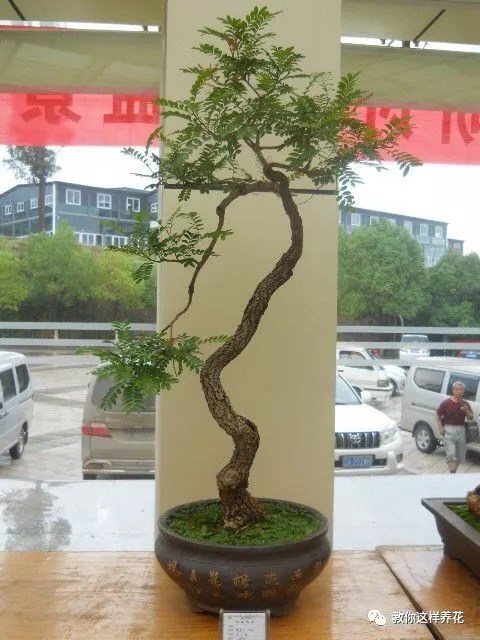
- Yunnan pistache (Pistacia weinmannifolia) -
Yunnan pistache, just as its name tells us, gives off a faint fragrance, and this fragrance is not harmful to the human body. Instead, it makes the environment around us very fresh. It can purify some harmful gases and various fine dust particles from the air, and it also drives away mosquitoes and insects.
Yunnan pistache likes sunlight, so it is best placed in a spot with plenty of sunlight. Once it lacks sunlight it will wilt and give you a "sulky face." Yunnan pistache is drought-tolerant, so do not water it too much normally. Water it thoroughly in one go only after the soil has dried out; too much moisture easily causes root rot. Its demand for fertilizer is also relatively low, and it is fairly tolerant of poor soil. Try not to fertilize it during the seedling stage; once it has grown, you can apply a diluted liquid fertilizer once a month.
Cuttings are the most commonly used propagation method for Yunnan pistache. Cuttings are best taken in spring and autumn, choosing healthy one-year-old branches 12-15 cm long as the cuttings. As for the soil, river sand is more suitable because it has good permeability. After cutting, cover with film, and roots will form in about 45 days.
Yunnan pistache should not be placed in too many spots indoors, because it has its own unique fragrance. You only need to place one pot, and you can immediately enjoy fresh air.
- Gymnocalycium baldianum -
Gymnocalycium baldianum is a plant with very strong radiation resistance. One great advantage of Gymnocalycium baldianum is that it can absorb carbon dioxide and release oxygen at night, so it is fine even in the bedroom. Placing Gymnocalycium baldianum together with other plants indoors can greatly improve purification capacity and absorb volatile organic compounds from the air. Moreover, Gymnocalycium baldianum blooms abundantly and vigorously. Compared with other cactus balls that do not bloom for decades, it is praised as the most conscientious cactus ball.
Gymnocalycium baldianum with many buds
Slowly blooming, truly beautiful
Gymnocalycium baldianum has strong adaptability, is easy to care for, and has few pests and diseases. It likes sunlight very much, but it does not sulk just because it is away from sunlight, and it can also grow in a semi-shaded environment. It has low soil requirements and can endure drought and cold for a period of time, but when blooming it needs sufficient water to support the flowers.
Gymnocalycium baldianum can be propagated by dividing offsets. As Gymnocalycium baldianum grows, it will produce many small offsets. Choose healthy, larger, dark green Gymnocalycium baldianum pups, cut them off with a knife, dry the wounds, and once the wounds have completely healed, place them into the potting soil.
It can also be propagated by sowing, which can be done in spring and autumn. During the growth and development of the newly sprouted seedlings, keep them warm and moist.
Place a pot around computers and other electronic products to absorb radiation; placing one on the balcony can also put people in a good mood; placing a pot in places such as the bedroom or study can make people feel refreshed and comfortable.
- Ivy (Hedera helix) -
Ivy can purify the air and absorb harmful gases such as benzene and formaldehyde released by furniture and decoration. More importantly, it can resist the carcinogens in nicotine, absorb bacteria brought in from outdoors, and adsorb dust in the air. In a room of about 10 sq m, one pot of ivy can eliminate 70% of benzene, 50% of formaldehyde and 24% of trichloroethylene. Placing a pot on a desk can also protect against radiation; it is a very good potted flower.
Ivy likes warm, humid and slightly shaded environments. Its cold resistance is moderate, and it likes water, so watering a little more is no problem. It has low soil requirements, but it will grow better if the soil is fertile, loose and well-draining.
Its cuttings can be taken in spring and autumn. The method is: cut healthy one-year-old branches, with a length of 10-15 cm as the cuttings, keep a few leaves at the upper end, and insert about 5 cm of the lower end into the soil. Be careful to shade it and keep the soil slightly moist, and roots will form and it will survive in 20-30 days.
When decorating indoor greenery, ivy can be used as a hanging, trailing ornament, placed on a tall flower stand or on top of a bookcase, giving people a very free and easy feeling. If it is a small potted plant, it can be placed on a coffee table or desk, appearing very delicate and elegant.
- Parlor palm (Chamaedorea elegans) -
Parlor palm can purify benzene, trichloroethylene and formaldehyde from the air, so it is very suitable for placing in newly renovated interiors.
Parlor palm likes warm, humid and semi-shaded environments. It is relatively able to withstand drought and does not like high temperatures or cold weather, so its optimum growth temperature is between 20-30°C. In summer and autumn, when it is dry, spray water on the leaves more often; watering less in winter helps it overwinter.
Parlor palm looks elegant and fresh and has a good effect of absorbing toxic substances, so it can usually be placed in the study or living room.
- Peperomia (Peperomia obtusifolia) -
Peperomia is also a common type of potted plant that purifies the air. Because it is a plant in the genus Peperomia of the family Piperaceae, it also has another name, pepper grass. Peperomia can purify harmful gases such as formaldehyde, xylene and secondhand smoke from the air, absorb electromagnetic radiation produced by computers and phones, and also protect the eyes and reduce eye fatigue.
Peperomia likes a warm environment, and the minimum temperature should not be lower than 10°C; it likes semi-shaded conditions and does not like direct sunlight; when watering, take care to water only after the surface of the potting soil has dried, and do not use too much water - just enough to moisten it.
Cuttings are taken in late spring and early summer. Cut healthy top branches, using stem sections 8-10 cm long with leaves as the cuttings. After cutting, keep the potting soil moist. Under conditions of 20-25°C, roots will form in about 20 days.
Peperomia plants are relatively small, so you can find some rather elegant containers to hold them. Placed in the living room or on a desk, they look very distinctive, or hanging them on a wall or in the bathroom is also very fresh and pleasant.
Grow a small green plant
It can both beautify the environment and freshen the air
You should try it too
Share it with flower lovers who need it!