Potted fiddle-leaf fig leaves often develop black spots? It is most likely because these 5 things are not done well
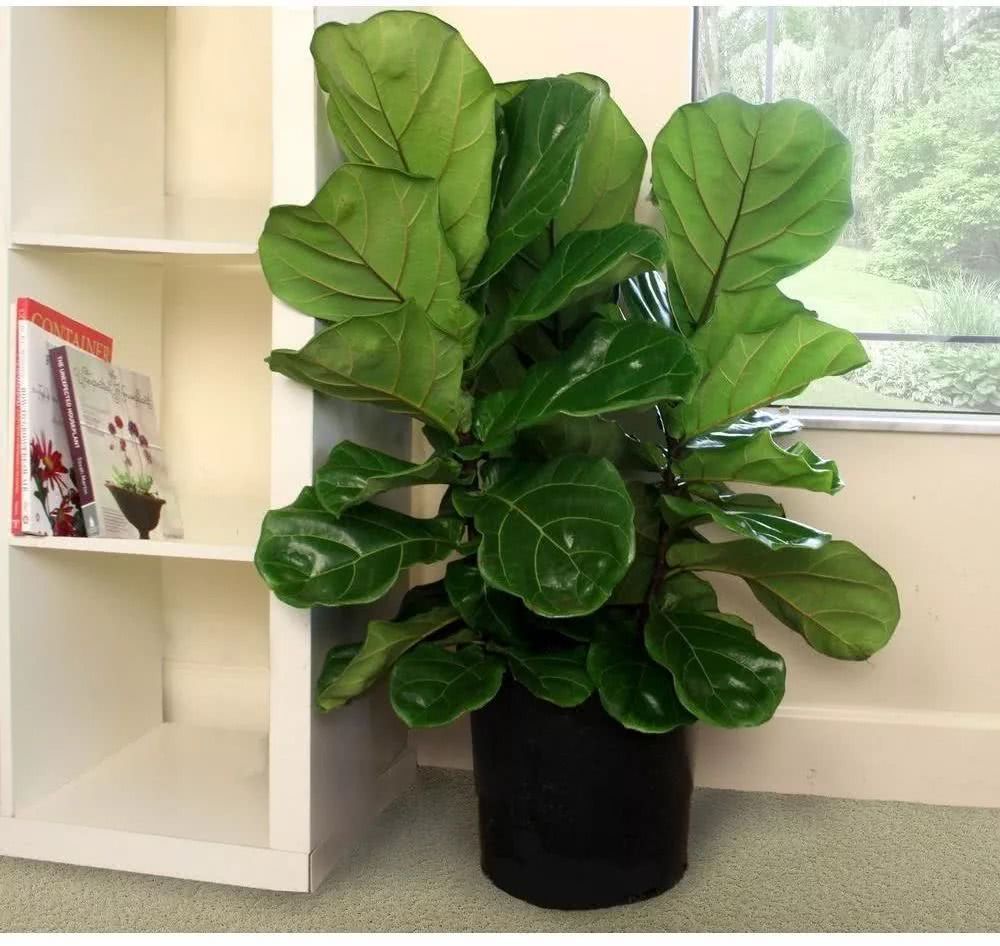
The fiddle-leaf fig looks very refined, but during care, its leaves very easily develop black spots, because it is still rather particular about its environment. However, as long as you pay attention to the following five points, the fiddle-leaf fig can be grown very well.
A fiddle-leaf fig kept indoors must be placed in a spot with ventilation and light, and avoid keeping it in a sealed space. The best care location has appropriate scattered light every day, and at the very least it should remain bright; do not keep it in a completely dark place.
The fiddle-leaf fig likes a warm and humid environment year-round. In tropical and subtropical regions, it can be planted outdoors and can grow to seven or eight meters tall, while when grown as an indoor potted plant, its shape can be controlled. You can pinch off the top to keep its height at around one to two meters.
Next, let us learn about the five most common mistakes in caring for the fiddle-leaf fig.
1. Overwatering
The thing a potted fiddle-leaf fig fears most is overly frequent watering. It originally grows in western Africa. If grown outdoors, it needs sufficient water to grow well, but when grown in a flowerpot indoors in a place without light, it does not need frequent watering. Generally, wait until the soil has dried out completely, then water thoroughly.
If your fiddle-leaf fig is kept in a place with more sunlight, you can wait until the surface soil is dry before watering. In spring and summer, keep the soil moist, while in autumn and winter, watering needs to be controlled.
2. Excessive drought
A potted fiddle-leaf fig also needs regular care, and excessive drought should be avoided. If it lacks water for a long time, it is also very prone to drying out and dropping leaves.
If it lacks water, the leaves of the fiddle-leaf fig will droop and become very soft. If it is not watered for a long time, the leaves of the fiddle-leaf fig easily turn yellow, and finally turn brown and continuously drop.
3. Too much light
If you want to promote better growth of a potted fiddle-leaf fig, then give it appropriate scattered light every day, but avoid scorching sun or excessive shade. You cannot keep it in a completely dark place, nor in a place with scorching sun or long periods of direct sunlight. It is best placed by an east-facing windowsill.
Placing a potted fiddle-leaf fig by a south-facing or west-facing window is not very suitable, because the sunlight is too strong and easily causes the leaf tips to dry or the leaves to wither.
If the sunlight is too strong, the leaves of the fiddle-leaf fig easily turn white and develop brown spots. You should promptly cut off these diseased leaves and move it to a cool place for one or two weeks of care.
4. Too much fertilizer
A potted fiddle-leaf fig has very little need for fertilizer. It only needs a small amount of fertilizer each year to grow well. Generally, only in spring and summer should fertilizer be appropriately supplemented, and fertilizer should not be applied too frequently. Usually, give a dilute slow-release fertilizer once every 3 to 4 weeks, and the concentration must not be too high.
If too much fertilizer is applied when caring for a fiddle-leaf fig, it easily causes fertilizer burn. The symptoms shown are withered new leaves, yellowing leaves, and continuous leaf drop.
5. Excessive cold
The fiddle-leaf fig likes a warm environment year-round. If the care temperature is too low, it is very easily frostbitten. The minimum care temperature must be kept above seven degrees. After the weather turns cold in late autumn, it should be moved indoors for care.
After the weather turns cold, in addition to maintaining a warm environment, watering should also be appropriately controlled. If watered too much in winter, frostbite will be worsened. In addition, one point is very important: when caring for a fiddle-leaf fig, also pay attention to maintaining a certain air humidity. You can mist water around it, but do not spray directly onto the leaves. If water accumulates on the leaf surface, black spots very easily develop.
If you do not want black spots to develop on the leaves of the fiddle-leaf fig you are caring for, then be sure not to spray water directly onto the leaves. Wipe the leaves of the fiddle-leaf fig regularly to avoid too much dust on the leaves, and keep the location where the fiddle-leaf fig is cared for well ventilated.