Detailed Guide to Boxwood Bonsai Making Techniques with Illustrations
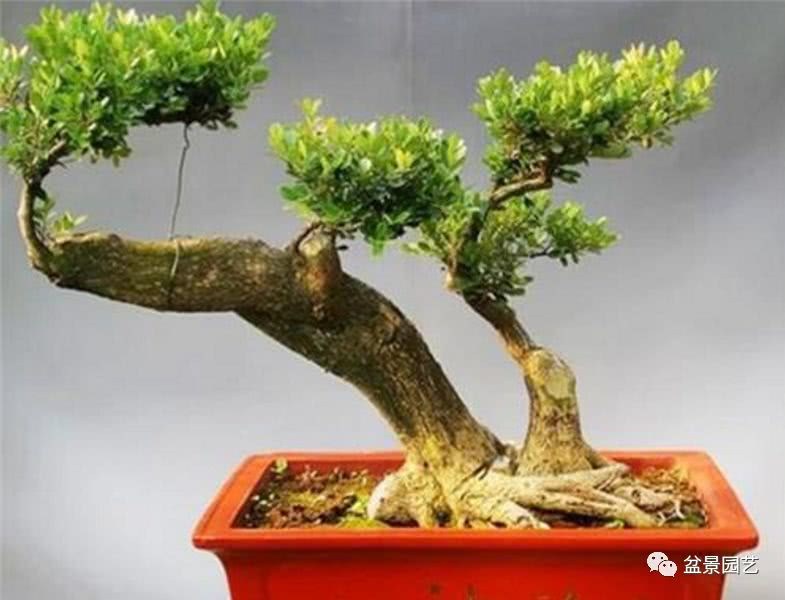
Summary: Boxwood, also known by the aliases boxwood wood and Chinese boxwood, is recorded in the Buxaceae family and belongs to the dicotyledonous group. The plant is a shrub species, reaching a height of about 1 m, and mostly grows wild in valleys. What this article will introduce to you next is the technique for making boxwood bonsai.
[Boxwood Bonsai Making Techniques]
Boxwood is an evergreen shrub, and at its maximum the plant can grow to more than 6 m in height. When kept indoors, it needs frequent pruning so its shape can be properly controlled.
▍Plant Profile
Boxwood is mostly pruned into a broad rounded shape. Its leaves are leathery, mostly elliptical, with no sharp feel, and the leaf veins protrude slightly, with no hairs on the surface.
Boxwood's flowering period is in March, mostly axillary, fairly dense, often with male flowers present, without pedicels, about 2 mm in height. By May, boxwood then bears fruit, mostly close to spherical, with a length around June, and the style is slightly long, about 2 mm, while the fruiting period is in May.
▍Sourcing Material for Bonsai
Before making a bonsai, suitable boxwood seedlings should be selected. It is recommended to choose boxwood propagated by cuttings or by grafting; boxwood propagated by sowing is poorer in both tree form and disease resistance, which will affect the making of the bonsai.
Boxwood used for making bonsai is usually a tree over 5 years old, and old tree stumps can also be selected directly for making it. Prune the boxwood branches slightly. When selecting the plant, try to dig out the soil around the boxwood together with it; the overall root and stem of the boxwood only need to be about 5 cm smaller than the flower pot.
▍Potting Boxwood
(1) Choosing a pot. Boxwood is a tree species, so it is recommended to choose a large flower pot. The plant is an evergreen tree species, so the flower pot material should be purple clay, and the color is best purple or yellow, while the specific pot shape and appearance are decided according to personal preference and the boxwood's tree form. (Choosing a pot in combination with later pruning methods: for the cliff-hanging style, a thousand-tube pot is suitable; for the curved-trunk style, a rectangular pot is suitable.)
(2) Preparing soil. Before making the boxwood bonsai, the soil can be prepared in advance. When selecting the plant, directly dig out half of the old soil, then mix in humus soil, leaf mold, or vegetable garden soil.
(3) Planting. First spread soil at the bottom of the flower pot, about 5 cm thick is enough. Hold the boxwood seedling with your hand, then add soil until its base is fixed and the soil covers the entire root system.
(4) Watering. Boxwood bonsai should be planted in loose, fertile soil. After planting, press down lightly with your hand, then water thoroughly to settle the roots.
▍Shaping Boxwood
Shaping and pruning are the key to making a boxwood bonsai, and since the plant has strong sprouting ability, regular pruning is even more necessary.
Time: one year after potting
Method: one week before starting shaping, directly cut back the top of the boxwood. For later shaping, prune in the order of the plant's surroundings and then the lower part. After each pruning, use binding wire to tie the main trunk and side branches slightly, to avoid spreading growth. The crown can be pruned into a cloud shape or a steamed-bun shape.
Summary: This article mainly introduces the methods for making boxwood bonsai, with detailed explanations according to its specific steps, and we hope it will be helpful to you.
Bonsai Gardening
Appreciate Bonsai, Enjoy Life