How do you grow orchids? Experienced growers share tips that flower lovers say are very practical
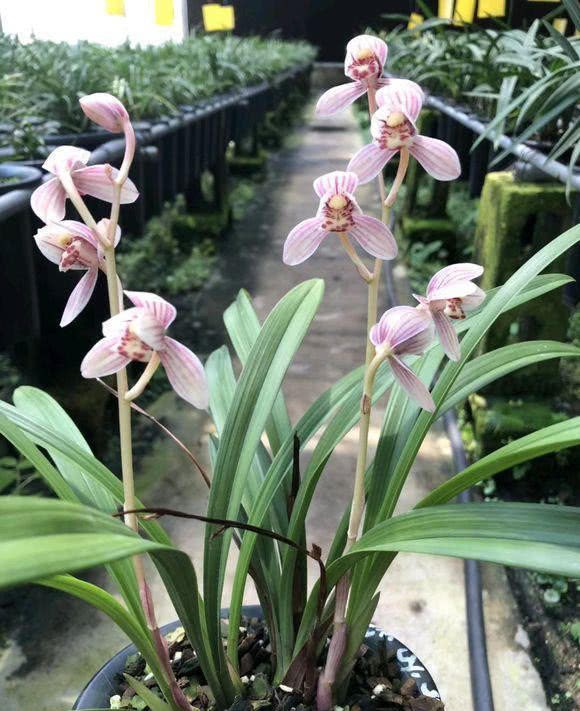
I believe many orchid growers have heard this saying: three parts planting, seven parts managing. So for growing orchids, management is very important. Many flower lovers think that improper day-to-day management causes all kinds of problems in their beloved orchids, mainly because they do not understand the "temperament" of orchids. Today the editor shares some key points for orchid care.
1. Apart from needing indoor care in winter, orchids should be grown under a shade frame in spring, summer and autumn. With suitable light and proper fertilizer and water, they can grow broad leaves, green color, strong stems and many flowers. The shading of the shade frame is best adjusted freely, opened in the morning and evening to receive dew, and not shaded too rigidly. What orchids need is semi-shade, semi-sun light conditions, especially during the flowering period, when cool, shaded and humid conditions are even more necessary. Only then can the viewing time be extended. Only in late autumn can stronger light be given, and in winter indoors they should also be placed in a spot with stronger light to benefit orchid growth. The structure and color of orchid leaves are determined by light. Generally, those with thick leaf flesh, yellow-green leaves or variegated leaves need more light, while those with thin leaves and dark green leaves need less light. Cymbidium goeringii (spring orchid) and Cymbidium faberi (Hui orchid) need strong light; Cymbidium ensifolium (Jian orchid) and Cymbidium sinense (Mo orchid) need weaker light.
2. Orchids love a humid growing environment, but the potting soil should be dry, so water can be sprinkled on the ground and the potting soil every day to increase the surrounding humidity. Watering should not be too much; basically keep it seven parts dry, and in winter keep it even drier. Slightly dry potting soil can concentrate the plant's nutrients and help flower bud differentiation, while too wet easily makes orchid leaves grow leggy, or even causes root rot. So the lower part of the orchid pot should be filled with broken bricks, charcoal pieces, etc., to help drainage. Before flowering, sprinkled water must not be sprayed on the flower stem, otherwise the buds will rot. In short, the air humidity orchids require is more important than the humidity at the roots.
3. Because orchids grow slowly and only send out new roots and new leaves once a year, repotting generally needs to wait until after two years. When repotting, the soil should be fully dried so the fleshy roots wilt slightly, then tip the orchid seedlings out, shake off the old soil, and cut away as much as possible of the broken roots, diseased roots and old roots. Even if you prune it into a rootless plant, there is no need to worry. After pruning, wash it clean with water and divide the orchid seedlings into 2-3 clumps according to their natural growth. Each clump should have at least 3 or more pseudobulbs. The wounds can be coated with stove ash or sulfur powder, then placed in a cool, ventilated spot and air-dried until the roots are slightly dry, whitish and soft, before planting in potting soil with a fairly high sand and gravel content. The retained orchid roots should be placed naturally in the pot, with new buds facing outward, so there is room for growth and development. Do not plant too deep; it is best to leave half of the pseudobulb exposed.
4. The physiological diseases of orchids can be observed and understood from subtle changes in the leaves: generally, leaves turning yellow and thin indicate a lack of fertilizer; scorching gradually downward from the leaf tip is caused by excessive fertilizing or applying raw fertilizer; scorching upward from the bottom of the leaf is because of overwatering; yellowing or black spots appearing from the middle of the leaf, or even scorching, is caused by too great a difference between soil temperature and water temperature.