China's unique aquatic vegetable was once considered a pest by the ancients, now exported at a hundred yuan per jin
When it comes to Chinese cuisine, there is truly enough to talk about for three days and three nights, but due to differences in regional food culture, some things that people in China do not like to eat may be what foreigners love most.
There are also similarities between Chinese and foreign diets. For example, Chinese jianbing guozi is still very popular abroad, and latiao and Lao Gan Ma are not only loved by Chinese people, but are also very essential dishes to go with rice in the eyes of foreigners.
But there are also certain differences. Some foods that people in China do not eat see their value soar after going abroad, and foreigners especially like to eat them.
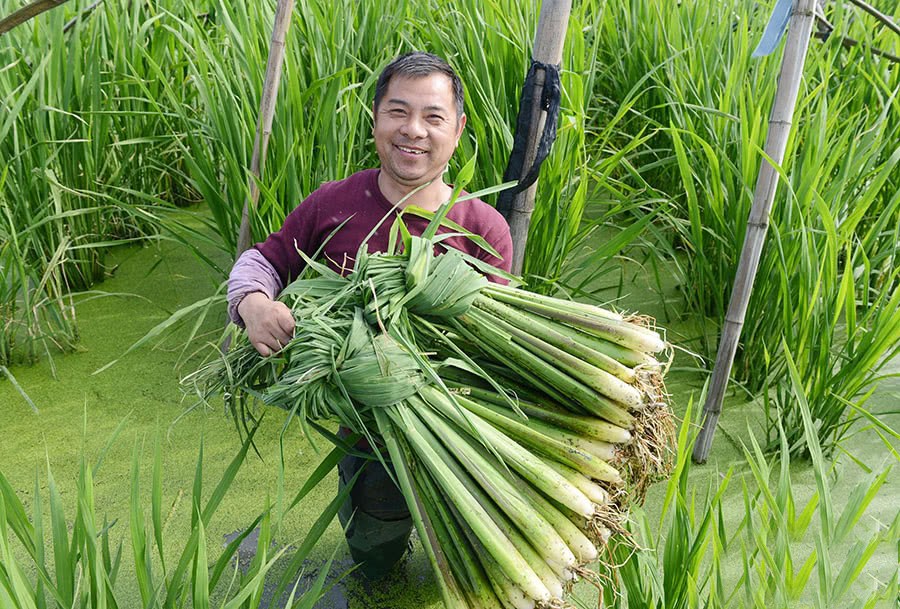
Today I will introduce this vegetable to everyone. It is jiaobai, also known as wild rice stem. Jiaobai is an aquatic vegetable, and it is also a unique aquatic vegetable of China. When autumn arrives, fresh jiaobai begins to be harvested.
Although jiaobai is delicious, quite a few people in China do not particularly like it, and of course it also sells very cheaply. In ancient times, jiaobai was once regarded as a pest. Why was that?
Because in ancient times, what people ate was wild rice, one of the "six grains," which is the seed of the crop known as gu. However, after gu was parasitized by "smut fungus" (equivalent to a disease), the plant could no longer head and flower, and instead the stem tip formed a deformed, enlarged fungal gall, called "jiaoyu" in ancient times, which is what we now call jiaobai. Therefore, during a certain period in ancient times, jiaobai was regarded as a pest, and this situation only changed after people discovered that jiaobai could also be eaten.
Therefore, many people in China also do not like to eat jiaobai, but if fresh jiaobai is flown once, its value becomes different. In some European countries, jiaobai can sell for nearly a hundred yuan per jin in RMB, and even so, foreigners still scramble to buy jiaobai.
But the harvesting process of jiaobai requires a lot of attention. Generally, jiaobai must be harvested before the sun comes out, because only then is it crisp and tastes better. Hardworking farmers all get up early to harvest jiaobai.
Harvesting jiaobai is relatively time-consuming and labor-intensive, and after air transport, jiaobai generally arrives on the same day. At this time, the jiaobai still retains the freshness of having just been picked, so this jiaobai, which no one buys in China even at one yuan per jin, can sell for hundreds of yuan abroad. Therefore, farmers also grow jiaobai for export, so the purchase price is also higher.
So why do foreigners value jiaobai so much? That is because some components contained in jiaobai have the effects of reducing swelling and relieving hangovers, which other ingredients are far from achieving. In addition, long-term consumption of jiaobai can also make people's skin whiter and more elastic. The effects of jiaobai are just that magical, so jiaobai is sought after abroad, and even if the price is high, many foreigners will still buy jiaobai.
Dear friends, I wonder whether you like to eat jiaobai? You are welcome to leave a message and share your thoughts!