Kalanchoe autumn care tips: thick, glossy leaves and countless blooms
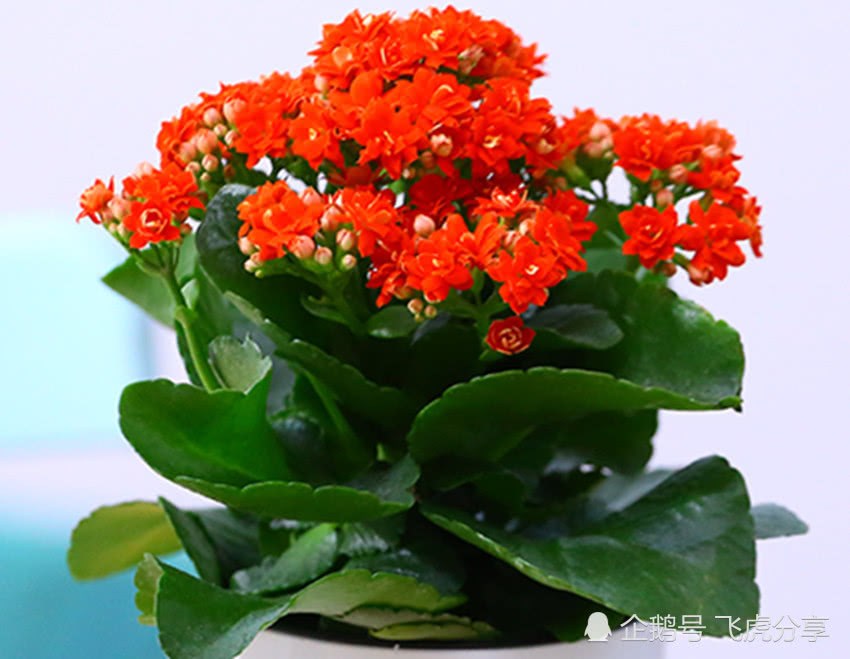
Kalanchoe (Kalanchoe blossfeldiana) is a succulent plant with dense, emerald-green leaves that blooms around the Christmas holiday, with flowers clustered in groups and rich in color; it is a beloved indoor potted flower. But if you want kalanchoe leaves to grow thick and glossy, and the blooms to be plentiful and large, you need to adopt scientific care methods starting in autumn, so that when it blooms the flowers are too numerous to count, and the blooms are large and vivid with a long flowering period.
Kalanchoe loves ample sunlight; for home growing, except in summer, it should be placed in a spot with plenty of light. If light is insufficient, not only will the branches be thin and spindly and the leaves thin with an unattractive plant shape, but the number of blooms will decrease, the flower colors will be less vivid, and it will cause a large number of leaves to drop, losing its ornamental value. Kalanchoe is drought-tolerant and does not need a lot of watering; just keep the potting soil slightly moist. Also note that in the humid season the main thing is to control watering, to prevent excessive moisture from causing root rot in kalanchoe.
The optimum growing temperature for kalanchoe is 15-25°C, and the indoor temperature in winter needs to be 10-15°C. If it is below 5°C, the leaves will turn red and the flowering period will be delayed. The flowers will also be small. If the room temperature is too high during the flowering period, exceeding 22°C, it will inhibit its flowering and make bud formation difficult. When the winter and spring room temperature is kept at around 15°C, kalanchoe will bloom continuously, and bloom abundantly. Kalanchoe is a short-day plant and is fairly sensitive to light response. For well-grown plants, giving 8-10 hours of short-day light per day for 3-4 consecutive weeks will bring out flower buds and blooming.
For kalanchoe, in September-October you can apply a diluted compound liquid fertilizer once every 20 days to promote robust growth and abundant flowering. In November, after the flower buds form, apply 1-2 additional rounds of 0.2% potassium dihydrogen phosphate or 0.5% superphosphate solution, and the flowers will be plentiful, brightly colored and long-lasting.