Whether grown in soil or water, this plant develops beautiful flower shapes after this treatment.
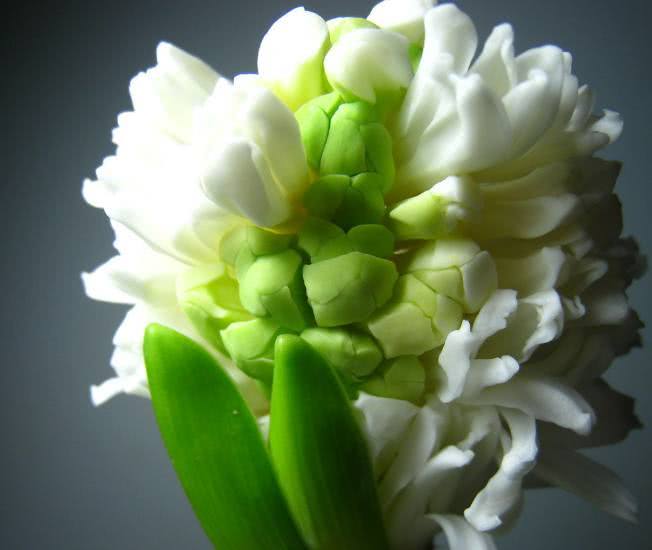
Hyacinths are prone to yellow rot under high temperature and high humidity. When the disease occurs, the leaf tips begin to expand into spots, which later turn brown and necrotic, the center of the bulb rots, and the slime turns yellow. For control, select disease-free bulbs and regularly spray agricultural streptomycin at a 1000-fold dilution.
Hyacinths prefer sunlight and tolerate cold. They are suitable for growing in a cool and humid environment, in loose, fertile soil, and should avoid waterlogging. Warm and humid winters, cool and slightly dry summers, and a sunny or partially shaded environment. They like fertilizer and prefer fertile, well-drained sandy loam. Planting, potting and watering are all acceptable.
When the bulb temperature is 2-6°C, hyacinth roots grow best. The optimum temperature for bud sprouting is 5-10°C, the optimum temperature for leaf growth is 5-12°C, and the optimum temperature for bud flowering is 15-18°C. The storage temperature for bulbs is 20-28°C, with the optimum temperature being 25°C, which is most favorable for flower bud differentiation. They can withstand short-term frost. They like cool, humid air, a sunny environment, and cold.
The steps for water-culturing hyacinths are as follows:
1. Clean the glass bottle, pour in tap water, and do not fill it full; leave a distance of 1-3 cm between the water and the base of the bulb.
2. Change the water for the hyacinth once a week (to keep the water in the bottle clean). Do not use nutrient solution; ordinary tap water is generally enough to supply the hyacinth's growth.
3. Before green leaves appear, do not give any light. It can be placed in a dark little corner. As the white roots develop, it can be exposed to the sun. Start with 1-2 hours, then gradually increase the light duration. If the weather is warm, it will soon begin.
Hyacinths like a sunny, warm, humid and cool summer environment, tolerate cold, and need fertilizer, fertile, loose sandy soil, avoiding heavy clay soil and waterlogging. Hyacinth planting, potting.
For hyacinths, choose well-drained sandy loam that is not too dry, with high soil fertility, high organic matter content, good aggregate structure, and neutral to slightly alkaline, at a pH level of 6-7; the culture soil can be prepared in the ratio of 5% humus soil, 3% garden soil, 1.5% coarse sand, and 0.5% bone meal; before planting, chemical agents such as formalin can be used. At a soil temperature of 10-15°C, immediately cover the soil surface with film after applying the agent, remove the film after 3 days in warm weather, and plant after 1 day in the air, keeping the soil moist. Before planting, apply sufficient base fertilizer, cultivate in the field, and avoid continuous cropping.