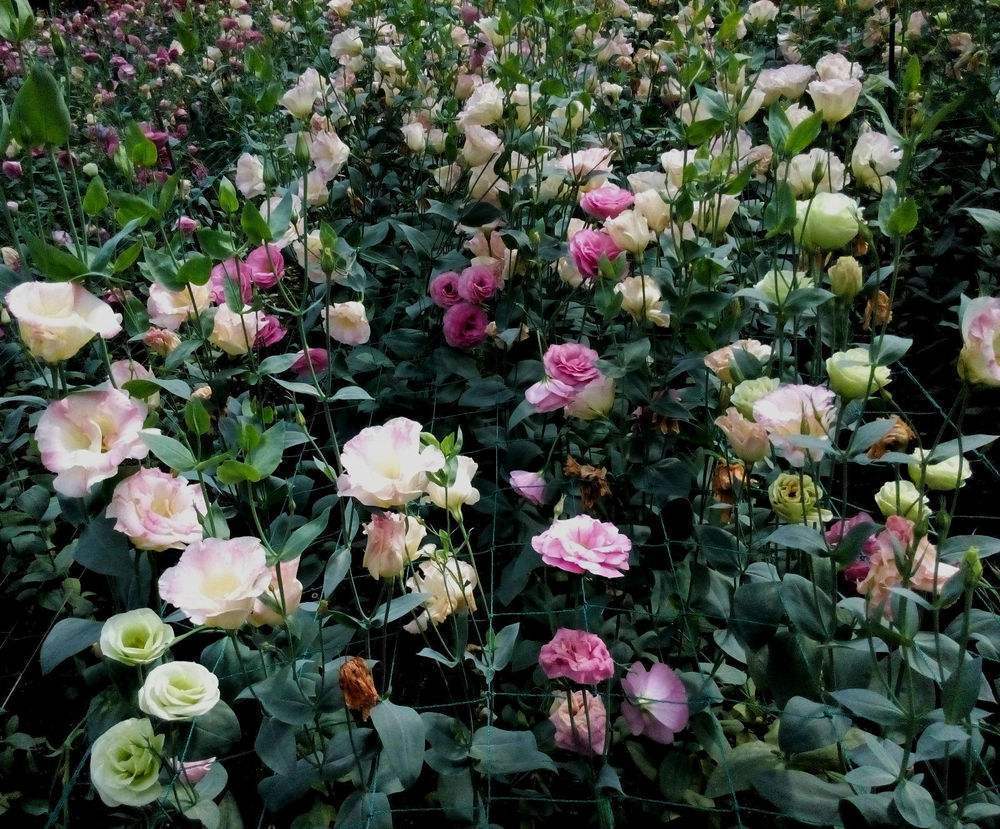
This flower can produce bicolored blooms, yet many people do not know it, which is truly a pity
Many people like jasmine and lilies because they are fresh and elegant, with a faint delicate fragrance that lifts your mood as soon as you see them. Some people also like roses; whether it is the passionate, fiery red rose or the noble champagne rose, they all have a unique charm. Yes, flowers always have an appealing charm.
So what flower is Huahua going to introduce to everyone today? Its name is: Lisianthus.
Many people actually do not know much about lisianthus. After all, lilies and roses are so famous that they overshadow the beauty of lisianthus. But that is fine. Today Huahua will give everyone a detailed introduction to lisianthus, and also talk about how to grow lisianthus.
Lisianthus is a perennial plant and a perennial herb in the Gentianaceae family. Lisianthus flowers are divided into double-petaled and single-petaled types. Not only that, its petals are also divided into single-color and bicolor types. This is one of the reasons Huahua insists on comparing it with jasmine, lilies, and roses. The flowers of lisianthus are in no way inferior to roses. Some friends even call lisianthus the "thornless rose," which really hits on lisianthus's most important advantage: it looks beautiful but has no thorns, so why not grow it?
Now let's talk about how to grow lisianthus.
1. Disinfect the pot and soil
Before planting or transplanting, the pot and soil used for planting should first be disinfected. For spraying, high-temperature steam can be used, or they can be washed clean and placed under the sun to bake for two or three days. It is best to also sun the soil for two or three days. Only in this way can the soil's pH be kept as close as possible to neutral, which is good for the later growth of lisianthus.
2. Suitable temperature
The most suitable temperature for lisianthus growth is 15-28°C. During the growing period, the nighttime temperature for lisianthus should preferably not be lower than 12°C. In winter, if the temperature is lower than 5°C, lisianthus will be unable to bloom. In summer, pay attention to shading; too strong light will shorten the flowering time of lisianthus or even prevent it from blooming at all.
3. Soil
Generally speaking, when planting lisianthus it is best to choose neutral soil. If the soil can maintain good fertility and good air permeability, it is most suitable. We can choose to add substances such as peat soil to the soil to make it more nutritious, which can help lisianthus grow better.
4. Watering
Lisianthus likes a slightly moist growing environment, so watering is especially important. Although lisianthus likes a moist environment, many friends accidentally water too much. When watering, it is best to use drip irrigation, which can better control the amount of water and prevent problems such as root rot in lisianthus.
5. Fertilizing
During the growing period, lisianthus has a high demand for fertilizer. Not only can some organic fertilizer be added before planting as a base fertilizer, but during the growing period you should also remember to give lisianthus more topdressing.
Hurry and grow a pot of lisianthus at home!