Thinking of giving up on autumn sowing? Just the thought of nonstop blooms makes your heart itch with longing.
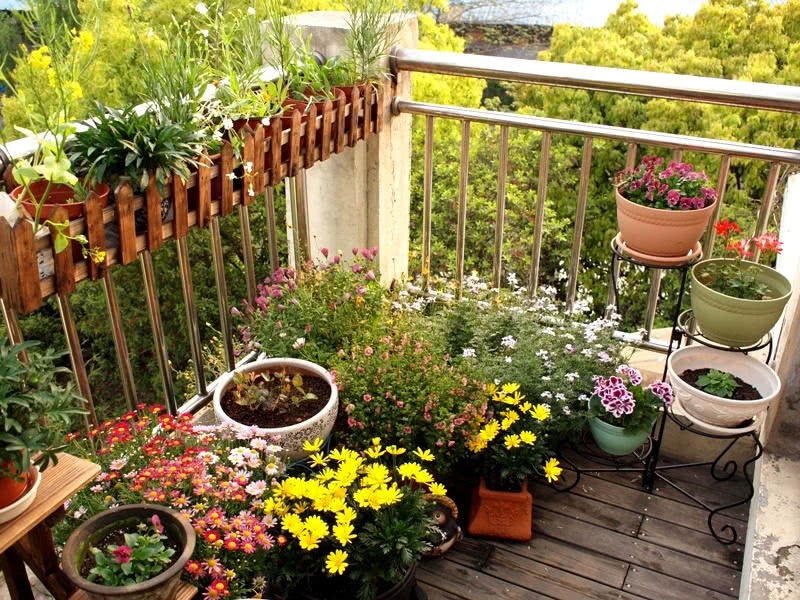
The difference between autumn sowing and spring sowing is really not small! It is often said that spring sowing brings flowers quickly, and compared with autumn sowing that is indeed true, but the stems are noticeably thin and weak, the size is only one third of autumn-sown plants, and there is no branching, with few flower buds at the top.
Facts have proven that with autumn sowing, the roots and stems of plants grow thicker and stronger, and there are more flower buds, with about 10 on a single seedling, and some small buds constantly emerging.
However, autumn sowing also has a drawback: the seedling stage is too long and growth is slow. Throughout autumn and winter the plants are almost dozing, and without a bit of patience it is really hard to keep going. So what exactly should you sow in autumn?
Silver cup flower: you can hardly see the leaves, yet it is all flowers!
The flowers of silver cup flower are larger than those of lobelia or baby's breath. Sow in mid-October; the seedling stage needs more effort, but later it becomes quite tough, with a fairly developed root system. During the seedling stage it grows relatively slowly like most autumn-planted flowers and plants, but just treat it as storing energy to build up a ball of flowers.
The next year, as temperatures rise quickly, you can start enjoying the flowers in early April. Silver cup flower has many flowers and small leaves, and it is also relatively heat-tolerant and drought-tolerant, so it can keep blooming all summer without a problem!
Lobelia: another blooming machine that fills the pot!
Lobelia generally blooms in spring, with flowers mainly terminal or axillary. The flower colors are rich, including red, peach red, blue-purple, white and so on, and the flower shape is like little cabbage white butterflies dancing. Sow starting in September each year, and during the seedling stage you must be ruthless about pinching the tips more; only in March and April of the next year will it bloom into a cluster, otherwise the plant shape tends to be loose.
In addition, if you want to get into growing lobelia, seed selection is crucial. Be sure to choose F1-generation coated pelleted seeds. Here F is a symbol in genetics, and F1 is the first filial generation produced by crossing to combine the advantages of both parents. If you get to F2-generation seeds, they are very likely to mutate or degenerate, and the blooming will be sparse.
Nasturtium: autumn sowing performs even better in bloom!
Spring-sown nasturtium has a short growth cycle, generally only 2-3 months from sowing to flowering, so the plant grows relatively fast and the leaves are relatively large, suitable for climbing, but it blooms less than autumn-sown plants and sets less seed.
Autumn-sown nasturtium, however, is different: the plant shape is compact, the flower quantity is large and concentrated, it is suitable for hanging, and it sets more and plump seeds. Sow in September-October, and the earliest flowers can be seen in November, but the first-year initial bloom is relatively sparse. If it overwinters safely, the flowering period in the second year is around March, and this is the full-bloom period, with a relatively large amount of flowers.
Baby's breath Gypsy: pink flower clusters and white flower clusters like cotton candy
Among baby's breath varieties, Gypsy is the cultivated variety with the best ball-forming effect, taking six months to grow from seed into a ball of flowers. Gypsy is an imported variety with many branches, short internodes, fine small leaves and double flowers, and it can grow into a compact, hugging ball. The F1-generation seeds are pelleted and can produce 3-6 plants.
If you want the blooms to have a cotton-candy effect, pinching is very important. Whenever you see it growing too long, pinch it decisively; more branches mean more flowers. Note that if the seedling is too small, do not pinch it. Pinch only after seven or eight pairs of true leaves, when survival is basically assured, so the seedling will not die while still small.
Anemone: stunning at first glance, and the more it blooms, the more beautiful it becomes!
Anemone is a member of the Ranunculaceae family, and this family is usually as beautiful as flowers. The flower colors are intense and enchanting, and the most unique feature is the ring of black in the center of the stamens, like deep, captivating big eyes that tug at the heartstrings.
It is cold-tolerant and afraid of heat, suitable for the north. Anemone can easily be planted with the "head and tail" confused, so plant it with the pointed end facing down. Anemone is called the bulb most prone to rot, so before potting it is best to half-bury it in perlite, place a saucer under the pot, and let the pot sit in water to absorb moisture. Often check for signs of mold or rot, and wait until it sprouts before potting it up.
This year for autumn sowing, do not only plant dwarf petunias and pansies. Do these flowers and plants above not move your heart? Welcome to follow Plant Fanatic; Squirrel Jun will chat about flowers and plants with you!