Insert a single fig branch into the soil, and a balcony potted plant will bear large and abundant fruit
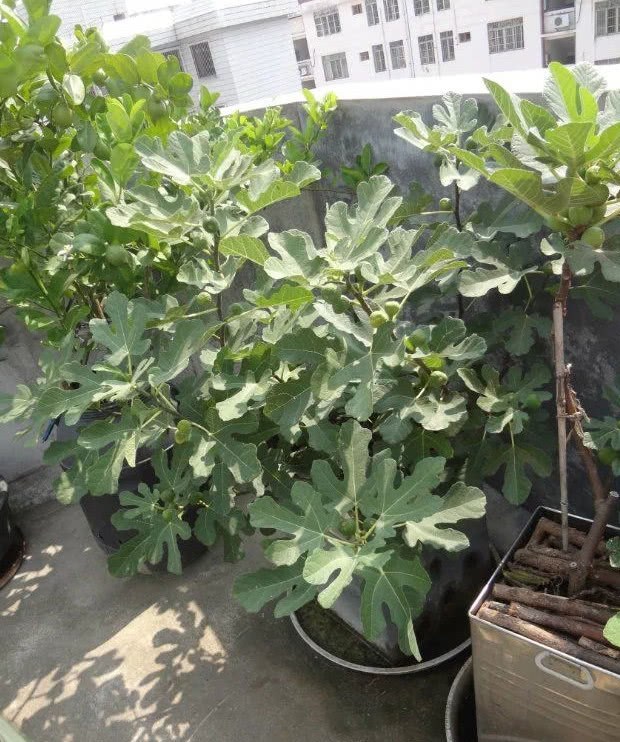
For potted fruit plants, the fig is a good-to-grow, easy-to-care-for fruit that does not need much attention and bears abundantly and sweetly. Some people grow figs directly on their balconies, using only a not-too-large flower pot, placed on the rooftop to bask in the sun, and the plants truly bore a lot of fruit.
The fig has a fairly developed root system, so it is best to choose a relatively large container. For balcony potting, you can choose a large clay pot or a large earthen jar for planting. For the soil, choose a loose, well-aerated, well-draining, slightly acidic humus soil. Add decomposed cake fertilizer to the potting soil as a base, and regularly supplement organic fertilizer during the growing season, which can make the fig bear more fruit.
Figs like a warm environment year-round and are not cold-tolerant. If the temperature is below 10 degrees, frost damage is relatively likely to occur, so generally speaking, in late autumn around the time of Frost's Descent, potted figs can be moved indoors to a sunny, well-ventilated place for care.
Potted figs also need attention to regular watering. Watering amount can basically be determined according to the progress of branch and leaf growth. If the soil is excessively dry, its leaves will keep dropping, but if there is too much water, the fruit produced is prone to cracking, so the general watering principle is to water when the soil is dry and stop when it is moist. Water more in spring and summer, and water less in autumn and winter.
Fig propagation is also very simple; it only takes one branch to propagate by cuttings. The last point is to pay attention to pruning the fig. Potted figs must have the trunk restricted to a certain height and must not be allowed to grow freely. Pruning figs not only makes them more attractive, but also promotes the sprouting of branches and results in more fruit.