What to do when an orchid's buds wither? With good care in autumn, you can grow them well too
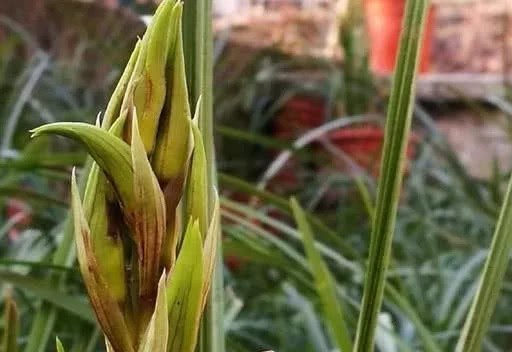
Autumn is a very important season for Cymbidium goeringii (spring orchid); most spring orchids sprout flower buds at this time. If care is not done well during this period, the flower buds may very likely stall or die off. Today, Haoshe Farmer and fellow orchid growers will discuss together the key points of fertilizing and other management for orchids during the bud initiation stage.
September 8 is White Dew among the 24 solar terms. Although the weather is still hot, it is no longer the intense heat of summer. The temperature difference between day and night is also gradually increasing, and such a climate is very suitable for plants to accumulate nutrients. Spring orchid flower buds have gradually emerged, and orchid growers should pay attention to avoiding several wrong habits and methods when managing orchids.
Orchids can be fertilized during the flower bud stage and the bud stage. Like other plants, orchids consume a great deal of nutrients during the flowering period. If no fertilizer is added, the orchid plant's energy will be overdrawn when it blooms, thereby affecting the following year's new growth.
In autumn, orchid fertilization is mainly done by burying fertilizer and spraying foliage; Haoshe Farmer does not recommend fertilizing by root drenching. For burying, it is best to use slow-release fertilizer or fermented organic fertilizer. Burying fertilizer has a long-lasting effect and can provide the energy needed for the orchid's entire bud initiation and flowering period. Foliar spraying should mainly use phosphorus and potassium fertilizer; it is not recommended to add pure nitrogen fertilizer. Foliar fertilizer takes effect quickly and is relatively safe.
The autumn climate is dry and crisp, and orchids choose this season for bud initiation, which shows that they like this kind of climate. When cultivating orchids artificially at home, we might as well learn from nature and give orchids a cool environment in autumn. Especially in late autumn (after mid-October), orchids need gradually increasing amounts of light. Haoshe Farmer suggests that orchid growers with the conditions can let orchids get more sun, which is greatly beneficial for protecting the buds.
Next is pest prevention. Out of animal instinct, autumn insects frantically reproduce before they die off each year. Anyone with agricultural planting experience knows that crop pests in autumn are very stubborn. The tender buds of orchids are also a food that pests like, so Haoshe Farmer often tells fellow orchid growers that pest prevention and control management should be done well in autumn. The needed pesticides can generally be bought at ordinary agricultural supply stores. What Haoshe Farmer commonly uses is ordinary pesticide for pest control.
The last point is something novice orchid growers often do: upon seeing the orchid produce buds, they are overjoyed and cover it with a thick layer of moss. Although it is autumn now, the summer heat is still present, and covering the orchid with moss now can easily smother the newly emerged buds. Haoshe Farmer suggests that it is best to cover orchids with moss after late October (Frost's Descent), but the climate differs between north and south, so fellow orchid growers can arrange it themselves according to the specific situation. The principle is not to make the environment where the buds are located too warm.
Welcome to leave your valuable opinions in the comment section, thank you for following