The Relationship Between Aplastic Anemia and Deficiency of the Blood in Traditional Chinese Medicine's Consumptive Disease
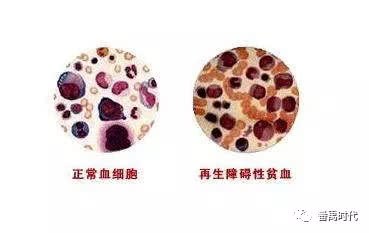
Among Western medicine patients with aplastic anemia, there are manifestations of chronic bronchitis, emphysema, other pulmonary and chest diseases or pulmonary vascular lesions, as well as pulmonary hypertension, right ventricular hypertrophy, or right heart insufficiency. This is consistent with traditional Chinese medicine's classification of chronic aplastic anemia under "consumptive disease with blood deficiency." In traditional Chinese medicine, consumptive disease is also called deficiency damage. Just as many chronic diseases in Western medicine can lead to deficiency damage, which then results in deficiency of qi and blood, from the perspective of traditional Chinese medicine, aplastic anemia is a syndrome whose main manifestation is blood deficiency.
Clinically, the onset and progression of aplastic anemia affects all systems, zang-fu organs, organs, and tissues throughout the body, causing damage and harm. In the case of acute aplastic anemia, the onset is sudden and the anemia progressively worsens, accompanied by severe infection and internal bleeding. Traditional Chinese medicine treats it as the "acute consumptive disease with marrow depletion and warm-heat type," and the main treatment method is cooling the blood and removing toxins, which can achieve remarkable results. Western medicine is superior to traditional Chinese medicine in emergency rescue, but traditional Chinese medicine is superior to Western medicine in eliminating the root cause of disease and consolidating the foundation to nurture the primal qi.
Western medicine understanding is mainly microscopic, while traditional Chinese medicine discusses it from a macroscopic perspective. For example, in Western medicine, routine blood tests for aplastic anemia show a marked decrease in white blood cells, red blood cells, and platelets, and patients have manifestations such as dizziness, palpitations, fatigue, nosebleeds, gum bleeding, skin bleeding spots, heavy menstrual flow, prolonged menstrual periods, susceptibility to colds, and fever. Referencing symptom manifestations is one of the points of integration between Chinese and Western medicine.
However, in symptom analysis and treatment, the guiding principles followed by Chinese and Western medicine are greatly different. Traditional Chinese medicine treats based on the whole, while Western medicine focuses on the local. Therefore, chronic aplastic anemia of the consumptive disease with blood deficiency type in traditional Chinese medicine is closely related to kidney deficiency, because the kidney governs bone, produces marrow, and stores essence; essence and blood share the same source. Due to kidney deficiency, essence is scarce and marrow is depleted, making it difficult to generate blood, and the disease manifests as consumptive disease with blood deficiency. In specific syndrome differentiation and treatment, the patient's objective conditions can also be taken into account, and treatment can be administered according to the kidney yin deficiency type, kidney yang deficiency type, and kidney yin-yang deficiency type.