Kale is extremely cold-hardy, tastes bad yet looks better than ordinary flowers
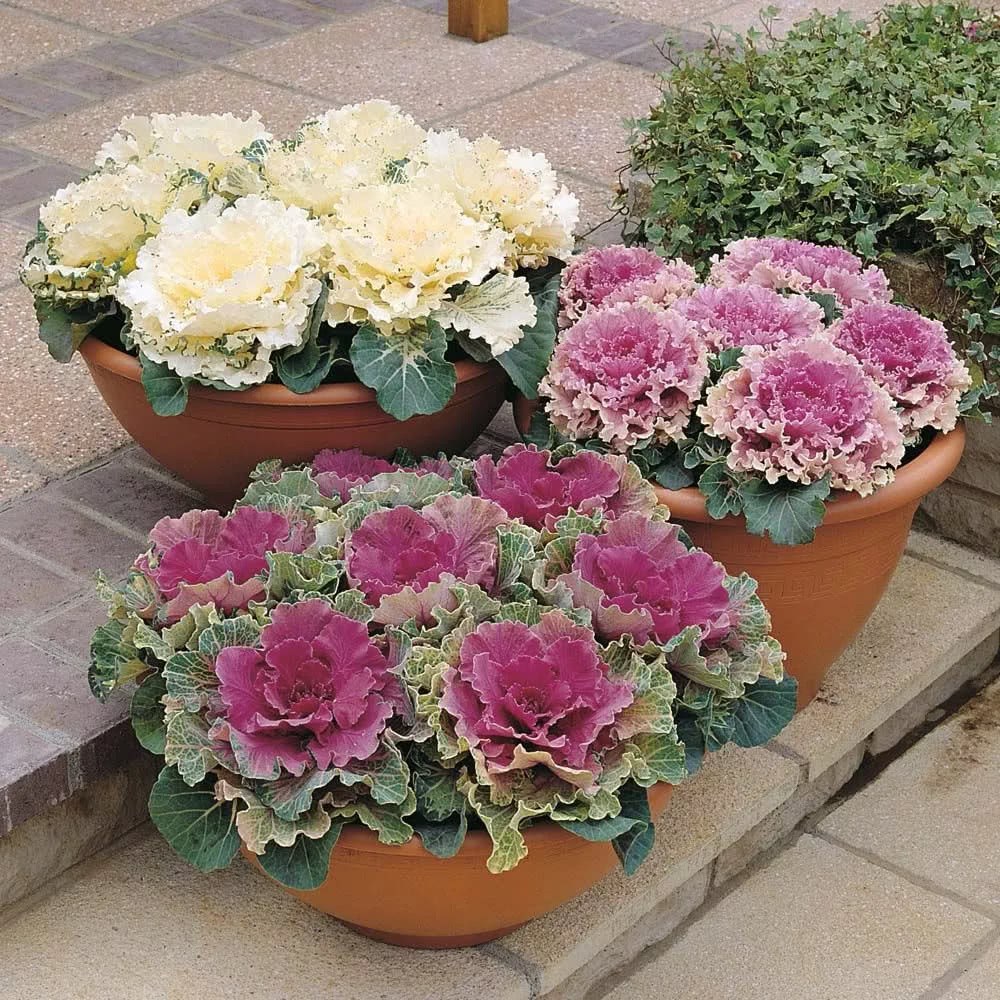
Kale is a very spectacular vegetable that can be grown into a bright and charming ornamental plant; it can be planted not only in the yard but also directly in the soil. Although its taste is not very good, it is edible, but its ornamental value is especially good and it looks especially spectacular.
Most vegetables freeze to death in winter, but kale has excellent cold hardiness. It can still show charming colors in winter, and it is fine to plant it directly on a balcony. Kale has a great many varieties, and you can choose kales with different leaf colors and combine them to form a charming landscape.
Kale is originally grown for its ornamental leaves, but its flowers are very poor ornamentally. The picture above shows kale flowers; they are generally a single upright yellow flower stalk, and the flowers do not look very attractive. In fact, it rarely blooms and is generally grown as a foliage plant, with leaves of different colors.
Some people say kale cannot be eaten, while others say it can. In fact, kale can be eaten, but its taste is very bitter, and it is only suitable as a side dish. The leaves of kale are especially rich in color, and the leaf edges are all colorful ruffled feathered leaves.
The environment for caring for kale needs appropriate scattered light; of course, it is best to grow it in a position with more than 8 hours of direct light each day, keeping the environment ventilated and letting light through. The soil for cultivating kale should also be a loose, breathable, well-draining sandy soil, avoiding waterlogged soil. If grown in a pot, choose a larger red clay pot or earthenware pot, with a larger drainage hole at the bottom.
Kale also needs a relatively large temperature difference between morning and evening. It is an extremely cold-hardy vegetable and can grow well even at temperatures of a few degrees below zero. Do not be afraid that it will freeze to death. With higher temperatures during the day and lower temperatures at night, its leaves will turn a charming variegated color.
During the growing season, be sure to keep the soil moist for kale and avoid long-term drought in the soil, otherwise the leaves are prone to drying up.
If you want kale to grow better, you can plant some other companion vegetables beside it; they can promote each other's growth, such as the common: artichoke, beet, celery, cucumber, garlic, basil, dill, mint, rosemary and thyme, etc.