The flower pot is too deep. Kalanchoe and Clivia die one after another when grown in one pot, so change the pot quickly.
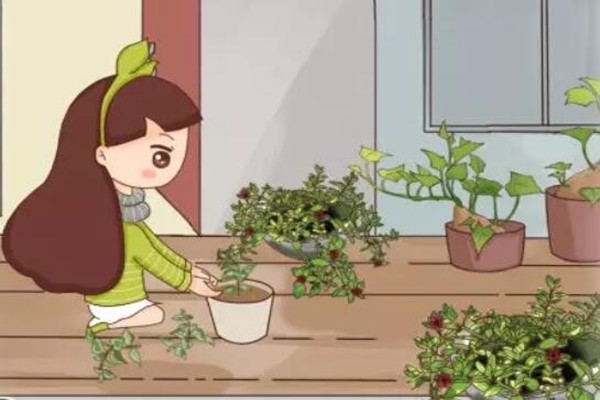
What impact does an unsuitable flower pot have?
1. Small seedling in a large pot
If the flower pot is too large and the plant is small, sunlight cannot penetrate thoroughly, drainage is relatively slow, water and fertilizer are hard to control, growth is slow, and it is especially likely to cause water accumulation and root rot.
2. Large seedling in a small pot
It is easier to understand a small seedling in a large pot: first, the root system cannot spread out, which inhibits growth; second, nutrients are insufficient, and the branches, leaves and roots compete for water and nutrients, ultimately leading to sparse and yellowing leaves, small and few flowers, pale flower color, or even no flowering.
Clivia - plant in a shallow pot
Clivia has fleshy aerial roots and has high requirements for root respiration and the breathability of the flower pot, so it is generally planted in a shallow pot.
1. Data reference
The data is for reference only, and the specific judgment should be made according to the size of the flower pot and the size of the plant.
Small seedlings with 1 leaf, plant every 4-6 plants in one 10 cm pot;
Small seedlings with 2-3 leaves, plant every 2-3 plants in one 10 cm pot;
Large seedlings with 3-5 leaves, plant every 1 plant in one 10 cm pot;
Large seedlings with 5-8 leaves, plant every 1 plant in one 13 cm pot;
Large seedlings with 8-10 leaves, plant every 1 plant in one 16-20 cm pot;
Mature plants with 10-15 leaves, plant every 1 plant in one 20-23 cm pot;
Mature plants with 15-20 leaves, plant every 1 plant in one 26 cm pot;
Mature plants with 20-25 leaves, plant every 1 plant in one 33-40 cm pot.
2. If the roots do not press against the pot, the flowers will not be strong
Clivia has aerial roots. After the root system presses against the pot, it will open up a certain gap, which is more conducive to respiration and growth, thereby producing vigorous flowering and bright flower color.
In addition, shallow-rooted plants such as money tree, snake plant, pothos, and ivy, as well as root-sensitive plants such as kalanchoe, succulents, and cacti, are best grown in shallow pots.
Orchids - plant deep first, then shallow
Orchids have single roots and no fibrous roots, and like a breathable and loose environment, but orchids also have pseudobulbs. This thing not only stores water and nutrients, but is also related to promoting buds and seedlings, so the depth of the flower pot must comprehensively consider the needs of the root system and the pseudobulbs.
1. Plant deep first, then shallow
First plant the orchid deeply, allowing the pseudobulbs to fully contact the growing medium, so they sprout more and produce more seedlings.
But the high-temperature and high-humidity environment in the soil can easily cause rot of the seedlings. What should be done? After the orchid seedlings grow out, remove some of the growing medium and expose part of the pseudobulbs, which can reduce the chance of disease infection.
2. Plant deep in the north, plant shallow in the south
The climate in northern regions is dry. If the pseudobulbs are exposed outside, it is not conducive to sprouting and growth; the pot surface is dry while the lower part is wet, and new seedlings are not easy to root; the climate in the south is humid, so shallow planting is suitable.
3. Shallow planting for mud-based material, deep planting for granular material
Mud-based material has poor breathability and is suitable for shallow planting; granular material is loose and breathable, so a deep pot is better.
Azalea - plant in a shallow pot
The root system of azalea is very shallow, with no main root, but with many fine fibrous roots, mainly clustered in the upper-middle part of the soil. It is not suitable for deep penetration, so it is best to plant it in a shallow pot.
Note: azalea cuttings can be grown in a clay pot of about 10 cm, and after one year they can be changed to a 15 cm flower pot.
Other woody flowers suitable for shallow-pot planting include: jasmine, camellia, gardenia, osmanthus, etc. Only shallow planting can produce vigorous flowering!
Spider plant and asparagus fern - deep or shallow is fine
Spider plant has a well-developed root system and is generally grown in a relatively deep pot, but spider plant is tough, so the flower pot can be deeper or shallower. A shallow pot fills out quickly, so it is best to repot once a year.
Petunia and pansy - wide-mouthed shallow pot
For herbaceous flowers such as petunia, geranium, verbena, and pansy, which grow quickly and easily fill a pot, it is best to grow them in a wide-mouthed shallow pot. Scatter a handful of seeds and they can fill out into a ball.
Radermachera - plant in a deep pot
For larger and beautifully shaped foliage woody plants, it is best to use a relatively tall and deep pot, such as Radermachera, kumquat, Schefflera, and umbrella tree. They require no worry and are easy to manage.
Note: when planting in a deep pot, place material at the bottom of the pot for breathability, the soil should not be filled to the top, and in daily care water less, ventilate more, and spray water more.
When you do not know what to plant in a deep pot, just use it as a cachepot, and you definitely cannot go wrong!