Can succulents still survive if their root system is damaged? They can, as long as you handle it properly.
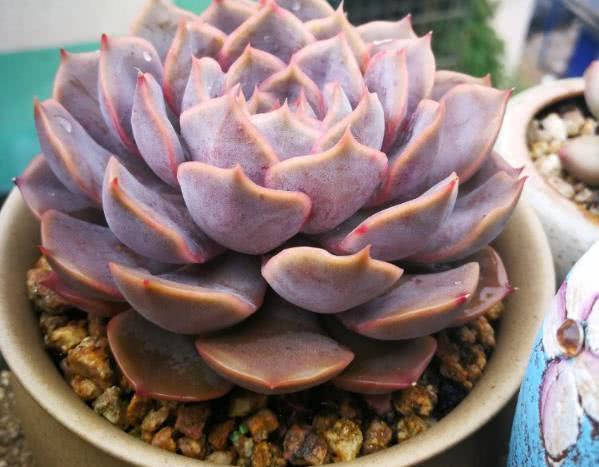
Succulents whose root system has been damaged should still be able to survive. The fact that they can live when propagated by cuttings even without roots shows that they have fairly strong vitality. If the damage to the root system is not serious, first cut away the more rotten, damaged parts of the roots, keep the normal roots, and after cleaning, sprinkle plant ash on the roots and leave them in a dark, ventilated place for 3 days. After 3 days, plant them and water thoroughly. Placing them indoors in a sunny, ventilated spot helps them grow new roots. Do not expose them to sunlight for a while to prevent dehydration and death.
After watering thoroughly, only water again when the potting soil looks pale or has cracks. If it still feels moist, do not water even a drop. Watering only after the soil has dried is less likely to cause root rot and death in succulents. After 20-30 days they will grow new roots, and you can move them outdoors to get 1-2 hours of morning and evening sun, which helps photosynthesis and reduces leggy growth.
Those of you who often buy succulents (with pot and soil) at flower markets or greenhouses will notice that many soils are just a mixture of peat moss and perlite (very light). After taking them home and growing them for a while, the plants will rot, or show signs of being unhealthy and short of water. This is especially hard to care for in summer.
Roots grow quickly in this kind of soil, but the root system is very fragile and thin, and the plant becomes puffy and weak. In contrast, roots grown in soil mixed with coarse sand are very strong. Especially after increasing the proportion of sand, you can see thick, sturdy roots, and the plants also become stronger.
This was discovered by observing plants in the wild. In nature there is not that much fertile peat soil; most succulents grow in sandy soil, and some even grow on dirt yet are very sturdy, with no scale insect pests at all. So in our homes, although we cannot recreate the natural environment, placing them on a windowsill, balcony, or terrace, as long as the ventilation is good, using somewhat leaner soil can also simulate the natural environment. Succulents do not need too much fertilizer.
Propagation of succulents: root cuttings. For the more valuable varieties of the genus Haworthia in the family Asphodelaceae, the roots are quite thick and well developed. Cut off the more mature fleshy roots, bury them in a sand bed with the upper part slightly exposed, and keep them somewhat moist with bright light. New shoots can sprout from the top of the roots, forming complete small plants.
This is a gathering place for succulent lovers, sharing succulent care tips. You are welcome to follow and join the discussion.