A Happiness Tree bloomed after 10 years of care - Sister Liu adds a little of "it" and it blooms every year
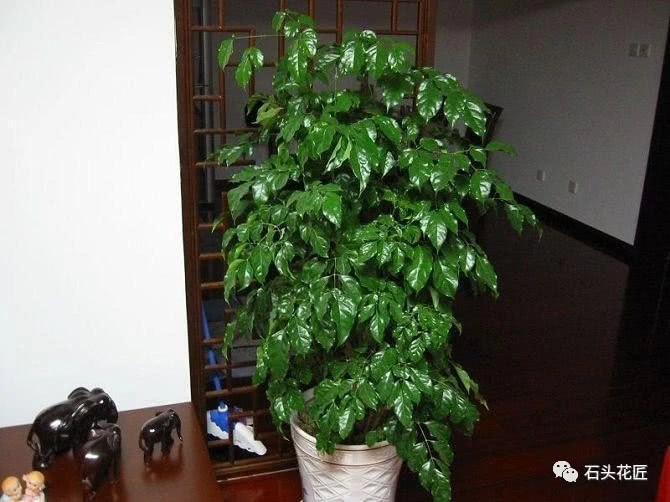
As people's living standards improve and rise, more and more people like to keep some green potted plants at home. They not only beautify the home, but also purify the indoor air, making the home warm, comfortable and healthy. Common flowers like pothos and spider plants kept at home can purify the air and absorb formaldehyde, and can also decorate the room, making the home more lively. And potted plants like lucky bamboo, kalanchoe, money tree and Happiness Tree not only purify the air, but also carry beautiful meanings, giving people a positive psychological suggestion.
What I want to share with you today is that flower lover Sister Liu has been growing flowers for ten years and has very rich experience in plant care. She also keeps all kinds of green potted plants at home, especially the Happiness Tree at home, which she grows very well and which can produce beautiful little flowers every year. Today I will share Sister Liu's tips for caring for the Happiness Tree, so the theme of today's sharing is:
Sister Liu has grown flowers for 10 years, and the Happiness Tree at home produces "happiness flowers" - add "it" and it blooms every year!
The Happiness Tree is a very easy-to-grow woody plant, generally kept at home as a potted plant, symbolizing family happiness, harmony and good fortune. The Happiness Tree can be placed on a coffee table or desk as a small potted plant; it can also be placed in the living room as a large potted plant. The Happiness Tree has glossy green leaves and stays evergreen all year round, with high ornamental value. If grown properly and appropriately, the Happiness Tree can produce lovely little happiness flowers every year.
If you want the Happiness Tree to grow emerald green and robust and also to bloom, during care you should focus on fertilizing, watering, light and ventilation, and fertilizing is especially key - it must be reasonable, adequate and timely.
Repot and add a base fertilizer
If you want the Happiness Tree to grow dense and robust every year, you generally need to repot and change the soil in spring. The Happiness Tree likes to grow in breathable, water-permeable soil, so when repotting every spring, use garden soil, leaf mold and sand in a 1:1:2 ratio to make a mixed soil. Then when potting, add a base fertilizer to the pot; you can choose compound fertilizer, chicken manure, sheep manure, rabbit manure, nut shells and so on, to ensure the plant's nutritional needs for later growth.
Add nitrogen fertilizer during growth
The rapid growth period of the Happiness Tree is generally in summer and autumn, so during these two seasons you must fertilize the Happiness Tree in time. Before the Happiness Tree's flowering period arrives, generally give the plant nitrogen fertilizer. This lets the leaves grow dense and emerald green. When growing the Happiness Tree at home, the simplest and most effective way to supplement nitrogen fertilizer is to use soybeans: cook the soybeans in a pot, let them cool, then dig 5-6 small holes around the edge of the Happiness Tree's pot, put 3-4 cooked soybeans in each hole, then cover them with soil and let the soybeans fully ferment in the pot, so the plant can absorb rich organic fertilizer.
Using soybeans is not only convenient and simple, it also saves the process of fermenting soybeans. Of course, you can also choose some inorganic nitrogen fertilizers; urea and quick-acting compound fertilizer can both be applied as supplemental fertilizer. Only by letting the Happiness Tree fully absorb nutrients and grow robustly can it meet the major precondition for blooming.
Add phosphorus and potassium fertilizer before the flowering period
The flowering period of the Happiness Tree varies according to growing conditions and environment, generally from May to September, and the flowering period usually lasts about one month. In fact, many flower lovers have never seen their Happiness Tree bloom when growing it, and that is because of improper fertilization and improper care conditions. Generally, before the Happiness Tree's flowering period, spray the plant with a 0.2% potassium dihydrogen phosphate water solution. Because before a plant blooms, it is the time when flower buds are developing, and supplementing phosphorus and potassium fertilizer for the Happiness Tree at this time can promote flower bud development and make the plant produce more beautiful and more numerous flowers.
Many flower lovers may not know when their Happiness Tree's flowering period is, so naturally they do not know when to apply phosphorus and potassium fertilizer to the plant. Then in the first year, you can start spraying the plant with a 0.2% potassium dihydrogen phosphate water solution from the beginning of summer, spraying once every two weeks, until the Happiness Tree has flowers open and then stop fertilizing. In the second year, you will roughly know when your Happiness Tree's flowering period is.
First, fertilize the Happiness Tree at different stages according to the three fertilization methods above, and then during the growing process pay attention to watering, light and ventilation.
The Happiness Tree likes to grow in a moist and breathable environment, so each time you water, water thoroughly, following the principle of "dry and wet alternating"; do not let water accumulate in the pot, otherwise the Happiness Tree can easily drop leaves or develop yellow leaves. The Happiness Tree likes to grow under scattered light, so it is generally most suitable to place it in a living room with scattered light; this way the plant can not only grow emerald green and lush, but also avoid drying out and wilting. Once the Happiness Tree's branches and leaves grow too dense, it needs pruning, which can increase ventilation around the plant and help flower bud development.
When growing the Happiness Tree at home, mainly pay attention to fertilizing, watering, light and ventilation. As long as you care for and maintain the Happiness Tree on schedule every year, it can produce beautiful flowers.
If you find this useful, please like it below, follow, and forward it to more friends!
I am [Stone Gardener], and I share little flower-growing tips every day. Remember to follow me.