Succulents can look beautiful in all four seasons; an experienced flower farmer teaches you how to plant and care for them
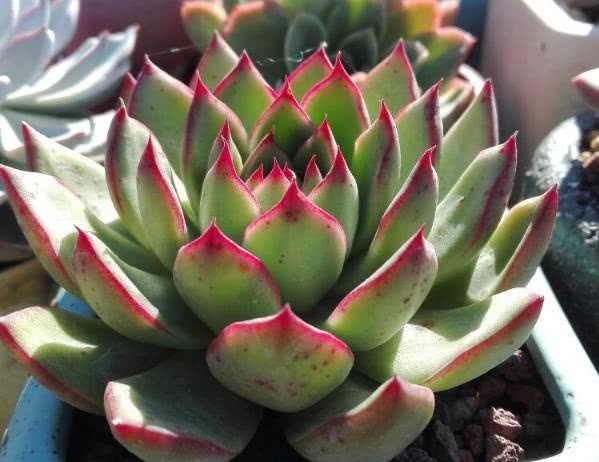
Temperature: Although succulents originate from hot regions, if the temperature stays above 35° you should also pay attention to ventilation and cooling. If growing them at home, they should be placed indoors with good air circulation; when you are at home you can open the windows, and even when no one is home it is best to leave a gap in the windows. In addition, spreading a layer of white pebbles on the surface of the soil in the pot to reflect sunlight can also help lower the temperature.
Succulent care in summer should pay attention to ventilation; no matter what type of succulent it is, it needs a good ventilated environment in summer. In a stuffy, hot and humid environment with no air circulation, water does not evaporate well and the temperature is hard to lower, which easily leads to root rot and also easily causes various pests and diseases. Because the humidity in the air in summer is itself greater than in other seasons, even the Haworthia (twelve-volume) genus, which likes high humidity, must leave its enclosed growing environment at this time and breathe some fresh air.
For winter-growing succulents, watering should be strictly controlled in summer, and if the temperature stays above 35° you can consider stopping watering altogether. Even if you water, you only need to moisten the soil surface around the plant; only in this way can you ensure the plant gets through summer safely. At the same time, be careful to avoid sprinkling water droplets on the leaves when watering; if obvious water droplets remain on the leaves, they should be blown away, so that the droplets do not gather strong light and scorch the leaves.
Succulents hate waterlogging most of all, especially in summer, when growers feel that the moisture in the soil dries quickly and so water frequently, causing the roots to stay wet and rot for a long time, beyond saving. In fact, summer has a lot of rain and humid air; although the soil surface may appear dry, the bottom is still not thoroughly dry, and this is even more true in southern regions.
The succulent Haworthia cooperi likes a cool, semi-shaded environment, and its main growing period is in the cooler spring and autumn seasons; it requires a certain amount of air humidity. It is drought-tolerant but not cold-tolerant, and it dislikes high temperatures, humidity and blazing sun; it fears shade and waterlogged soil. In production it is generally grown in pots in greenhouses or planted in seedbeds in the ground.
Haworthia cooperi is suitable for growing in an environment that is warm in winter and cool in summer. In summer, when temperatures are high, the plant enters a dormant or semi-dormant state, growing slowly or stopping completely; it can be placed in a ventilated, cool, dry spot for care, avoiding blazing sun and prolonged rain, and it should not be watered too much; stop fertilizing, and wait until autumn cools down before resuming normal care. In winter, with a nighttime minimum temperature of around 8°C and daytime temperatures above 20°C, the plant can continue to grow and should be watered normally; if watering is restricted, the plant will enter a dormant state.
This is a gathering place for succulent lovers, sharing succulent care tips; you are welcome to follow and exchange ideas.