Understanding white tea starts with understanding natural sunlight withering and indoor withering
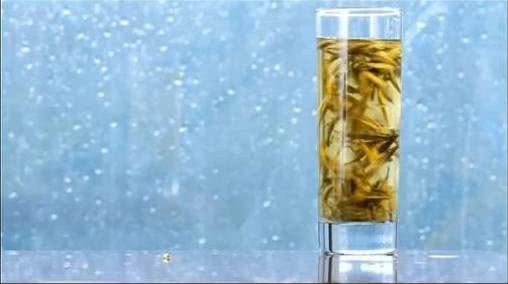
Among the six major tea categories, white tea has the simplest production process. It involves only two steps, withering and drying, and withering plays a crucial role in determining the quality of the tea.
Many tea lovers say they have recently become very interested in white tea and want to learn more about its secrets, especially the withering process. How exactly should we understand and distinguish between the two process concepts that frequently appear on the market, "natural sunlight withering" and "indoor withering"?
What is withering?
White tea is a lightly fermented tea, made through withering and drying processes, using a method that involves no rolling and no pan-firing.
White tea processing does not involve pan-firing or rolling; the key procedure is withering. The purpose of withering is to "evaporate the moisture in the tea leaves to reach the required dryness level for withering. Along with the evaporation of moisture and the ongoing respiration, the contents within the leaves undergo slow hydrolysis and oxidative changes, forming the appearance and internal qualities characteristic of white tea, volatilizing moisture, and enhancing the tea's aroma."
In terms of process, there are currently mainly two withering methods in white tea production: natural sunlight withering, which depends on the natural weather changes of heaven, and the more efficient and higher-yielding indoor withering.
To further understand the secrets between them, we first need to clarify the characteristics of these two processes and how each is carried out.
Natural sunlight withering
Natural sunlight withering means constantly watching "heaven's mood"
Natural sunlight withering involves spreading freshly picked leaves evenly and thinly, one leaf at a time, on bamboo trays and placing them under sunlight for natural withering. The duration is generally about 4 to 7 days.
Natural sunlight withering sounds simple, but it is actually not easy to carry out in practice. "Although the white tea-making process is simple, it has strict requirements for the source of fresh leaves, the intensity of sunlight, and the drying time. The raw materials must be picked in fine weather, the white down on the buds and leaves must be kept intact, the spread leaves must not overlap, and at the same time there must be sufficient sunlight and no turning of the leaves."
Natural sunlight withering
The placement of the bamboo trays also requires attention. You need to pay attention to wind direction; if the wind is too strong, you must quickly turn the tea in another direction; if the sunlight is too intense, you must quickly adjust the tea from direct exposure to angled exposure; if the surface humidity is too high, you must dry it off the ground; if the moisture content is too high, you must spread it even thinner; when the moisture content is very low, you must spread it thicker...
Advantages: It absorbs the energy of nature and sunlight, preserves the nutritional components in the tea leaves to the greatest extent, maintains the natural flavor of the tea, brings out the down aroma, and gives a sweet, fresh, and refreshing liquor taste.
Disadvantages: Tea-making depends on the weather and is greatly affected by weather conditions; labor costs are too high; production efficiency is very low; there are strict requirements for weather, making large-scale production impossible.
Natural sunlight withering
Indoor drying withering simulates all conditions of natural sunlight withering except the sun
Indoor drying withering is a traditional indoor withering method. The method is roughly similar to traditional natural sunlight withering: the tea leaves are spread out one by one on bamboo trays and placed in a room, where natural ventilation and temperature allow them to slowly lose moisture.
But since the location becomes indoors, there are certain requirements for the indoor environment. The room requires ventilation on all four sides, complete facilities such as windows, no direct sunlight, a hygienic and clean space, and hygrometers for observing changes in temperature and humidity. Generally, indoor withering lasts about 70-90 hours in total.
This method is more about people using the indoor environment and trying their best to create conditions that simulate all factors of natural sunlight withering except the natural sun.
Indoor drying withering
"If the temperature is on the low side and the humidity is on the high side, you should first close the windows and introduce a heat source indoors, such as charcoal fire or an electric stove, to raise the room temperature and lower the humidity."
In this process, after the tea leaves reach the standard level of fermentation and moisture content, the tea is then dried at low temperature. This is a traditional process of tea enterprises. For example, most tea factories in Fuding now use indoor drying withering.
Advantages: The method is relatively simple, and under normal climate conditions, this method is often used.
Disadvantages: If large-scale production is needed, a relatively large space is required; it is also affected by weather; the withering time is longer, and production efficiency is relatively low.
Indoor drying withering
Indoor heated withering, assisted by modern equipment
The method of indoor heated withering involves installing a hot air duct (or a dual-purpose heating and cooling air conditioner), exhaust fans, blowers, and other devices in the withering room. By controlling temperature and humidity, the room temperature is brought to between 38°C and 40°C, causing the tea leaves to lose moisture quickly.
Artificially controlled temperature and humidity environments have also been widely applied in production. Blowers reduce the humidity in the room, and air conditioners raise the room temperature. The result is that tea that originally needed three to four days to complete withering can be finished in one day through this method.
Indoor equipment heated withering
This is the current non-traditional heated withering used by tea enterprises: indoor heated withering. It uses modern equipment to carry out withering indoors.
Advantages: It is not constrained by weather conditions, greatly shortens the processing cycle, has high production efficiency, and produces a large output of tea.
Disadvantages: In terms of internal transformation, it often fails to meet requirements because the heated withering time is too short, and there may also be uneven moisture loss between the leaves and the stems and veins. This leads to a relatively poorer taste, and the later transformation quality is also inferior to traditional natural withering.
Indoor equipment heated withering
Natural sunlight withering depends on heaven for tea-making, cannot achieve mass production, and is uncontrollable
Tea using indoor withering, whether in terms of production efficiency or production volume, is far greater than natural sunlight withering.
Therefore, basically all white tea sold on the market is produced in large quantities using indoor withering. In comparison, natural sunlight withering, which "depends on heaven for tea-making," cannot be produced in large quantities, is greatly constrained by the natural environment, has many uncontrollable factors, and also consumes more time and labor.
For example, when a batch of top-quality fresh tea leaves arrives, if it does not encounter clear skies and sunlight, then there is no way to make high-quality sun-dried tea. Once it is impossible to get three or four consecutive sunny days, these originally expensive fresh leaves face a lamentable fate.
Natural sunlight withering
It looks simple, but in practice it also carries risks
From this it can be seen that for tea makers who insist on natural sunlight withering, this is somewhat a matter of gambling on luck, entirely depending on whether heaven favors them. The consumption of both time and labor is very great, and producing a batch of standard natural sunlight withered tea is extremely difficult.
Moreover, even if the natural sunlight withering process is used to make tea, it cannot be guaranteed that every tea produced will be of very good quality.
Although natural sunlight withering is simple, it greatly tests technique and the tea maker's experience. Once a certain step is not done well, it easily harms the quality of the tea. Therefore, even natural sunlight withering, which looks simple, carries a certain risk in practice.
Sunlight gives tea good aromatic conditions
When we drink it, we find that white tea made by natural sunlight withering has a very pleasant scent. To put it in a more literary way, this scent is "the smell of sunlight."
In a speech, the famous Chinese tea scientist Professor Liu Qinjin mentioned the sun-drying process for tea. One passage went like this: "Sunlight has 72 kinds of light waves. These 72 kinds of light waves have a certain relationship with the formation of tea aroma. In particular, the shorter-wavelength violet light is highly positively correlated with the formation of aromatic substances in tea. Sun-drying and photo-oxidation create good aromatic conditions for it."
This is an explanation from a scientific perspective. Applied to white tea, the same principle holds true. In tea leaves that have undergone sufficient sun exposure, sunlight allows slower and more natural transformation inside the tea, turning it into something like the taste of sunlight.
Whether it is natural sunlight withering or indoor withering, and no matter which of these is used when making tea, the process itself is partly good and partly bad; more important is the control of each step and detail.
At present, the white tea withering process used by most tea enterprises on the market is indoor heated withering. The purpose is to speed up production so that the whole process from picking to finished product can be completed in about one or two days.
When indoor heated withering first appeared, it was mainly for export, so production efficiency and yield rate were very important. For the same batch of tea, whether it is finished in five days or one day makes no small difference. What is now called the process is actually the indoor withering process. It is only divided into heated and non-heated.
But this does not mean that tea made by indoor withering is necessarily not good to drink.
In terms of raw materials, if the quality of the fresh leaves is very good, and standard techniques are added, then the controllability of the entire production process will be better, and the taste will be more standard.
As we mentioned earlier, tea made by indoor heated withering is prone to uneven moisture loss and inadequate internal transformation. Therefore, in addition to good raw materials, an experienced tea maker with excellent skills is also crucial.
Therefore, compared with natural sunlight withering, which depends on heaven for tea-making, indoor heated withered tea not only greatly improves production efficiency and increases output, but can also make tea quality more stable.