This blood-nourishing vegetable comes from the United States; leave it unpicked for two days and it goes tough. Have you ever eaten it?
Now, with the development of society, exchanges between countries are very frequent, whether in the economy or in food. Nowadays, in our country, you can basically see many things from every country in the world, and some have even been domestically cultivated. Today I will introduce to you a vegetable that our country introduced from abroad.
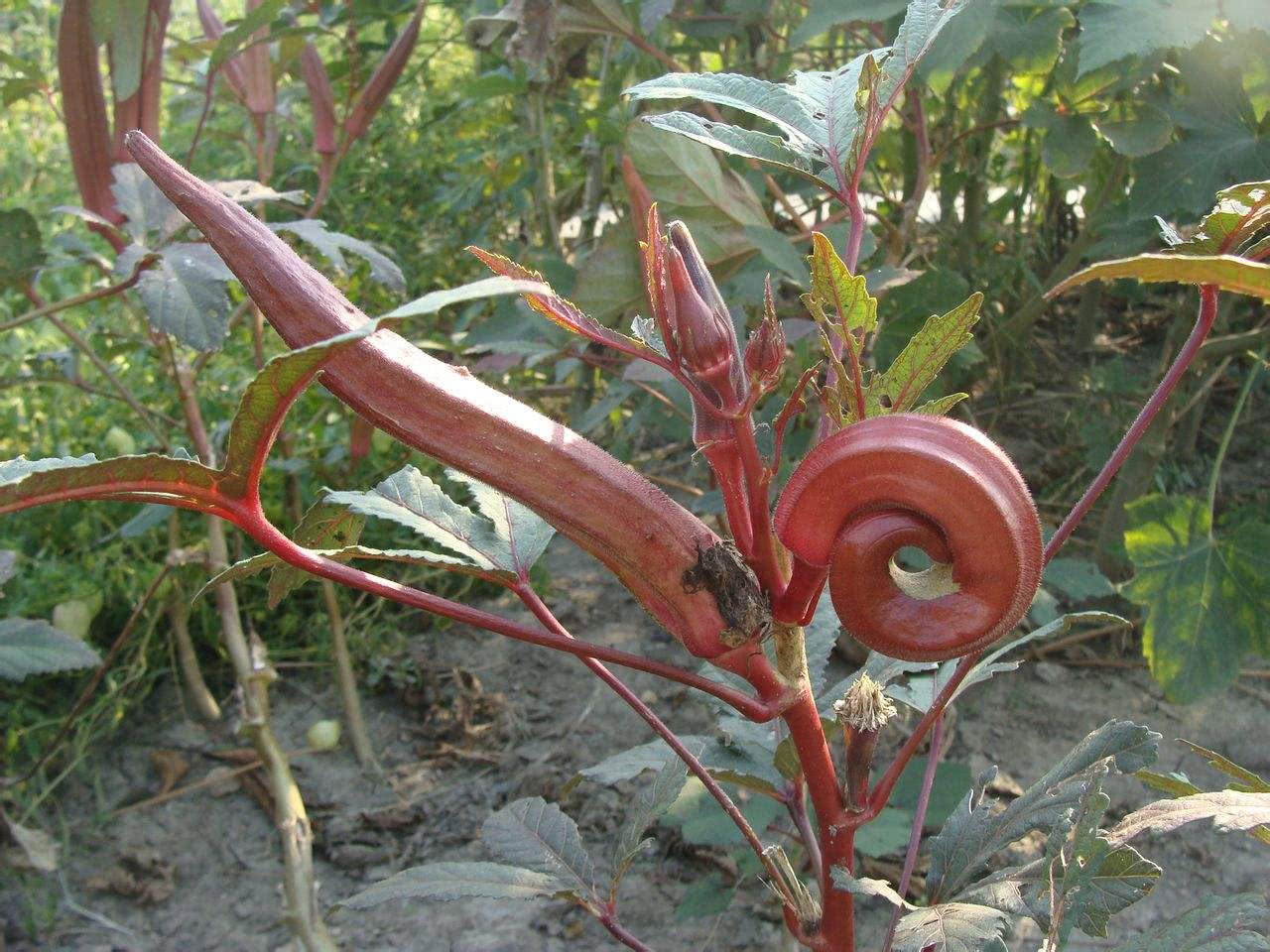
This vegetable looks very much like a red chili pepper. It is called red okra. The outer skin of red okra is bright red, and at first glance you would think it was a red chili pepper.
Red okra is a plant originally native to the United States, and later it was introduced into our country for cultivation. Red okra has very high nutritional value; in particular, its content of protein, minerals and vitamins is richer than that of ordinary vegetables and fruits. It also has a very special fragrance. As long as you open the bag, you can smell the faint scent that belongs uniquely to red okra.
Red okra is very simple to prepare. It can be made into soup, stir-fried plain, or served cold with dressing. Only simple preparation is needed to taste the most original flavor of red okra, and red okra can be eaten by both the elderly and children, and is good for the body.
Red okra not only has very high nutritional value, it actually also has high medicinal value. Now the flowers and seeds of red okra have begun to be used as medicine, and they have good effects on the treatment of some stomach ailments.
At the same time, red okra also has a protective effect on the liver and can eliminate the body's sense of fatigue, among other things. In the diets of some athletes, red okra can often be seen, because after eating red okra it can quickly help them recover their physical strength, a function that other foods do not possess.
Precisely because of this, among the general public people also commonly call red okra the "blood-nourishing vegetable." It can quickly help people replenish their physical strength. So do not underestimate this little red okra; its benefits are truly very many.
However, although red okra is good, for the farmer friends who grow it there are also a few drawbacks, namely that it is a crop that likes high temperatures, and once the temperature is too low it easily withers. In addition, its harvest period is very short. For ordinary vegetables such as corn, the ears of corn can stay on the corn plant for dozens of days, but if red okra is not picked for 2 days, it goes tough, and then it cannot be eaten.
Red okra not only has a faint fragrance itself; even the food made with red okra has a unique taste, a taste that other foods truly cannot achieve. After eating it once, it will be hard for you to forget.
It is also because red okra has so many values that nowadays quite a few farmers in our country have begun to grow it and become rich through it, and many farmer friends also grow some in their own vegetable gardens for daily consumption.
Dear friends, have you all ever eaten this kind of "blood-nourishing vegetable," red okra? You are welcome to leave a message and share your thoughts!