Why geraniums fail to resume growth after surviving summer
Geraniums are herbaceous flowering plants that can bloom all year round, and their flowers have a captivating fresh fragrance; of course, some varieties have rather peculiar scents, and some can even repel mosquitoes, namely the scented geranium. Many friends say their geraniums simply cannot recover after passing through summer. What is going on?
Although geraniums enjoy a warm, humid environment all year round, they are afraid of excessive heat or prolonged exposure to strong sunlight.
In summer, when caring for geraniums you must be sure to avoid this: when they are kept in a spot with overly intense sunlight, shade them appropriately, and when the ground temperature is too high, move them to a slightly shaded spot to give them some dormancy time; only then, after getting through summer, can they resume a rapid growth state.
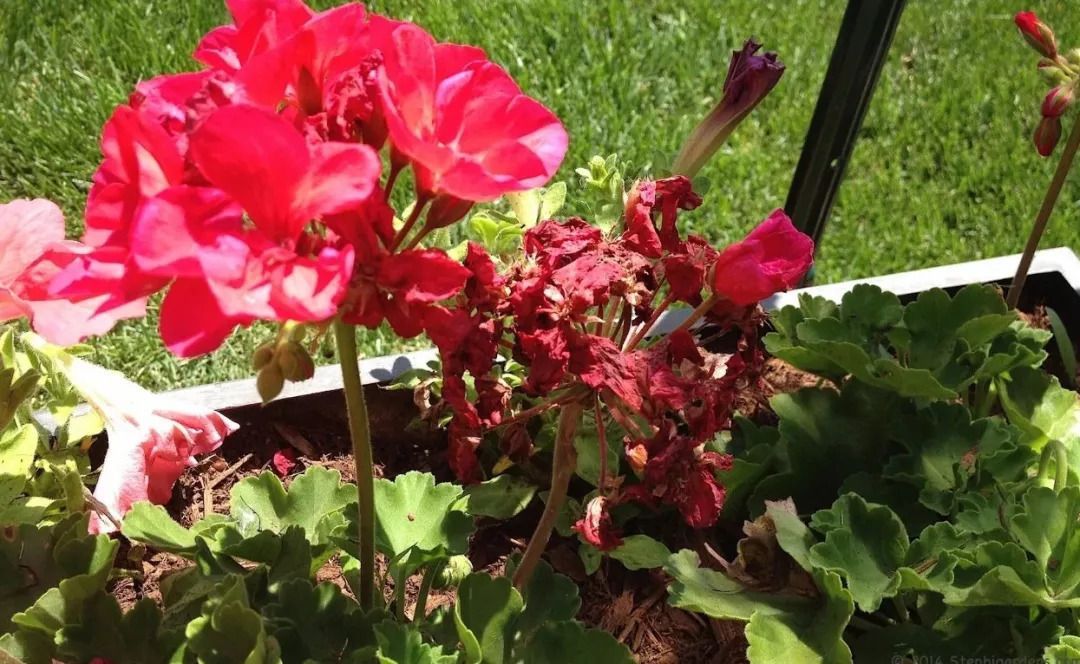
When caring for geraniums in summer, you should still promptly cut off spent flowers and withered branches and leaves. Removing these dying flower stems in time helps with ventilation and light penetration, prevents fungal diseases from being triggered, and makes the geraniums grow more robustly.
These spent flowers not only look very ugly, but they also consume a great deal of nutrients. If spent flowers are left on the flower stems and remain wet for a long time, they easily trigger fungal diseases.
Geraniums are very suitable for growing as indoor potted plants. When winter temperatures are too low, they should be moved indoors to avoid freezing, and the minimum care temperature should be kept above 5°C. With proper care, geraniums can bloom all year round.
The spot where you care for geraniums should have plenty of light; avoid placing them in shade, otherwise their branches and leaves will grow leggy.
Before planting geraniums, you can choose a suitable variety. They come in rich flower colors and diverse varieties, so you can pick some you like with robust branches and leaves.
For cultivating geraniums, use loose, airy, well-draining sandy soil, and you can appropriately add some slow-release organic granular fertilizer to the soil.
In the spring and summer growing seasons, wait until the soil is dry before watering thoroughly, and avoid the soil staying wet for long periods. In winter, control watering and let the roots stay appropriately dry.
In addition, you need to regularly supplement fertilizer during the growing season. In spring and autumn, you can give a water-soluble fertilizer once every two weeks; when summer temperatures are too high or winter temperatures are relatively low, stop fertilizing.
When frost is about to arrive in late autumn, you can appropriately prune the geraniums, removing some of the longer branches to avoid consuming too many nutrients, then move them indoors to a windowsill with plenty of light. Newly pruned geraniums should be kept from getting water on the wounds.
If you do not know when to water your geraniums, you can wait until the leaves droop slightly, then water thoroughly once, avoiding overly frequent watering.
In the process of caring for geraniums, if there is insufficient light or too much watering, yellow leaves are easily caused. Cut off the yellow leaves in time, move the plant to a spot with relatively ample light, and it will quickly resume growth.