When planting roses in the ground, keep them away from these plants, otherwise they will constantly drop flowers
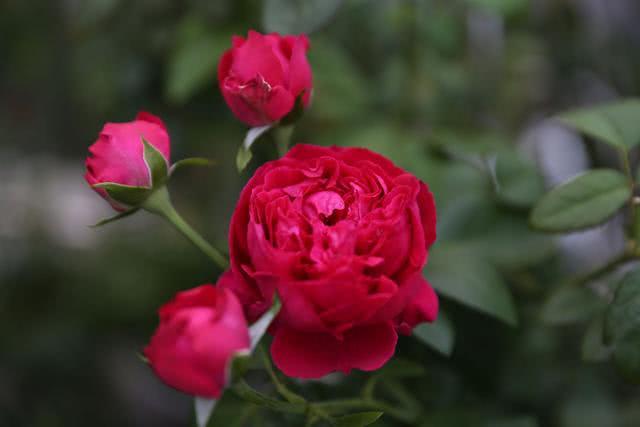
Nowadays, more and more people are starting to use in-ground planting to realize their dream of building a garden, and when it comes to choosing in-ground plants, roses have undoubtedly become the core option. After all, with their stunning beauty, no one can resist rose flowers. But in-ground roses are considerably more difficult than potted ones, and one key point is the pairing of various plants, especially for roses. If their "neighbors" are poorly chosen, they may fail to show a good state throughout the entire growth cycle, so the reason your in-ground roses are not growing well may be that the neighbors were chosen wrongly.
Why do roses need to "pick their neighbors"?
Many friends, when creating an in-ground landscape, go by just four words: "do whatever you like," planting whatever comes to mind, but this is actually a mistaken view, especially for roses! We all know that roses are flowers with very high demands on environment and nutrients. If other plants are casually planted around them, an awkward situation of "competing for food" is very likely to occur. In this way, a fine large-flowered rose at home is turned into a miniature rose, and tell me, wouldn't that make us growers feel miserable? So if you want roses to be the core of your in-ground landscape, you really need to put some thought into choosing the companion plants.
These few "neighbors," please step away!
The first neighbor that must be kept away is weeds, because if there are weeds nearby, it is extremely unfavorable for roses. It not only affects their appearance but may also cause poor ventilation in the rose's growing environment. Especially under high-temperature weather, various pests and diseases are extremely likely to occur, and roses themselves have relatively weak resistance to these pests and diseases. Once affected, the consequences are unimaginable, so if there are weeds near your in-ground roses, be sure to remove them quickly!
Second, if you want to be a neighbor to roses, then the flowers you choose must themselves have the trait of a "poor appetite," meaning they cannot compete with roses for absorbing nutrients. Therefore, from the list we can cross out a series of high-appeal flowers such as peonies and osmanthus. Because these plants may be even more fertilizer-loving than roses themselves and have stronger absorption capacity. By comparison, how could the somewhat delicate rose compete with them? Over time, this will inevitably cause malnutrition in roses. Want a pot bursting with blooms and huge flowers? That can only remain a dream.
Finally, it is best not to plant large plants with luxuriant branches and leaves together with roses. Even if they must share the same in-ground environment, they should still be kept as far away from the rose roots as possible. Because roses themselves are light-loving plants, large plants growing beside them will block part of the sunlight, and roses kept in this environment for a long time are extremely prone to leggy growth. Of course, we can also choose some more shade-tolerant varieties, but then again, sufficient light must still be ensured, so large plants are best kept away from roses.
In addition to what has been introduced above, there is actually another key point we need to pay attention to when planting roses in the ground: because in-ground planting is a relatively complete ecosystem, any mistake in any part of it may affect the normal growth of roses. For example, if seemingly unrelated other plants develop yellow leaves or pest problems, we need to pay timely attention, otherwise it will be too late when the "tragedy" happens to the roses.