The wild vegetables sold by the auntie on the roadside are rarely seen, nutrient-rich, and a good medicine for replenishing qi and blood.
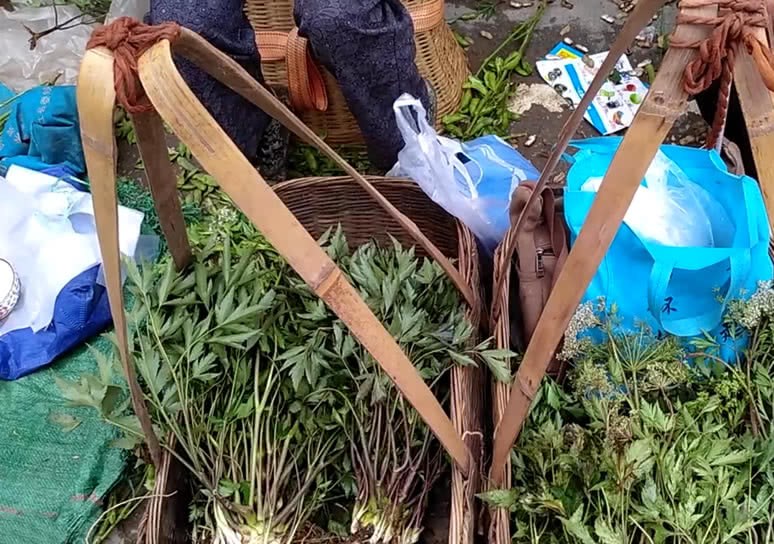
Recently I've noticed quite a few more vegetable sellers along the roadside. An auntie was carrying a load of vegetables on a shoulder pole to sell. Getting closer for a look, the wild vegetables seemed a bit familiar, but I just couldn't tell what they were. The auntie said this was wild Angelica sinensis she had dug up in the mountains. It is a kind of wild vegetable and also a very common traditional Chinese medicine.
Everyone has probably eaten chicken stewed with Angelica sinensis, but we generally use the Angelica sinensis root. There are also many types and varieties of Angelica sinensis. After its root is dried, some look very much like ginseng, and their medicinal effects are all very good. The stems and leaves of Angelica sinensis, which we rarely eat normally, are all edible.
Generally speaking, only the root of Angelica sinensis has medicinal value, and it is also one of the most commonly used traditional Chinese medicines. It has a very good therapeutic effect on nourishing blood and invigorating blood circulation, and tonifying the middle and benefiting qi. But in fact, its stems and leaves also have considerable edible value, and are nutrient-rich. They contain sucrose, a variety of amino acids, and also vitamin A, vitamin E, volatile oil, arginine, and a variety of minerals, etc.
When making stewed dishes at home, you can wash its stems, leaves, and root together and put them in the pot. We will taste a slight sweet and fresh flavor. It is nutrient-rich and appetizing. Wild Angelica sinensis especially has a richer fragrance.
Wild Angelica sinensis is hard to come by. Generally, there is quite a lot in the mountains in rural areas, but nowadays Angelica sinensis is mostly cultivated artificially. Angelica sinensis is a low-temperature, long-day crop. It is suitable for high-cold and cool climates, avoids direct sunlight, and can tolerate shade. For planting Angelica sinensis, it is suitable to use loose, breathable, well-drained, fertile sandy loam rich in humus. It is not suitable to plant it in clay soil that easily hardens, which is unfavorable to root growth.
In fact, in addition to the effects of nourishing blood and invigorating blood circulation, Angelica sinensis also has effects such as moistening dryness and lubricating the intestines, anti-cancer, and enhancing immunity. The auntie dug out this kind of wild Angelica sinensis and sold it together with stems, leaves, and root for 8 yuan per jin, which counts as selling it very cheaply. It is just that a single plant is a bit large, and it is estimated that it cannot be finished in one meal. What cannot be finished can also be dried in the sun before eating. It is quite convenient.