This African weed that runs rampant has a salty taste of its own, and after entering China it became a high-end product at 18 yuan per jin
Nowadays China's economic strength is growing stronger and stronger, and we are no longer in the era of not having enough to eat. The appeal of big fish and big meat is not as strong as before, and the variety of food on everyday dining tables has become increasingly rich. Modern people pay more attention to a healthy and natural lifestyle, and this lifestyle is most directly reflected in food. Some wild vegetables have now been brought back to the dining table, because wild vegetables are purely natural and highly nutritious, which makes many friends who pursue a return to simplicity very fond of them. In spring and autumn, people go out in twos and threes to gather wild vegetables together. It allows them to get close to nature and also obtain healthy green vegetables, which is truly a great joy.
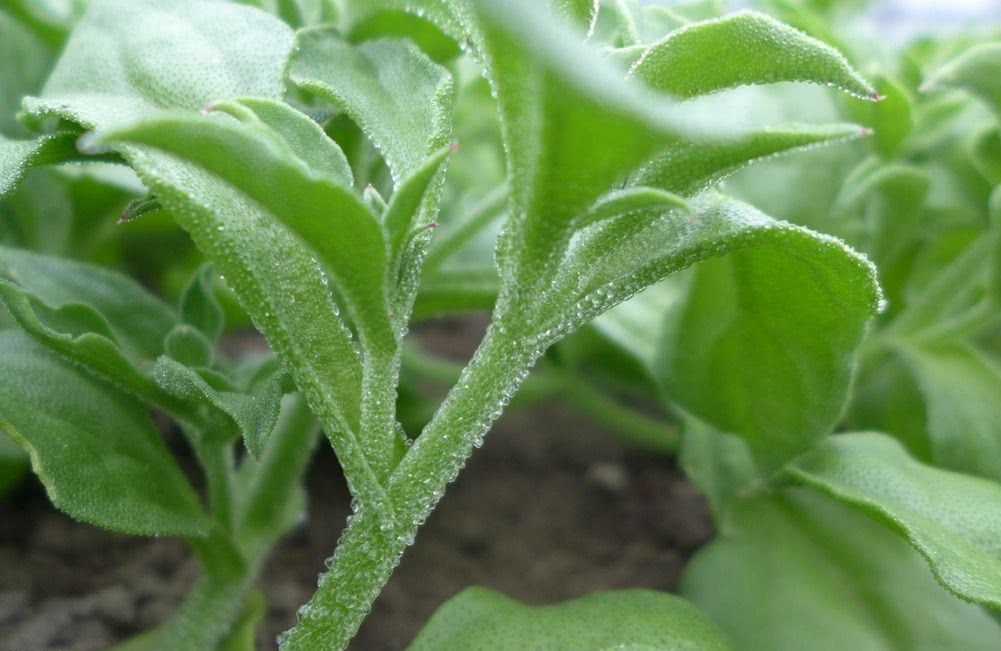
The wild vegetable we introduce today can be called an "African immigrant." Its name is African ice plant, a variant of a succulent plant. Why is it called ice plant? It is not because it is icy cold, but because its whole body looks as if it is covered with a layer of ice beads, crystal clear. In fact, it is the juice stored by this plant. This juice has a salty taste of its own. This shape actually evolved as this plant adapted to harsh environments such as saline-alkali land. You could say it "substitutes salt" for itself.
This ice plant is often used in cold dressed salads. Its texture is very soft, and its taste is especially fresh. It first ran rampant as a disaster in Africa's saline-alkali land, and was later brought to Europe, where Europeans ate it as a vegetable. Because it has a salty taste of its own, it is very popular with Europeans; there is no need to add salt when making salad. Later, after China introduced African ice plant, it was first supplied to domestic Western restaurants, and later it could also be seen in some restaurants.
The nutritional value of ice plant is very high. Those small blisters full of juice are rich in a variety of amino acids and proteins, and they contain many kinds of trace elements. They are beneficial for strengthening memory and relieving brain fatigue. Therefore, people who do mental work for long periods, such as white-collar workers and students, are very suitable for eating this vegetable. It is also rich in salts from natural plants and is very friendly to patients with the "three highs." It is not as concentrated as edible salt, and it also has a salty taste. It satisfies the appetite of patients with the three highs and also helps people maintain good health.
Such a good-tasting vegetable is of course not cheap. On the one hand, its planting area and scale in China have never developed, and people in many areas are very unfamiliar with this plant and have never seen it at all, let alone eaten it. Therefore, its selling price in many areas is very expensive. In shopping malls in some places, it can even reach 18 yuan per jin, making it a veritable high-end product. Many people have only eaten ice plant in some high-end restaurants, and it is hard to see it in vegetable markets.
African ice plant is now being planted by farmers near large cities such as Zhejiang and Shanghai. The reason for its high price is that it has high planting requirements and cannot be sprayed with pesticides, because pesticide residue easily remains on the surface of ice plant. Second, ice plant is relatively delicate and spoils quickly, and transportation is also troublesome, so the price remains high. With the development of agricultural technology, it is believed that one day ice plant will enter ordinary people's homes just like cabbage.