A detailed guide to four-season succulent care and first aid, worth saving
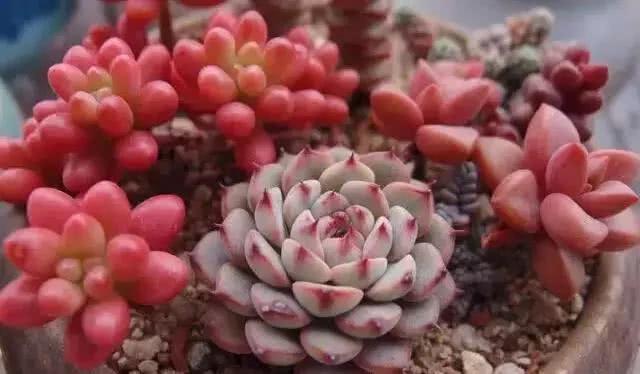
Watching your beloved succulents grow healthily brings a deep sense of accomplishment. But as the climate and environment change, the content of gardening work must be adjusted accordingly, and beginners may feel at a loss about where to start, but don't worry - this time the key tasks from January to December are all laid out for you at once!
"The Four-Season Care Code for Succulents"
★January
Key cultivation point: give a small amount of water.
Environmental conditions: at the end of winter, the climate is on the cold side, the growth of succulents is still slow, and attention must be paid to cold damage.
Gardening tasks: give a small amount of water; when the potting soil is dry, water thoroughly once.
★February
Key cultivation point: give a small amount of water.
Environmental conditions: after the Start of Spring, the sunlight already carries the breath and warmth of spring, and the weather is warm one moment and cold the next.
Gardening tasks: give a small amount of water; when the potting soil is dry, water thoroughly once.
★March
Key cultivation point: a good time for gardening work.
Environmental conditions: in early spring, the weather is warm, making it a good time for gardening work.
Gardening tasks: normal watering. Suitable for repotting, sowing, leaf cuttings, stem cuttings and pest removal.
★April
Key cultivation point: the first peak growth season.
Environmental conditions: at this time the day-night temperature difference is large, summer-growing types begin to thrive, and winter-growing types begin to go dormant.
Gardening tasks: normal watering. Suitable for repotting, sowing, leaf cuttings, stem cuttings and pest removal.
★May
Key cultivation point: normal replenishment of water and fertilizer.
Environmental conditions: the Start of Summer has arrived, sunlight is intense, and the peak growth season for succulents continues.
Gardening tasks: fully and continuously replenish water. Fertilize. Provide appropriate shading.
★June
Key cultivation point: prevention and control of plum rain and typhoons.
Environmental conditions: the plum rain season begins; in late June winter-growing types start to show sluggish growth, while summer-growing types grow normally.
Gardening tasks: control moisture. Set up wind protection facilities.
★July
Key cultivation point: the climate is stuffy and humid, be careful to prevent rot.
Environmental conditions: temperatures are unstable, humidity is high, stuffy heat and rot easily occur, maintain ventilation.
Gardening tasks: control moisture. Maintain ventilation. Fungicides and insecticides can be sprayed at the appropriate time.
★August
Key cultivation point: be careful to maintain ventilation in the environment.
Environmental conditions: at the end of winter, around the Start of Autumn, the plum rain ends and the period of intense heat begins; pay attention to ventilation and drainage.
Gardening tasks: pay attention to watering. Maintain ventilation, fertilize a small amount.
★September
Key cultivation point: the second peak growth season.
Environmental conditions: the second growth period begins, autumn typhoons are common, and precautions against rain and dampness are still needed.
Gardening tasks: normal watering. Suitable for fertilizing, repotting, sowing, stem cuttings, grafting and pest removal.
★October
Key cultivation point: late autumn, remove the shade netting.
Environmental conditions: at this time sunlight is ample and the temperature difference between morning and evening is large; watering in the early morning or at dusk is better.
Gardening tasks: normal watering. Suitable for repotting, sowing and stem cuttings. Grafting. Remove the shade netting.
★November
Key cultivation point: normal watering.
Environmental conditions: around the Start of Winter, the air is dry, sunlight is no longer intense, and there are more clear days than rainy ones.
Gardening tasks: normal watering; when the potting soil is dry, water thoroughly once.
★December
Key cultivation point: reduce watering.
Environmental conditions: in deep winter, with freezing cold, all gardening work should stop.
Gardening tasks: extend the watering interval; indoors, water once every 3 weeks to 1 month.
"Common Planting Problems and First Aid"
Situation 1. Sunburn
Solution: set up shade netting for the plant, or immediately move it to a place without direct sunlight; in midsummer water in the early morning or at dusk, and avoid leaving water droplets behind, so as to prevent scorching.
Situation 2. Water damage
Solution: when excessive watering causes the plant to rot, it is recommended to cut out the damaged parts down to the roots and replant in a medium with good drainage and aeration.
Situation 3. Leggy growth
Solution: cut off the top bud portion of the leggy plant to make its shape attractive and to carry out cutting propagation.