Grafting a Christmas cactus onto a dragon fruit stem isn't for eating - the layered blooms are especially beautiful
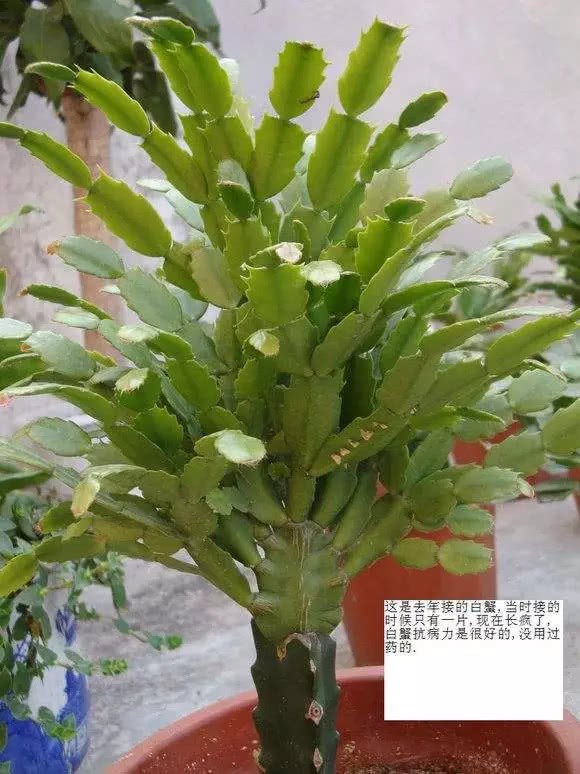
A gardening friend asked, can dragon fruit stems be used to graft a Christmas cactus? Actually, dragon fruit stems belong to the cactus family, so they can be used to graft a Christmas cactus
Because the Christmas cactus has an undeveloped root system, grows slowly, is prone to waterlogging and root rot, and tends to go dormant in summer, it is often grafted onto other plants in the cactus family, relying on their strong root systems to grow. The rootstocks suitable for grafting a Christmas cactus mainly include cactus, Pereskia, three-ribbed cereus, dragon fruit stems, cactus balls, and so on
Using dragon fruit stems to graft a Christmas cactus is exactly the same as using three-ribbed cereus to graft a Christmas cactus, and their appearance is also very similar; the grafting method is interchangeable
1. First, take a fairly robust dragon fruit stem and cut off its top. Then take a Christmas cactus scion and make cuts on both sides of it to expose the central pith, which means exposing the cambium
At the top of the dragon fruit stem, near the center, cut a slit, then insert the Christmas cactus, and secure it with a cactus spine, and that's it
2. When grafting a Christmas cactus onto a dragon fruit stem, you can use top grafting or side grafting, that is, cut a slit on its side, deep enough to reach the pith, then cut both sides of the Christmas cactus leaf and insert it, secure it well, and that's it
Then place it in a ventilated spot with diffused light, and after about a week of care it can gradually receive light. The advantage of grafting onto a dragon fruit stem is that it has good support, so it can take shape independently without other supports, and after grafting it survives relatively quickly, grows relatively vigorously, is easy to manage, and is fairly low-maintenance